
Negative Space in Photography: Give Meaning Room to Breathe
Updated 12 Oct 2026
Consider what the space contributes
Negative space in photography is the quieter area around or between elements that attract attention. It may be sky, water, shadow or a relatively plain surface. Its shape and relationship with the rest of the frame can carry meaning of their own.
Begin with what made you stop. Perhaps the distance between two figures matters more than either figure alone. Before filling that gap, consider whether it is the reason you want to make the photograph.
Restraint means deciding what earns its place. Removing an element may help, but keeping a spacious area can be just as deliberate. Compare the effect of your choices instead of aiming for a fixed proportion.
Three things to take from this lesson
Notice the space
Look at the shape, tone and position of quieter areas, including gaps between objects.
Compare what changes
Try spacious and tighter framings. Identify what each version gains and loses.
Keep what matters
Choose the amount of space that supports the feeling or relationship you want to preserve.
Where this lesson fits
Notice what draws your attention, recognise what you want to communicate, then choose the tools that support it.
SEE → FEEL → TECHNIQUE
- Intention
- Restraint · this lesson
- Observation
- Judgement
Restraint
What can I leave out?
Consider what quieter areas contribute before filling them. Leaving out an element can give an important relationship room to be felt.
Video 2 · Restraint
- Lesson 30 · Negative Space — you are here
- Lesson 31 — Contrast
- Lesson 32 — Compositional Balance
The four themes work together throughout photography. Return to any of them whenever it helps you reconsider a choice. The video groups connect related lessons; the Academy’s numbered route stays the same.
⏱️ CHAPTERS
00:00 - Introduction: Composition with Restraint
01:21 - Lesson 30: What Is Negative Space?
02:24 - Active Space: Sky, Water and Horizon Decisions
03:17 - How Much Space Do You Need? (In-Field Comparison)
04:49 - Three Rules for Using Negative Space
05:16 - Lesson 31: Contrast - Tone, Color and Texture
06:34 - Low Key vs Contrast
07:05 - Testing Contrast: How Much Is Enough?
08:19 - Three Rules for Contrast and Separation
08:52 - Lesson 32: Compositional Balance and Visual Weight
09:25 - Symmetry vs Asymmetrical Balance
10:40 - The Golden Ratio and Phi Grid Overlay
11:45 - 5 Factors That Control Visual Weight
13:20 - Three Rules for Compositional Balance
13:47 - Space, Contrast and Balance: The Practical In-Camera Challenge
Table of Contents Show
What negative space means
Negative space is quieter space within the photograph. It can surround an object, sit between several elements or occupy most of the frame. It need not be white, completely empty or out of focus. A plain wall, still water or an area of shadow can all provide it.
Positive space usually describes the forms that draw attention. These terms describe a relationship: a small dark figure may stand out against a pale beach, while the expanse of beach carries the feeling of distance. Neither part works independently of the other.
Space can be what the photograph is about
An interval between two people may suggest separation. An expanse of sky may express exposure or freedom. These are possible readings, not fixed meanings. Look at the actual photograph and describe what the space contributes.
There is no required percentage of negative space. Compare framings and keep the relationship that supports your intention.
The differences between quieter and more prominent areas also connect with Lesson 31 — Contrast.
Recognising space in different scenes
Look for quieter areas in the scene you already have. They may contribute through their shape, tone or distance from another element.
Sky and water
Sky and water can suggest scale or exposure. Watch how the horizon divides that space.
Walls and darkness
Walls and darkness can separate forms or conceal information. Consider whether that uncertainty matters.
Quiet textures
Sand, grass and other textures can act as negative space when their detail remains relatively quiet.
Gaps and relationships
Gaps between figures or objects can communicate distance, connection or anticipation.
Softly focused backgrounds
A softly focused background can reduce detail, but blur alone does not make an area useful. Bright shapes may still compete for attention.
Explore minimalist photography when simplicity interests you. Negative space can also work within a more complex image.
For background blur, see depth of field. Choose focus for what you need to preserve, rather than automatically using the widest aperture.
What the space contributes
Emphasis and relationships
Quieter surroundings may make a figure more noticeable. They may also make that figure feel remote or vulnerable. Compare whether the photograph concerns the object, its surroundings or the relationship between them.
Visual weight
A spacious area can affect how the frame feels without containing another object. You do not have to add a rock, tree or person simply to balance it. Lesson 32 — Compositional Balance explores stability and deliberate imbalance.
Mood and uncertainty
Wide framing can feel peaceful, exposed or unsettling. A tight frame can feel intimate, concentrated or tense. Light, subject matter and context affect the response; the amount of space alone does not determine it.

The mist withholds detail and leaves the figures exposed within the frame. The quiet space creates uncertainty rather than simple calm.

Town & Country
Choosing the frame and the light
Change position with a purpose
Step back, move sideways or change camera height when practical. Notice how the gaps and overlaps change. A wider view may reveal useful space, but it may also introduce a distracting edge.
Compare central and off-centre placement
Thirds offer one arrangement to try. A central subject may better express symmetry, isolation or directness. Compare the whole photograph. Lesson 27 — Framing develops decisions at all four edges.
Notice pathways
A shoreline, shadow or repeated shape may connect an object with the surrounding space. It can also divide that space. Use the relationship when it contributes; Lesson 29 — Leading Lines explores visual pathways.
Let light reveal or quieten detail
Watch what changes as light moves. Shadow may simplify an area or remove information you need. Soft light can retain gentle distinctions; harder light can create stronger divisions. Choose according to the scene and your response.
Consider what colour contributes. Black and white is an option when tonal relationships matter. Compare what happens to the meaning when colour is removed. For these choices, return to Lesson 31 — Contrast.

Restraint and minimalist photography
Minimalist photography explores what a small number of elements can express. Negative space can support that approach, but a sparse frame is not a measure of success. Retain context or complexity when it contributes to the photograph.
Consider what each element contributes
Before excluding an element, name what it does. Does it establish location, scale or a relationship? Compare a version without it and check whether the photograph becomes clearer or simply loses meaning.
Explore what deserves to remain
In Your photographs have too much in them, I explore chosen space and subtraction, including the Shingle Beach example. The useful question is what deserves to remain.
Look carefully before intervening
For the philosophical background, The Way of Wu Wei Philosophy reflects on non-forcing through a Taoist parable adapted from Solala Towler’s Tales from the Tao. Here, the practical application is to look carefully before assuming that more detail or intervention will help.
Keep the space, detail and relationships that support what you want the photograph to communicate.

Composition like this is something you can train your eye to see. If you're starting out, my free online photography course walks you through the fundamentals at your own pace, and my beginner photography classes in Coventry take it further with feedback on your own images.
Master Negative Space in Your Photos
Download the 1-page field checklist or book live support.
The same attraction — winter light catching the remaining orange leaves — can be organised in several valid ways. These three photographs were made in the field from different viewpoints and orientations. They are separate photographic decisions, not digital crops of one file
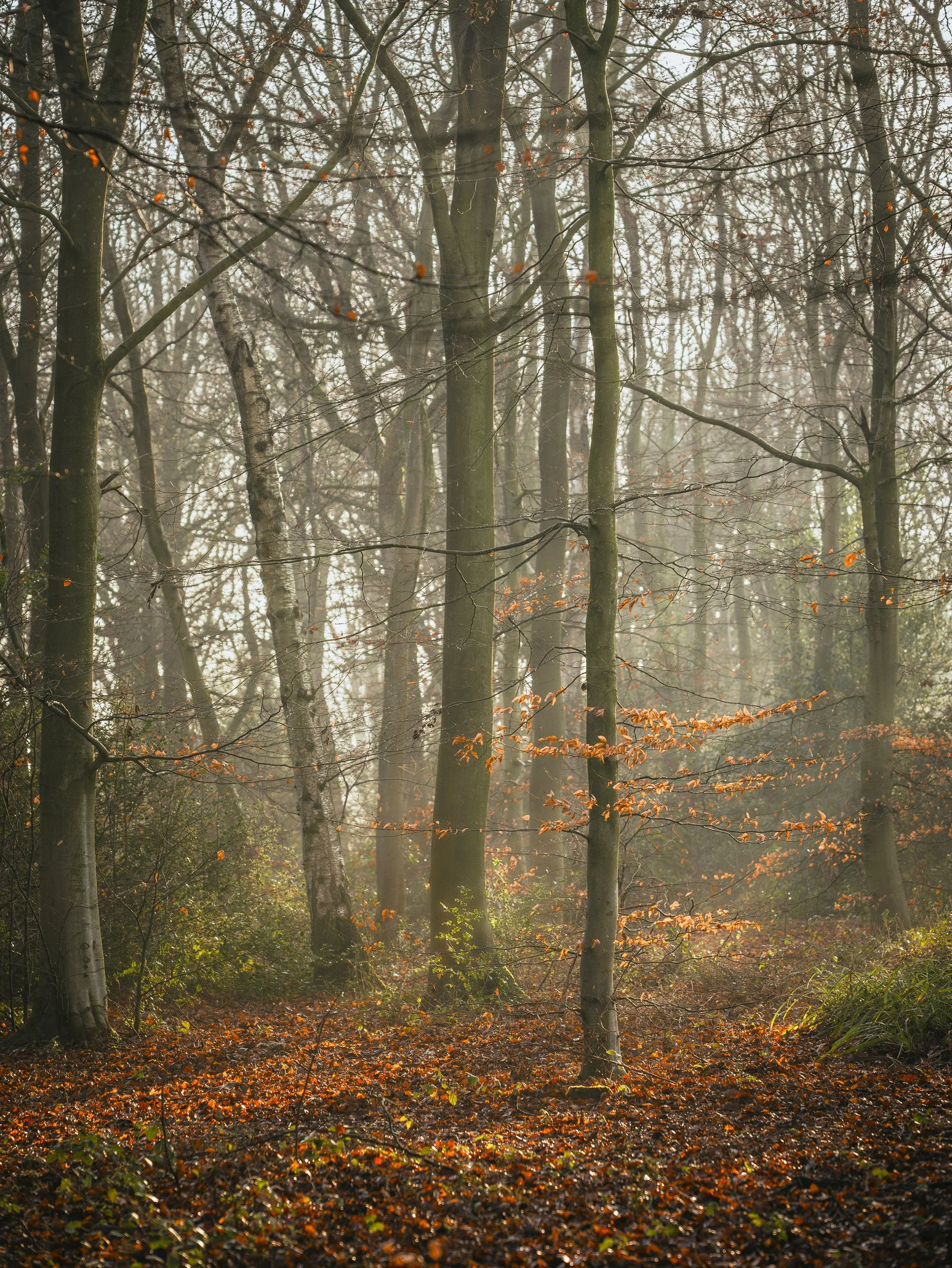
Portrait framing: the leaves remain a small accent; the trunks, mist and shaft of light carry more of the atmosphere.
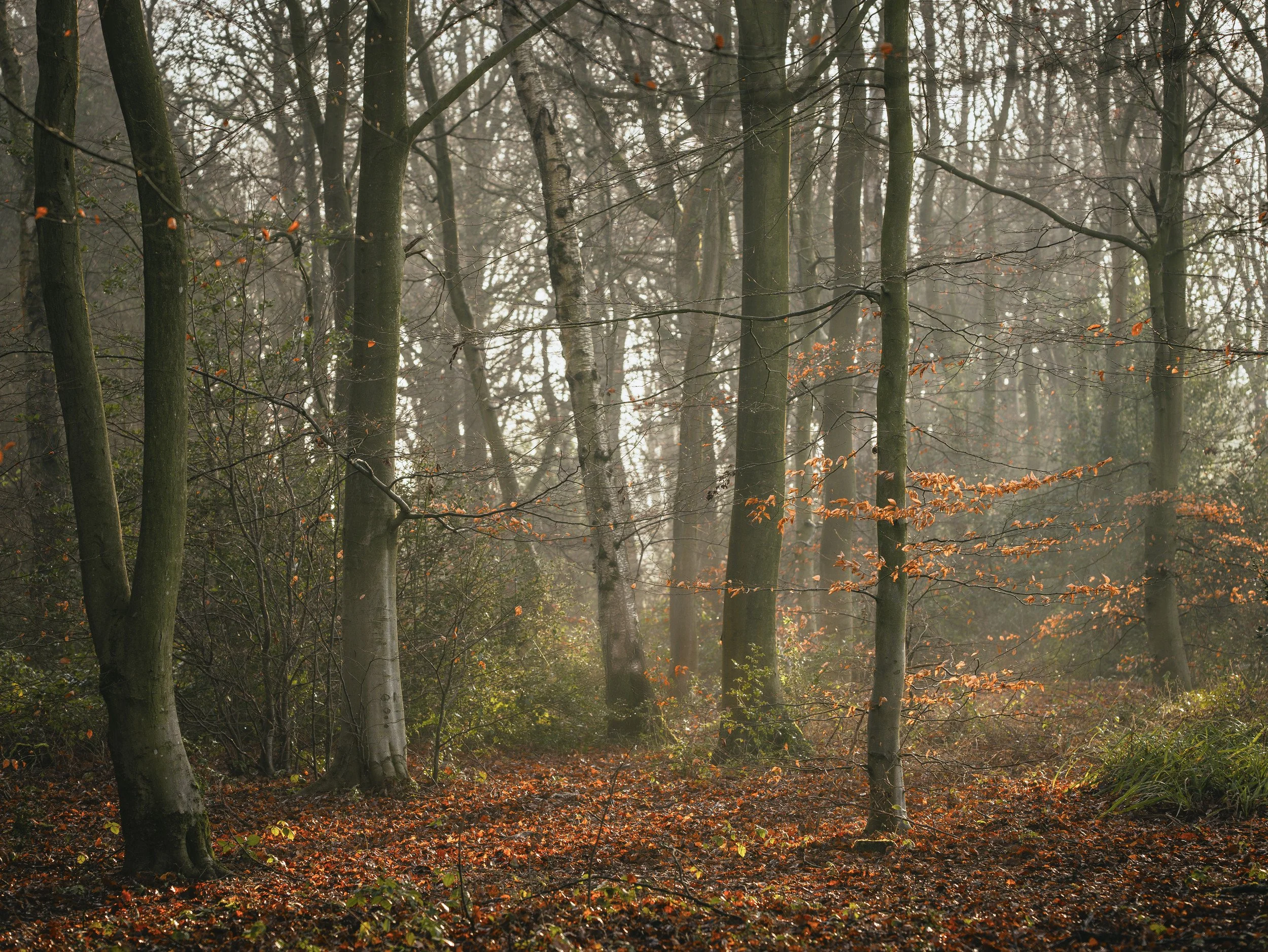
Wider landscape framing: the woodland context and the relationship between light, trunks and leaves become clearer.
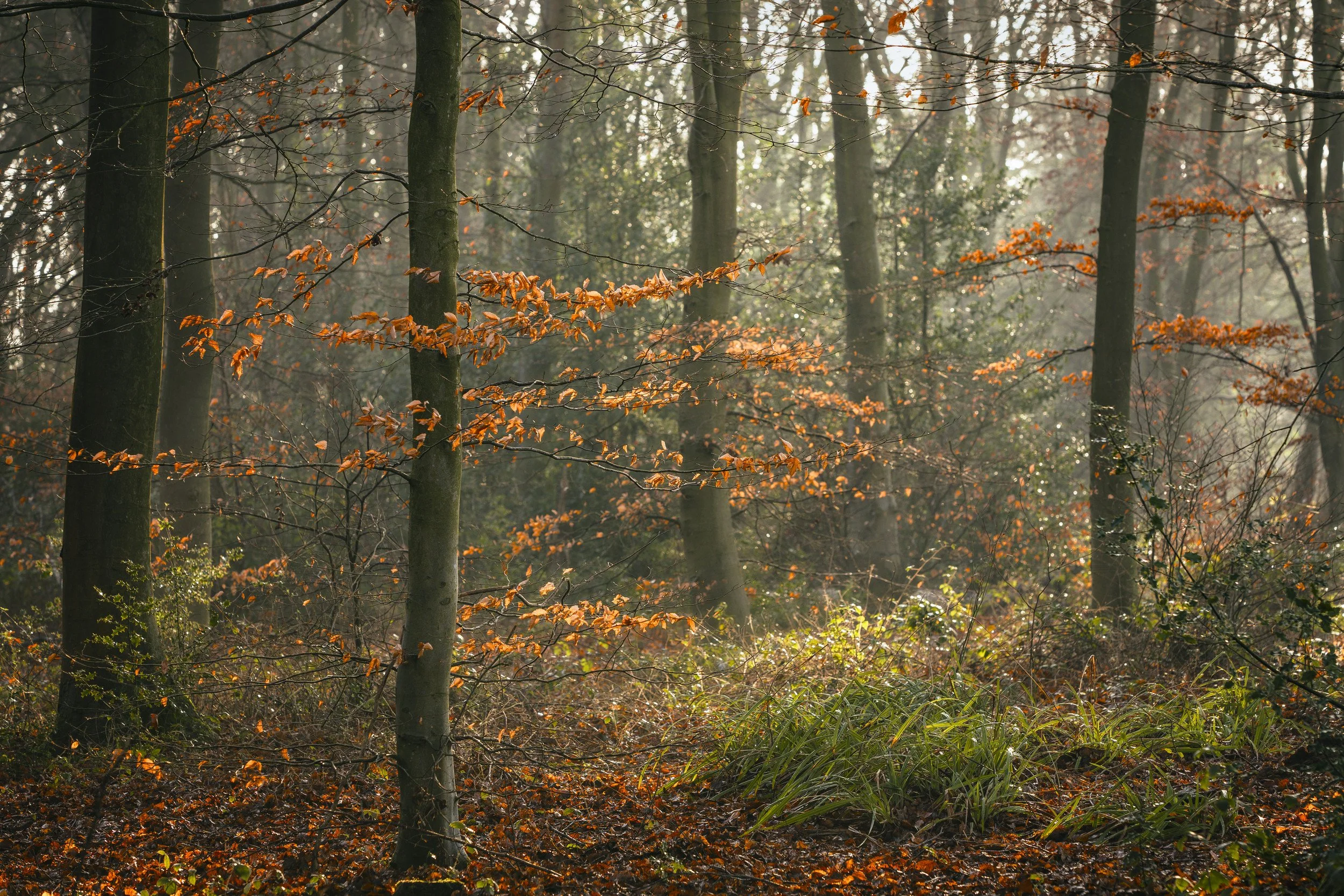
Closer framing: colour and leaf detail become dominant, while some surrounding atmosphere and spatial context are left out.
None is automatically correct. Compare what each version gains and loses, then choose the frame that best preserves what made you stop.
Practice: compare three amounts of space
Notice what attracts you
Choose a scene and identify what attracts you: an object, a gap, a relationship or a feeling.
Make three versions
Use the Hay Wood photographs above as a reference. Make three versions in camera by changing your distance, orientation or viewpoint to create a spacious, intermediate and tighter frame. Keep the attraction itself consistent where practical.
Compare what changes
Compare the photographs together. Notice how the subject’s size, surrounding space, atmosphere and relationships change. Identify which visible difference best explains your response.
Choose and explain
Choose one version and state what you gained and lost. A preference for the spacious image is not required.
Finish these sentences
The space contributes _______.
I prefer this version because _______.
If you compare crops later, remember that cropping can change proportions but cannot recover anything outside the original frame. Use Lesson 34 — Improving Composition to review a proposed change.
Let space earn its place
Negative space can carry scale, stillness, tension or a relationship. Notice its contribution before deciding how much to include. Compare alternatives and keep the version that best preserves what matters.
SEE → FEEL → TECHNIQUE
This is Restraint within the Photography Composition Framework: what can I leave out, and what deserves room to remain? SEE → FEEL → TECHNIQUE connects that question with your choices.
Negative Space FAQs
What is negative space in photography?
Negative space is the quieter area around or between elements that attract attention. It can be sky, water, shadow or a relatively plain surface. Its relationship with other elements can express scale, distance, stillness or tension.
How much negative space should a photograph have?
There is no required percentage. Compare spacious and tighter framings and identify what the space contributes. Keep the amount that supports the feeling or relationship you want the photograph to express.
Does negative space have to be empty or white?
No. It may contain colour, texture or subtle detail. The term describes its relatively quiet role within the image, rather than a requirement for blank white surroundings.
Can negative space be the subject of a photograph?
Yes. A gap, an expanse or a relationship between forms may be the main reason for making the photograph. Space can carry meaning instead of merely supporting a separate object.
Does negative space always create calm?
No. It may suggest peace, isolation, exposure, uncertainty or another response. Subject matter, light and context influence the effect. Judge the actual image rather than assigning a fixed emotion to a spacious frame.
How do I create negative space?
Explore viewpoint, distance and framing to find quieter areas around or between forms. Shadow or selective focus may also reduce detail when useful. Compare what each change adds or removes from the photograph.
Can cropping improve negative space?
Cropping can change the proportion and shape of space already recorded. It cannot add anything beyond the original frame, and it may remove space that carries meaning. Compare the crop with the full photograph before deciding.
How is negative space connected to restraint?
Restraint asks what can be left out. With negative space, that also means recognising which quiet areas deserve to remain. Remove elements when their absence helps, while retaining context or complexity that matters.