
RPS Courses - Mentoring Guidance on gaining a LRPS or ARPS
Build an RPS panel that passes — with a mentor who’s done it
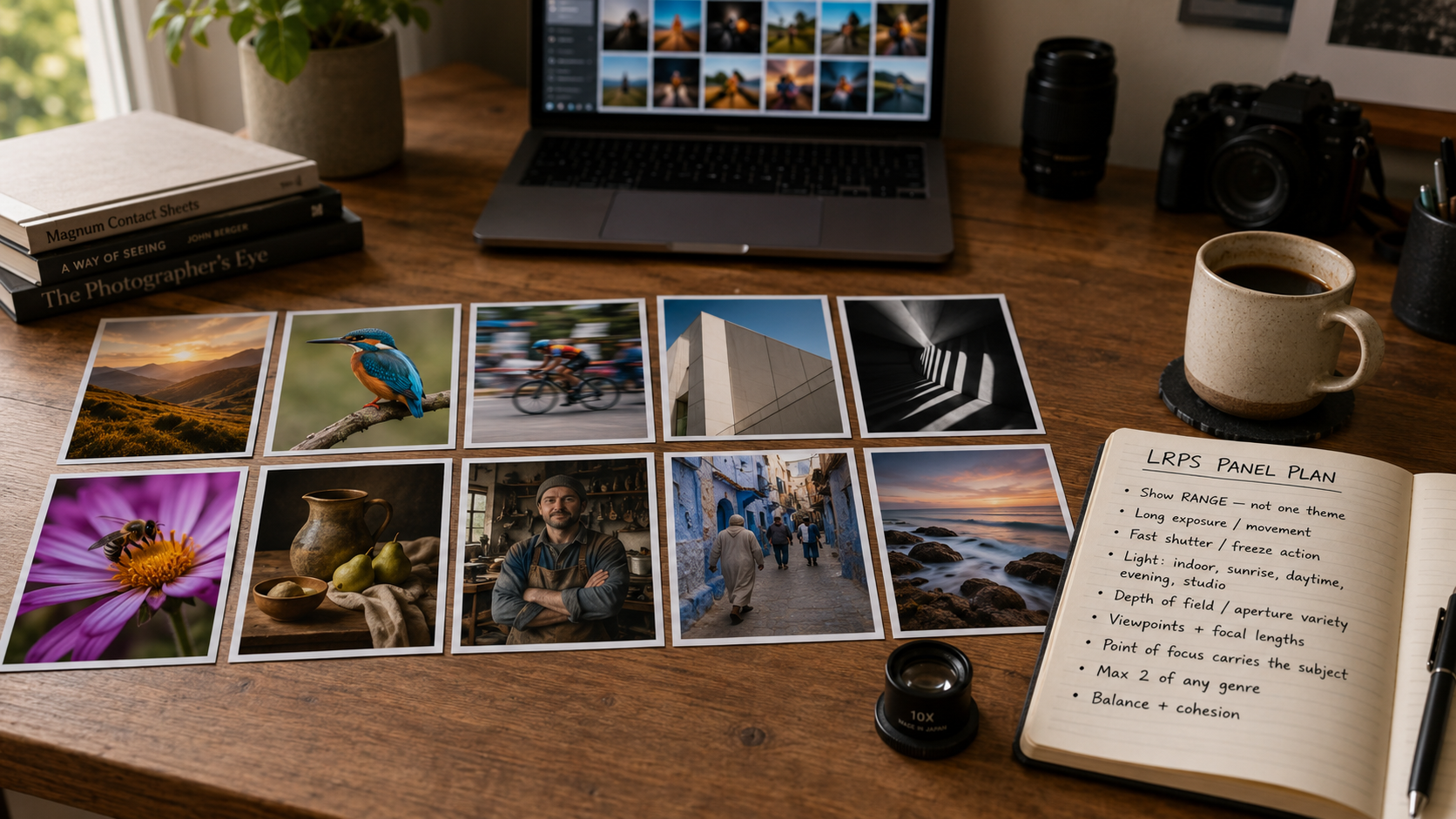
Independent one-to-one and small-group mentoring for your Licentiate (LRPS) or Associate (ARPS) distinction. We plan and build your panel together — image selection, sequencing, the hanging plan and your Statement of Intent.
Online via Zoom, flexible sessions across up to 12 months — start fresh, or revise a panel that didn’t pass first time.
ARPS & LRPS holder · mentored 20+ LRPS & 4 ARPS · see reviews →
Is RPS mentoring right for you?
Wherever you are on your distinction journey, there’s a row here for you.

Why panels pass or fail at the planning stage
Most photographers who fall short don’t fail on technique — they fail because they submitted a collection of strong individual images rather than a planned, cohesive panel. A panel is judged as a whole object.
- LRPS rewards breadth held together by quality — ten images, four criteria, and every image is judged against every criterion.
- ARPS rewards depth and a personal voice within one genre — fifteen images and a Statement of Intent that frames them all.
- Both demand editorial ruthlessness — dropping images you love because the panel is stronger without them.
That judgement — sequencing, balance, the hanging plan, the Statement of Intent — is what mentoring brings, and it’s where panels are won.
How the mentoring works
Plan the panel
Define what the body of work is about, choose images against the criteria, and identify the gaps to shoot deliberately.
Build & refine
Sequencing, the hanging plan, tonal consistency, and an iterative review of your Statement of Intent.
Test & submit
Honest readiness checks before you book your assessment — you submit when the panel is genuinely ready.
Read first — free, in-depth planning guides
What distinction candidates say
★ 800+ verified 5-star reviews · Google & Trustpilot →
“The service and expertise is outstanding. We worked together on my panel for a distinction with the RPS. In all areas — art, craft and science — he is a true expert.”
Peter Orton, ARPS · Google“I recently completed a mentoring course with Alan to prepare a panel of work for my LRPS — and was successful in gaining my LRPS.”
Anne Watkinson, LRPS · Google“Working towards a distinction I found mentoring with Alan extremely helpful. He worked with me at a pace which was just right for me. I thoroughly recommend it.”
Barbara V · Google
Mentoring from someone who holds the distinctions
Alan holds both the LRPS and ARPS himself, and is a BIPP-qualified professional photographer (ABIPP). He has mentored more than 20 Licentiate and 4 Associate candidates — a 100% pass rate to date. The technical floor is rarely the issue. The judgement — what to keep, what to drop, and how the panel reads as a whole — is where mentoring makes the difference.
Real distinction success stories
Case studies from photographers I’ve mentored to their LRPS and ARPS
Independent mentoring — not officially RPS-accredited
This is private mentoring based on my own experience holding both the LRPS and ARPS and guiding others through the process. It is not officially accredited by the Royal Photographic Society. The Society’s own Advisory Days and One2One reviews are excellent and well worth attending alongside — mentoring complements them with sustained, personal support over months rather than a single day.
RPS mentoring packages (Zoom)
Pay once, book your dates later — bundles save up to 25%
| Package | What it’s for | Mon–Fri 9–5 | Mon–Sun 9–9 |
|---|---|---|---|
| Single session — 1 × 1hr | Fact-find & review | £50 | £75 |
| Starter bundle — 4 × 1hr · 15% off | Reset a failed panel | £170 | £255 |
| Improver bundle — 6 × 1hr · 20% off | From scratch (recommended) | £240 | £360 |
| Committed bundle — 8 × 1hr · 25% off | Extended panel build | £300 | £450 |
| Best-value bundle — 12 × 1hr · 25% off | Best value — full programme | £450 | £675 |
Choose your sessions and book your place
RPS Courses - Independant RPS Mentoring for RPS Distinctions - Start anytime, you select a package of Zoom sessions within twelve months at intervals to suit you
Description: Independent one-to-one RPS mentoring for your Licentiate (LRPS) or Associate (ARPS) distinction — online via Zoom, with a mentor who holds both distinctions himself and has a 100% pass rate to date. Most photographers who fall short don't fail on technique — they submit a collection of strong individual images rather than a planned, cohesive panel, and a panel is judged as a whole. That judgement — image selection, sequencing, the hanging plan and your Statement of Intent — is exactly what mentoring brings. We work in three stages: plan the panel, build and refine it, then test readiness before you submit. Sessions are flexible 1-hour Zoom slots — buy only what you need and book your dates later, across up to twelve months. Start fresh, or revise a panel that didn't pass first time.
Format: One-to-one, online via Zoom — private and personal to you and your panel.
Equipment Needed: Zoom App; free Dropbox account for sharing portfolios and updated images.
Terms: A package of Zoom sessions must be used within 12 months of purchase or it is forfeited. You can extend the timeline or purchase additional sessions if needed.
Method: Honest technical and creative critique with suggestions for improvement; advice on image selection, sequencing, the hanging plan and your Statement of Intent.
Package Options: Choose Mon–Fri 9am–5pm daytime rates, or Mon–Sun 9am–9pm for evening and weekend flexibility.
1 × 1hr — single session (fact-find & review)
4 × 1hr — 15% off (reset a failed panel)
6 × 1hr — 20% off (from scratch, recommended)
8 × 1hr — 25% off (extended panel build)
12 × 1hr — 25% off (best value, full programme)
More Details: about the RPS Mentoring Course
RPS distinctions mentoring — FAQs
Is this mentoring officially accredited by the RPS?
No. This is independent, private mentoring based on Alan’s own experience holding both the LRPS and ARPS and guiding others through the process. It isn’t officially accredited by the Royal Photographic Society, and it works well alongside the Society’s own Advisory Days and One2One reviews.
How many sessions will I need?
It depends on where you’re starting. Most photographers beginning a panel from scratch take a block of around six one-hour sessions across their twelve months. Those revising a panel that didn’t pass often need just three or four. You can always add more single sessions as you go.
I failed my panel — can you help me revise and resubmit?
Yes, and it’s very common. We work from the assessors’ feedback to rebuild the panel — reviewing what to keep, what to drop, the sequencing and the Statement of Intent. The case study on this page is exactly that: a failed ARPS panel rebuilt into a pass.
Is it one-to-one or in a group?
Both are available. You can work one-to-one, or in a small group of up to three. All sessions are online via Zoom.
What’s your pass rate?
To date, 100% — across more than 20 Licentiate and 4 Associate candidates mentored to a successful distinction. No mentor can guarantee a result, but the planning-led approach is built around what assessors actually look for.
What software and equipment do I need?
Just Zoom for the sessions and Dropbox for sharing your images and updated panels between meetings. Both are free to use, and Alan will explain how to set them up if you’re not familiar with them.
Can I take it for both the LRPS and the ARPS?
Yes. Many photographers work towards the Licentiate first and then return to step up to the Associate, which is a different kind of challenge — a single genre with a personal voice and a Statement of Intent. The mentoring covers both.
How long do I have to use my sessions?
Sessions are valid for twelve months from purchase. If you need longer — panels often develop over a year or more — the timeline can be extended and unused sessions retained, so nothing is lost.
Do I need to be an RPS member?
You don’t need to be a member to start mentoring, but you will need to be a member of the Royal Photographic Society to apply for a distinction with them. It’s worth joining early so you have access to their own resources too.
Do you guarantee I’ll pass?
No honest mentor can guarantee an assessment result — the decision rests with the RPS assessors. What the mentoring does is prepare your panel as thoroughly as possible against the published criteria, and the track record to date is a 100% pass rate.
Ready to build a panel that passes?
Whether you’re starting your Licentiate, stepping up to the Associate, or rebuilding a panel that didn’t pass first time, structured mentoring turns a strong portfolio into a successful panel. Read the planning guides above, then choose the sessions that suit where you are — and we’ll plan, build and test your panel together, online and at your own pace.
See sessions & bookNew to it? Start with the LRPS and ARPS planning guides, or take general monthly mentoring first.