
Why YouTube Photography Tutorials Can't Replace Teaching
Updated 14 Oct 2026
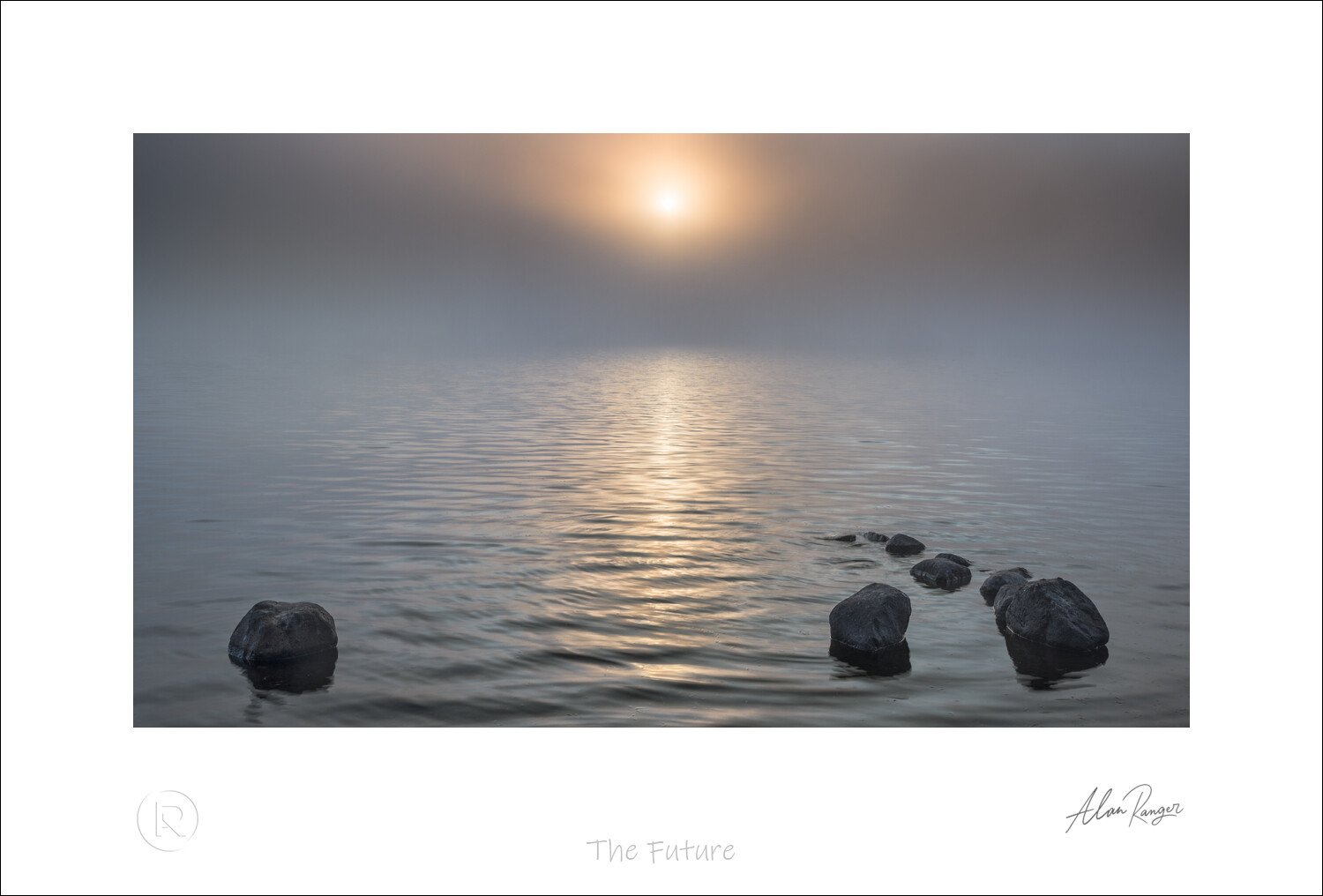
Table of Contents Show
A thousand tutorials — and still no photographs you love.
I meet this photographer almost every week. They arrive on a workshop with decent kit and a genuinely impressive technical vocabulary. They can explain back-button focus. They know what focal-length compression does, what the histogram is telling them, why the algorithm has decided they need a 35mm prime next. They have watched hundreds of hours of photography YouTube — some of it excellent, most of it free, all of it consumed in good faith.
And when I ask to see a photograph they love, they go quiet.
Last month I argued that most photography teaching has it backwards — that we teach the camera before we teach seeing. Consider this the next chapter: a closer look at where most of that teaching now actually happens.
The diagnosis
How YouTube photography teaching leaves you stuck
Because this isn't their fault. And — this may surprise you — it isn't really YouTube's fault either. There has never been a better library of photographic technique than the one sitting in everyone's pocket.
The fault is in what we've quietly allowed the library to become: not a resource we use, but a course we believe we're on.
YouTube is an ingredient, not a curriculum.
The difference matters more than it sounds. A curriculum — any real structure for learning, whether it's an apprenticeship, an evening class, a mentor, or a well-built course — does several things that a pile of videos cannot, no matter how good the videos are.
The gap
Five things YouTube photography can't give you
1. No sequence
The algorithm doesn't serve you what you need next; it serves you what keeps you watching. Those aren't the same thing, and they're sometimes opposites. Learning needs ordering — this before that, foundations before refinements — and the recommendation engine is structurally incapable of providing it, because it doesn't know what you can already do. It only knows what you clicked.
2. No feedback
This is the heart of it. A tutorial with ten million views contains not one second of footage of your photographs. The presenter cannot look at the frame you made yesterday and ask the only question that matters: what were you trying to say? They can't see that your horizons lean, that your edges are cluttered, that the picture you're proudest of has a lamppost growing out of your subject's head. Watching someone correct their work teaches you remarkably little about correcting yours.
3. No test
Here's the trap nobody warns you about: understanding a video and being able to do the thing are two different achievements — and they feel identical from the sofa. You watch a video on metering a backlit scene, follow every word, and come away with the warm sense of having learned. Whether you actually have only reveals itself on a hillside, against a real backlit scene, with no pause button. Educationalists call the missing piece retrieval: knowledge isn't yours until you've had to produce it, not merely recognise it. A pile of watched videos contains no gates. Nothing ever asks you to prove it.
4. No progression
No "you are here". No "do this next". Just an infinite buffet and a creeping, unspecific sense that you ought to be better by now. I suspect this — more than any gap in knowledge — is what wears people down. They aren't short of information. They're short of a map.
5. No "why"
A quieter fifth absence. Look at what the library actually stocks: it is overwhelmingly a library of technique. The how. Settings, gear, recipes, edits. Almost none of it is about seeing — and not because the platform is hostile to artistry, but because artistry demonstrates badly on camera. A histogram makes a good thumbnail; patience doesn't.
The counter-argument
This isn't anti-YouTube
If you've read this far and concluded I'm telling you to cancel your subscriptions, you've misread me — and you'd be entitled to point out the hypocrisy, because I use YouTube myself. There are creators on that platform who explain technique with a clarity most institutions never managed — free, to anyone, anywhere. A generation has learned more about the mechanics of photography from YouTube than from every camera manual ever printed. That isn't nothing. That's extraordinary.
The video sits inside a sequence, in a module on a topic, with a short exam at the end and a "do next" waiting after it — so progress is something you can see rather than something you have to feel. And I'm not claiming mine is the only structure that works. An evening class is a structure. A mentor is a structure. A camera club with honest critique is a structure.
The point isn't my structure versus the algorithm. The point is that you can't learn photography from YouTube alone — because alone is precisely the condition YouTube leaves you in.
A video, used right
Here's one of mine
The practice
What this looks like on a Tuesday
If you want to turn passive watching into actual learning this week, try this.
- Before you press play on the next tutorial, write one sentence: the thing you currently can't do. Not "improve my landscapes" — something testable. "I can't hold detail in a bright sky."
- Then watch. Pay attention to the one thing you came for.
- Within forty-eight hours, while it's still warm, go and attempt that exact thing on a real subject.
- Judge the result against your sentence. Did it work?
You've just built the gate the platform never will: a sequence (chosen by your gap, not the algorithm), a test (did it work?), and feedback (the photograph in front of you, telling the truth). One video used this way is worth twenty consumed from the sofa.
A video is a photography lesson. It is not a photography education.
The first is everywhere, brilliant and free. The second you'll have to build — and the day you start building it, all those tutorials suddenly become useful, because at last they have somewhere to go.
Where to go next
Build the structure the algorithm won't
If this piece has landed, three ways to put a structure around the videos you already watch:
- The free Academy foundation course is YouTube photography embedded in sequence — modules in order, exams between them, a map that shows where you are.
- My landscape workshops are feedback in the field — someone standing next to you looking at the frame you just made.
- One-to-one tuition is the fastest fix for the "no feedback" problem: a mentor who can see your photographs.
Previous issue: Why most photography teaching has it backwards — the argument this piece builds on.
About the image
The Future — Bassenthwaite Lake, September
The month fog earns its keep. Ten minutes before this frame the morning was clear; then the fog rolled down off the fell, the temperature dropped, and the spectacular sky everyone had come for was cancelled. That's the moment most photographers pack up.
The picture was made by changing the plan instead: turning to face the low sun, finding the rocks for a foreground, and standing exactly where the diffused reflection would fall between them. No fiery sky — just the sun, the fog and the water doing all the light-painting needed, for anyone still there to watch.
No tutorial covers the ten minutes after the forecast fails. That's rather the point.