
Simplifying Your Photography Composition: The Art Of Less
Updated 14 Oct 2026
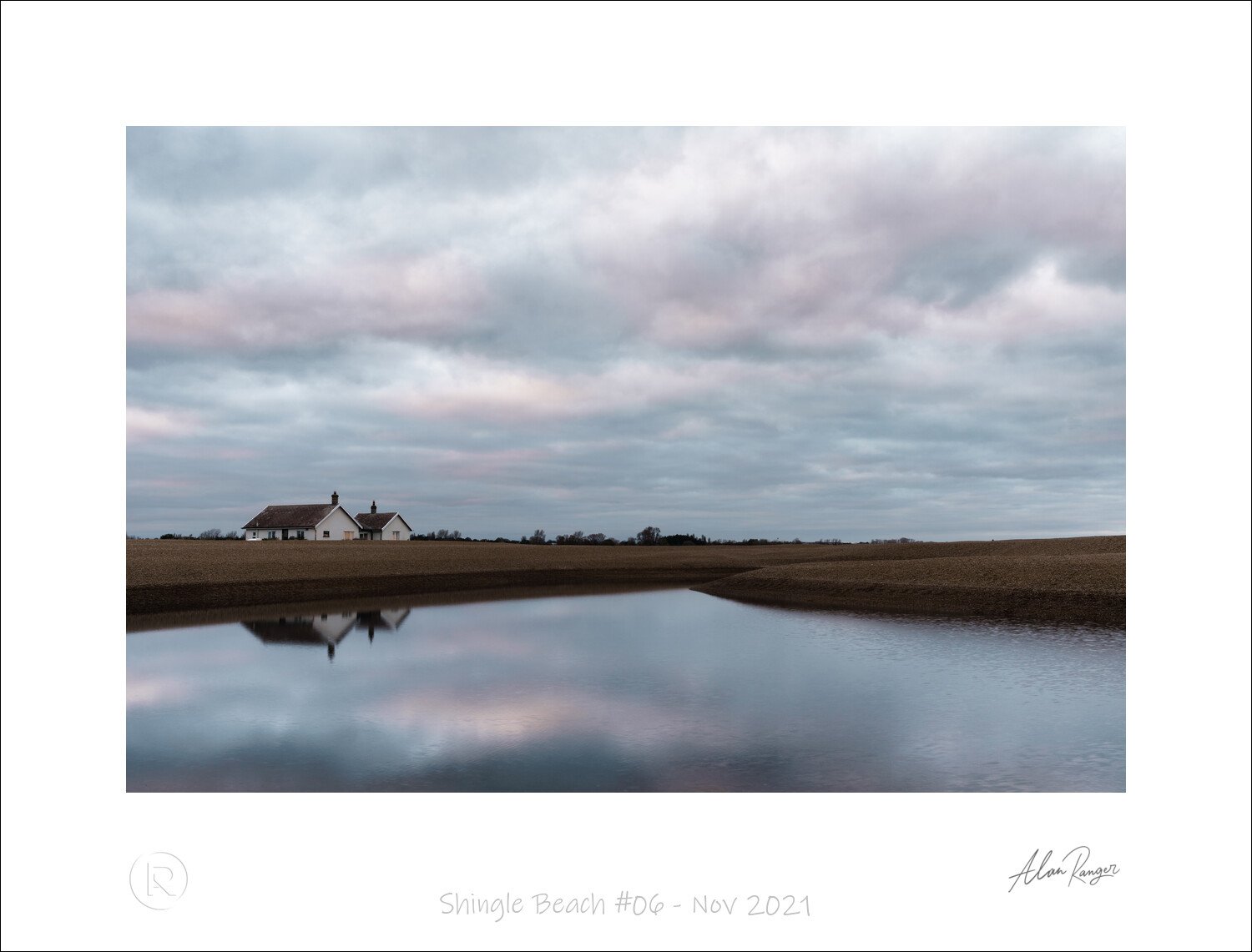
Table of Contents Show
There's a story that Solala Towler tells in Tales from the TAO, and I've never forgotten it.
An emperor asks his court philosophers to demonstrate their wisdom by painting a mural. The Confucians — organised, precise, learned — spend weeks producing a marvel: the city, the palace, the emperor astride his horse leading his troops to victory. Every detail exquisite.
The Taoists, curtained off on the opposite wall, order wine and soft cloths. Day after day, they drink and polish. They polish the wall. That is all.
When the emperor comes to judge, he stands before the Confucian masterpiece for a long time. It is, he agrees, wondrous. Then he crosses to the Taoist wall — and finds it blank. He is furious. "Is this how you view me?"
"Please," says the oldest Taoist, "draw the curtain aside."
The emperor does. And there, on the polished wall, is the Confucian mural — reflected. But not exactly. The river moves. The birds fly. The horse's nostrils quiver. The emperor sees himself, alive.
"How?" the emperor asks.
"It is actually in not-doing that we achieved this wondrous thing. All we did was create the space for the painting to happen. And it painted itself."— The Taoists, as told in Tales from the TAO
"We call it Wu Wei."
In moving pictures
The parable, in two minutes
 Watch · 2 min
Wu Wei, inside the frame
Simplifying your photography composition: a love of emptiness
I've been thinking about that story for a long time, because it names something I recognise in photography but couldn't quite articulate.
Wu Wei is the way of not-doing that creates the space for the thing to happen. It isn't laziness. It isn't passivity. It's the discipline of stepping back so that the picture can arrive on its own terms rather than the ones you tried to force.
In photography, Wu Wei shows up in three places — before the frame, inside the frame, and after the frame. Today I want to talk about just one of them. The one inside the frame. The one that most photography composition teaching pretends doesn't exist.
I'm talking about emptiness.
The training we all had
Every composition lesson is about what to put in
Almost every photography composition lesson you've ever read has been about what to include. Rule of thirds — put the important thing on the third. Leading lines — direct the eye toward the subject. Foreground interest — add a rock, a fence, a curve. Frame within a frame. Golden triangles. Fill the frame.
There is nothing wrong with any of these techniques. They are useful, and I teach them.
They all answer the question "what should I put in?" — and none of them ask the harder one: "what should I take out?"
What emptiness does
Three things that happen when you put less in
I have a series I've been quietly working on for the last few years called Ma — a Japanese aesthetic term I've translated for myself as Amor Vacuii, "a love of emptiness."
It is, to be clear, not a love of the void. It is a love of space. Space that isn't decoration or accident, but chosen. Deliberate. The photographic equivalent of a well-placed silence in music.
When you put less in a frame, three things happen.
- What remains matters more. A single tree in an empty field carries a weight the same tree can never carry in a busy scene. Not because the tree changed — because the surrounding silence gave it room to be heard.
- The viewer has to arrive at it. A photograph with a hundred things in it tells the viewer what to look at. A photograph with one thing gives the viewer time — and the picture becomes theirs, not just yours. You are handing them the space to feel, not filling their eyes with your decisions.
- The feeling comes forward. Stillness. Solitude. Longing. Whatever the picture is about emotionally — emptiness lets it breathe. Density crowds feeling out.
Why we resist it
Because it's frightening
An empty frame feels lazy. It looks like you couldn't be bothered. It looks like you forgot to include something. Every voice in your training whispers "you need more foreground — you need a rock or a bird or a stronger diagonal — it's too bare."
But that voice is the voice of the Confucians, not the Taoists. It is the voice that says the more effort I put in, the better the picture must be. It's a voice earned by hard work, and I understand it — I spent years listening to it.
And the older I get, the more I realise that the photographs I return to — mine and other people's — aren't the ones that were filled. They're the ones that were emptied.
The practice
What this looks like on a Tuesday
Next time you're composing a landscape, try this.
- Frame the shot as you normally would.
- Before you press the shutter, take three steps back, or push the zoom out, or move the horizon down.
- Ask yourself what you could remove. What piece of "foreground interest" is really just there because your training told you to add it? What "leading line" would the picture actually be stronger without? What silence is being drowned out by your effort?
- Make the photograph with less in it.
You will feel resistance. You will feel like you're doing it wrong. That's the point.
The Taoists were told, again and again, that they weren't painting. They were.
What's coming
The Wu Wei arc continues
Emptiness inside the frame is one Wu Wei practice. Two more are coming.
There is a stillness that comes before the frame — a way of seeing that most photographers skip past in the rush to shoot. Watching before making. Waiting for the picture to arrive. Not-doing until doing is called for.
And there is a restraint that comes after the frame — a discipline of leaving well alone in the darkroom. Knowing when the picture is finished. Not-adjusting when adjusting would only add.
Both are for other months.
For today: try leaving something out. You may find your best photograph of the year has less in it than the ones you're currently proud of.
Where to go next
Practise the discipline of less
If this piece has landed, three places to put the "less, not more" practice to work:
- The free Academy foundation course teaches the Composition Framework — Intention, Restraint, Observation, Judgement — with Restraint doing exactly the work this piece describes.
- My landscape workshops are where you practise simplifying in the field, with someone standing next to you to push back when you reach for the extra rock.
- One-to-one tuition is where we work on your actual photographs — what you've put in, and what's getting in their way.
Previous issue: Why YouTube can't teach you photography — the gap this piece fills in.
About the image
Shingle Beach, Suffolk — November 2021
From my Ma — Amor Vacuii series. "Ma" is the Japanese concept of negative space — the meaningful pause, the room to breathe. "Amor Vacuii" is Latin for a love of emptiness, the deliberate opposite of horror vacui: the artist's instinct to fill every square inch.
This photograph is what happens when you stop trying to fill the frame and let the space be the subject.