
The History of Photography - Origin of Photography to Today
Updated 15 Oct 2026
Table of Contents Show
Photography through time
Introduction
The History of Photography: A Journey Through Time
Photography has transformed the way we see and document the world. From early light projections to the digital revolution, the history of photography showcases human ingenuity and artistic expression. Understanding its evolution offers insight into the technology shaping modern imaging.
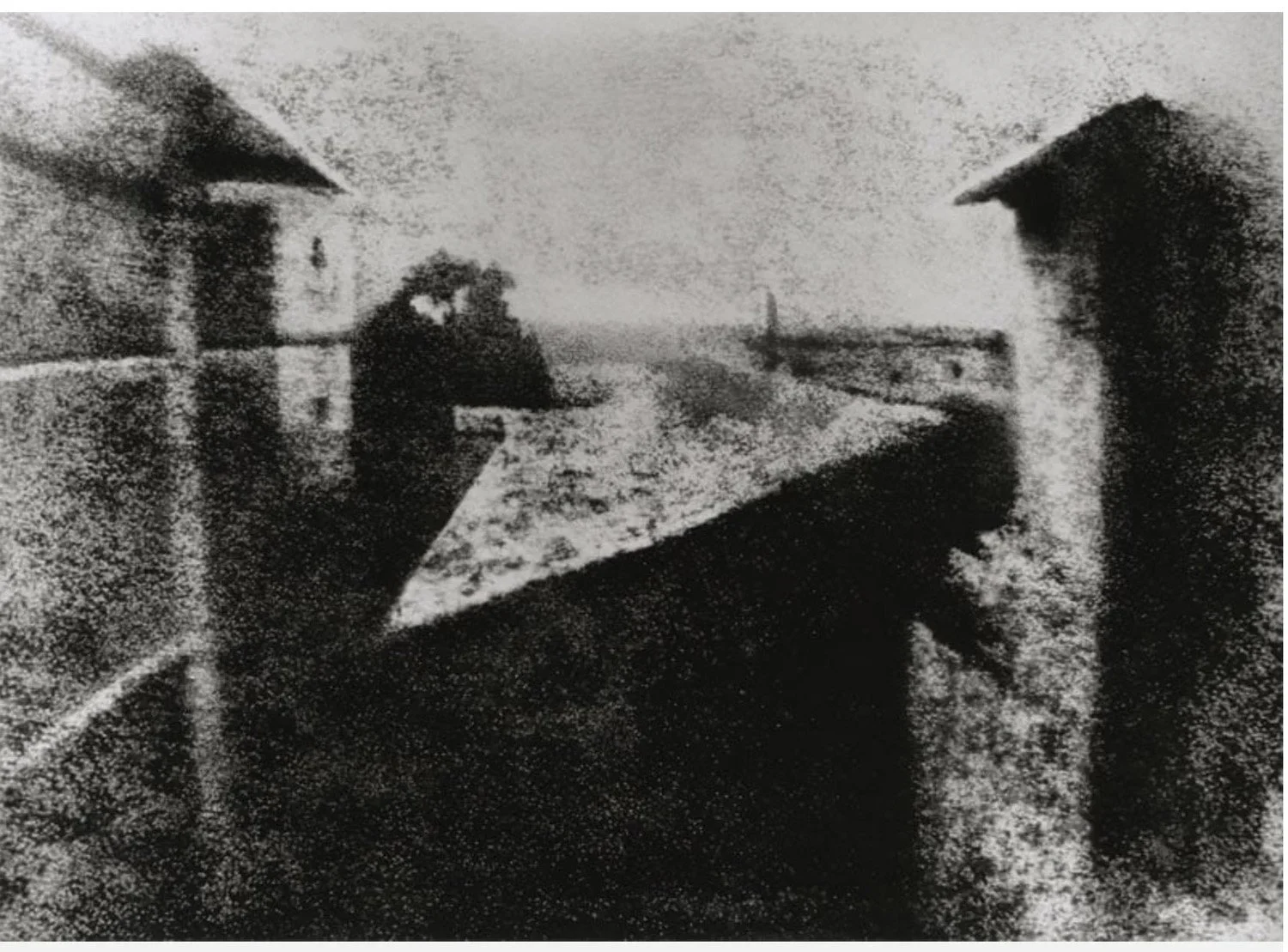
The Birth of Photography: The camera obscura was known in antiquity and later used by artists to study and draw scenes. In the 1820s, Joseph Nicéphore Niépce made the earliest surviving permanent camera photograph using a light-sensitive bitumen coating. Daguerre’s process was announced in 1839; Talbot’s calotype, patented in 1841, made multiple prints from a paper negative possible.
Technological Advances: Archer’s wet collodion process (1851) produced detailed negatives but had to be prepared and developed while wet. Eastman’s Kodak camera (1888) brought simple roll-film photography to more people. The Leica I helped popularise 35mm cameras in 1925; Kodachrome followed in 1935. Polaroid demonstrated instant photography in 1947 and sold its first Land Camera in 1948.
The Digital Age and AI: Kodak engineer Steven Sasson built a digital camera prototype in 1975. Digital cameras later became widely used, followed by camera phones and smartphones. Computational photography combines or processes multiple captures; generative AI can also create images that were never photographed. These are related technologies, but they are not the same thing.
Why Photography’s History Matters: Each milestone changed how images could be made, copied, shared or interpreted. Understanding that history helps us see what technology contributes—and what still depends on the photographer’s choices.
Want to put what you have learned into practice? The free Photography Academy offers structured lessons, practical assignments and tests to help you build your skills with the camera you already own.
Start the free Academy courseTable of Contents
- Timeline of the History of Photography
- Pre-19th Century: The Foundations
- 19th Century: The Birth of Photography
- 20th Century: The Rise of Modern Photography
- 21st Century: The Digital Revolution & AI Photography
- Summary
Timeline of the History of Photography: From Invention to Present Day
All 25 timeline stages
- Classical Antiquity – Early Observations of Light
- 16th Century – Camera Obscura Used in Drawing
- 1826–1827 – The Earliest Surviving Photograph
- 1839 – Daguerreotype: A New Level of Detail
- 1841 – Calotype: The Birth of Negatives
- 1851 – Wet Plate Collodion: A Leap in Sharpness
- 1888 – Kodak’s Roll Film Revolution
- 1895 – Röntgen’s Discovery of X-rays
- 1907 – Autochrome Lumière: An Early Commercial Colour Process
- 1925 – The Leica I: Pioneering 35mm Photography
- 1935 – Kodachrome: The First Widely Available Colour Film
- 1947–1948 – Polaroid Instant Photography
- 1957 – Russell Kirsch’s First Digital Image
- 1963 – Kodak Instamatic: Simplicity for the Masses
- 1975 – The First Digital Camera: A New Era Begins
- 1981 – Sony Mavica: An Electronic Still-Camera Prototype
- 1987 – Canon EOS: Autofocus Reinvented
- 1991 – Kodak DCS 100: A Landmark Professional Digital Camera
- 2000 – Early Camera Phones
- 2000s – Digital Cameras Overtake Film
- 2007 – The iPhone: A Pocket Camera Revolution
- 2011–2012 – Mirrorless Cameras Gain Ground
- 2013–2017 – Computational Photography Advances
- 2022–Present – Generative AI and Synthetic Images
- 2024–Present – Computational Photography and Camera Choice
Pre-19th Century: The Foundations
01 · Pre-19th century photography
Classical Antiquity – Early Observations of Light
Writers in ancient Greece and China described the way light passing through a small opening could form an image. Centuries later, the camera obscura became a practical optical device for projecting a scene. It could display an image, but could not preserve it as a photograph.

What changed — and what came next?
01Why did this matter?
A projected image could be studied, but not kept.
02How was it used, and what did it make possible?
The camera obscura helped artists and observers inspect a scene.
03What pushed photography forward next?
The next step was to use projection as a practical drawing aid.
02 · Pre-19th century photography
16th Century – Camera Obscura Used in Drawing
16th Century – Camera obscura projections were used as aids for drawing and studying perspective.
By the 16th century, camera obscura devices were being described as aids for drawing. They projected a scene onto a surface, where an artist could study or trace its forms. The projection itself was temporary; it did not record a photograph.

What changed — and what came next?
01Why did this matter?
The camera obscura turned an optical effect into a working tool.
02How was it used, and what did it make possible?
Artists used the projection to study form and perspective.
03What pushed photography forward next?
The remaining problem was preserving the projected image.
19th Century: The Birth of Photography
03 · 19th century photography
1826–1827 – The Earliest Surviving Photograph
1826–1827 – Joseph Nicéphore Niépce creates the first permanent photograph, "View from the Window at Le Gras," using a process called heliography with a bitumen-coated plate.
Niépce’s View from the Window at Le Gras, made around 1826–1827, is the earliest surviving photograph made with a camera. He used a light-sensitive bitumen coating on a metal plate and a very long exposure. The image is faint and difficult to interpret, but it permanently recorded a view.

What changed — and what came next?
01Why did this matter?
Niépce proved that a camera could make a lasting record.
02How was it used, and what did it make possible?
Heliography exposed a bitumen-coated plate for many hours.
03What pushed photography forward next?
The next processes sought clearer detail and more usable photographs.
04 · 19th century photography
1839 – Daguerreotype: A New Level of Detail
1839 – Daguerre’s photographic process was publicly announced in France. It produced a detailed, one-of-a-kind image on a silver-coated copper plate.
1839 – Sir John Herschel used the English word “photography” in a paper presented to the Royal Society. Hercules Florence had recorded the related term “photographie” in 1833, so Herschel should not be credited as its sole originator.
Daguerre’s process was announced publicly in 1839. A daguerreotype was a unique image on a silver-coated copper plate, not a negative from which prints could be made. It could show exceptionally fine detail, though the image needed careful viewing and protection.

What changed — and what came next?
01Why did this matter?
Photography became public and could show remarkable detail.
02How was it used, and what did it make possible?
Photographers made portraits on unique polished plates.
03What pushed photography forward next?
The need for repeatable copies encouraged negative-positive methods.
05 · 19th century photography
1841 – Calotype: The Birth of Negatives
1841 – William Henry Fox Talbot patents the calotype, an early paper-based negative-positive process, allowing multiple prints.
Talbot’s calotype used a paper negative to make multiple positive prints. Its images were generally less sharply defined than daguerreotypes, but the negative-positive method became a foundation for later photographic printing.

What changed — and what came next?
01Why did this matter?
One negative could produce multiple positive prints.
02How was it used, and what did it make possible?
Talbot used paper negatives to make repeatable copies.
03What pushed photography forward next?
The search for sharper detail led to glass-plate processes.
06 · 19th century photography
1851 – Wet Plate Collodion: A Leap in Sharpness
1851 – Frederick Scott Archer develops the collodion wet plate process, dramatically reducing exposure times and improving image sharpness.
Frederick Scott Archer published the wet collodion process in 1851. It could produce detailed glass-plate negatives and shorter exposures than earlier paper-negative methods, but each plate had to be coated, exposed and developed before it dried.

What changed — and what came next?
01Why did this matter?
Glass negatives improved detail and shortened exposures.
02How was it used, and what did it make possible?
Each plate had to be prepared, exposed and developed while wet.
03What pushed photography forward next?
The burden of wet plates created demand for easier roll-film cameras.
07 · 19th century photography
1888 – Kodak’s Roll Film Revolution
1888 – George Eastman introduces the Kodak camera, revolutionizing photography with roll film and the slogan “You press the button, we do the rest.”
Eastman’s Kodak camera, launched in 1888, came preloaded with roll film. Customers returned the camera to Kodak for processing and reloading, making photography simpler for non-specialists. The key change was access and convenience, not a direct image-quality comparison with later compact cameras.

What changed — and what came next?
01Why did this matter?
Roll film and processing services widened access to photography.
02How was it used, and what did it make possible?
Customers returned the camera to Kodak for processing and reloading.
03What pushed photography forward next?
X-ray imaging showed photography could record beyond visible light.
08 · 19th century photography
1895 – Röntgen’s Discovery of X-rays
1895 – Wilhelm Conrad Röntgen discovered X-rays and demonstrated their use for imaging structures inside the body.
In 1895, Wilhelm Conrad Röntgen discovered X-rays and made radiographs that showed structures hidden beneath the skin. His image of his wife’s hand became an early, famous demonstration. X-ray imaging expanded photography’s use beyond visible light into medicine and science.

What changed — and what came next?
01Why did this matter?
Radiography extended image-making into medicine and science.
02How was it used, and what did it make possible?
X-rays revealed structures hidden beneath the skin.
03What pushed photography forward next?
Commercial colour processes changed what photographs could show.
09 · 19th century photography
1907 – Autochrome Lumière: An Early Commercial Colour Process
1907 – The Lumière brothers introduced Autochrome, one of the first commercially available colour photographic processes.
Autochrome made colour photographs by using microscopic dyed starch grains on a glass plate. It produced distinctive, often soft-looking transparencies and was an important early commercial colour process; it was not the first attempt to make colour photographs.

What changed — and what came next?
01Why did this matter?
Autochrome brought colour photography into commercial use.
02How was it used, and what did it make possible?
Photographers recorded colour on glass plates using dyed starch grains.
03What pushed photography forward next?
The next major shift made cameras more portable.
20th Century: The Rise of Modern Photography
10 · 20th century photography
1925 – The Leica I: Pioneering 35mm Photography
1913 – Oskar Barnack built an early 35mm Leica prototype. 1925 – The Leica I went on sale, helping popularise compact 35mm photography; Leica did not invent the 35mm format.
The Leica I, introduced in 1925, helped establish the compact 35mm camera as a practical tool. Its small negative required precise lenses and enlargement, and its influence came from portability and a usable system—not from replacing every larger-format camera.

What changed — and what came next?
01Why did this matter?
A compact 35mm camera made photography easier to carry.
02How was it used, and what did it make possible?
Photographers exposed a small negative and enlarged it later.
03What pushed photography forward next?
Colour film made colour photography more practical.
11 · 20th century photography
1935 – Kodachrome: The First Widely Available Colour Film
1935 – Kodachrome, an influential colour reversal film, was introduced.
Introduced in 1935, Kodachrome was an important colour reversal film known for rich colour and fine detail when properly exposed and processed. It was one of several developments that made colour photography more practical.

What changed — and what came next?
01Why did this matter?
Colour reversal film produced vivid transparencies.
02How was it used, and what did it make possible?
Kodachrome depended on careful exposure and processing.
03What pushed photography forward next?
Instant photography promised a finished print without a lab wait.
12 · 20th century photography
1947–1948 – Polaroid Instant Photography
1947 – Edwin Land demonstrated the Polaroid instant-picture process. The first Polaroid Land Camera went on sale in 1948.
Land’s system produced a finished photograph within minutes, without sending film away for processing. Early models used a peel-apart process; later instant films integrated the image and processing materials. It made immediate prints practical, rather than matching the quality or process of an inkjet print.

What changed — and what came next?
01Why did this matter?
A finished photograph could be available within minutes.
02How was it used, and what did it make possible?
Early Polaroid cameras used peel-apart materials; later films integrated the process.
03What pushed photography forward next?
Computers would soon store photographic information as digital data.
13 · 20th century photography
1957 – Russell Kirsch’s First Digital Image
1957 – Russell Kirsch’s team scanned a photograph into a computer, producing an early digital image.
Kirsch’s 1957 scan measured 176 × 176 pixels. It was a digital image made by scanning a photograph, not a photograph captured by a digital camera. The distinction matters: digital capture came later.

What changed — and what came next?
01Why did this matter?
A scanned photograph could be represented as pixels.
02How was it used, and what did it make possible?
Kirsch’s team digitised a physical image; this was not camera capture.
03What pushed photography forward next?
Camera makers made film cameras simpler for a mass audience.
14 · 20th century photography
1963 – Kodak Instamatic: Simplicity for the Masses
1963 – Kodak introduces Instamatic cameras, making photography accessible to a mass audience.
Introduced in 1963, Kodak’s Instamatic cameras used easy-to-load film cartridges and simple controls. They helped make casual photography more convenient; the comparison with smartphone cameras is about ease of use, not equivalent technology or image quality.

What changed — and what came next?
01Why did this matter?
Easy loading and simple controls widened casual photography.
02How was it used, and what did it make possible?
Instamatic cartridges removed the need to handle loose film.
03What pushed photography forward next?
Digital sensors would replace film as the recording medium.
15 · 20th century photography
1975 – The First Digital Camera: A New Era Begins
1975 – Steven Sasson at Kodak invents the first digital camera, capturing a 0.01-megapixel image on a cassette tape.
In 1975, Kodak engineer Steven Sasson built an experimental self-contained digital camera using a CCD sensor. It recorded a black-and-white image of about 100 × 100 pixels to a cassette tape and took roughly 23 seconds to capture it. This was a laboratory prototype, not a consumer camera.

What changed — and what came next?
01Why did this matter?
A sensor could capture an image directly as digital data.
02How was it used, and what did it make possible?
Sasson’s prototype recorded a small black-and-white image to tape.
03What pushed photography forward next?
Electronic still cameras explored alternatives to film.
16 · 20th century photography
1981 – Sony Mavica: An Electronic Still-Camera Prototype
1981 – Sony demonstrated a Mavica prototype that recorded still images as analogue video signals on a magnetic disk. It was not a digital camera.
The 1981 Mavica was a prototype, not a released digital camera. Its analogue electronic recording was an alternative to film; later Mavica models reached consumers. It should not be described as digitally storing images or assigned a digital-camera megapixel rating.

What changed — and what came next?
01Why did this matter?
Electronic image capture could be explored without digital files.
02How was it used, and what did it make possible?
The Mavica prototype recorded analogue video signals to magnetic disk.
03What pushed photography forward next?
Autofocus and electronic lens communication reshaped SLR cameras.
17 · 20th century photography
1987 – Canon EOS: Autofocus Reinvented
1987 – Canon introduces the EOS system, marking the transition to modern autofocus SLRs.
Canon launched the EOS autofocus SLR system in 1987. It introduced electronic communication between camera and lens and a new lens mount. These were film SLRs; digital SLRs arrived later.

What changed — and what came next?
01Why did this matter?
The camera and lens could communicate electronically for autofocus.
02How was it used, and what did it make possible?
Canon’s EOS system introduced a new mount on film SLRs.
03What pushed photography forward next?
Digital capture moved into professional work with the Kodak DCS 100.
18 · 20th century photography
1991 – Kodak DCS 100: A Landmark Professional Digital Camera
1991 – Kodak introduced the DCS 100, a professional digital camera system built around a Nikon F-3 SLR body.
Introduced in 1991, the Kodak DCS 100 combined a Nikon F-3 film SLR body with a digital imaging system and external storage unit. Its 1.3-megapixel sensor made it a landmark professional digital camera, though it was large and very expensive.

What changed — and what came next?
01Why did this matter?
Digital capture reached professional assignments despite high cost and bulk.
02How was it used, and what did it make possible?
The DCS 100 paired a Nikon film body with digital hardware and storage.
03What pushed photography forward next?
Phones would make cameras part of everyday communication.
21st Century: The Digital Revolution & AI Photography
19 · 21st century photography
2000 – Early Camera Phones
1999–2000 – Camera phones entered the market. Kyocera’s VP-210, released in Japan in 1999, is widely recognised as the first commercially available camera phone; Sharp’s J-SH04 followed in 2000.
The J-SH04 helped popularise a built-in camera phone in Japan. Its camera produced small, low-resolution images, but it was not the first commercial camera phone: Kyocera’s VP-210 had appeared the previous year.

What changed — and what came next?
01Why did this matter?
The camera became part of a device people carried everywhere.
02How was it used, and what did it make possible?
Camera phones made quick images easier to capture and share.
03What pushed photography forward next?
Digital camera sales soon overtook film in major markets.
20 · 21st century photography
2000s – Digital Cameras Overtake Film
Early 2000s – Digital camera sales overtook film-camera sales in major markets, accelerating the shift to digital photography. This describes sales, not the date film-camera production ended.
The transition happened over several years and varied by market. Megapixels alone are not a fair way to compare digital cameras with film: film has no fixed pixel count, and results depend on film, lens, exposure, scanning or printing, and viewing size.

What changed — and what came next?
01Why did this matter?
Digital capture changed storage, review and copying at scale.
02How was it used, and what did it make possible?
The transition took years; film production did not end at once.
03What pushed photography forward next?
Connected smartphones made images easier to edit and share.
21 · 21st century photography
2007 – The iPhone: A Pocket Camera Revolution
2007 – Apple released the first iPhone, combining a camera with a touchscreen smartphone and internet-connected software.
Apple’s first iPhone, released in 2007, had a 2-megapixel rear camera. Camera phones already existed; the iPhone’s significance was its role in the evolution of the smartphone as a connected camera, alongside the touchscreen and software ecosystem.

What changed — and what came next?
01Why did this matter?
The camera became part of a connected software platform.
02How was it used, and what did it make possible?
The first iPhone combined capture with a touchscreen and internet access.
03What pushed photography forward next?
Mirrorless systems offered compact bodies with interchangeable lenses.
22 · 21st century photography
2011–2012 – Mirrorless Cameras Gain Ground
2011–2012 – Interchangeable-lens mirrorless cameras gained wider attention. Sony introduced the 24-megapixel NEX-7 in 2011.
Mirrorless cameras remove the reflex mirror used in DSLRs and can use sensors comparable in size to those in DSLRs. The Sony NEX-7 showed that a compact body could offer a 24-megapixel APS-C sensor and interchangeable lenses; its results still depended on lens, exposure and use.

What changed — and what came next?
01Why did this matter?
Compact mirrorless bodies could use large sensors and interchangeable lenses.
02How was it used, and what did it make possible?
The NEX-7 paired an APS-C sensor with a compact camera body.
03What pushed photography forward next?
Multi-frame processing could improve what a single exposure recorded.
23 · 21st century photography
2013–2017 – Computational Photography Advances
2013 onward – Google’s HDR+ used bursts of short exposures and computational processing to improve dynamic range and reduce noise. Google introduced the Pixel Visual Core in 2017; HDR+ itself should not be labelled simply as AI.
HDR+ combines multiple exposures and aligns and merges them to control highlights, reduce noise and preserve detail. It is computational photography; calling the original HDR+ system “AI-powered” overstates what the technique was.

What changed — and what came next?
01Why did this matter?
Software could combine captures to control highlights and noise.
02How was it used, and what did it make possible?
HDR+ aligned and merged short exposures; it is computational photography.
03What pushed photography forward next?
Generative systems began making images without photographing a scene.
24 · 21st century photography
2022–Present – Generative AI and Synthetic Images
2022 onward – Publicly available image-generation systems brought synthetic images to much wider attention, while deepfakes raised new questions about trust and consent.
Generative systems can create or alter images without photographing the depicted scene. Their growing public visibility accelerated from 2022, though the underlying research is older. These synthetic images raise questions about authorship, evidence and disclosure; they are distinct from photographs made with a camera.

What changed — and what came next?
01Why did this matter?
Images could be generated without photographing the depicted scene.
02How was it used, and what did it make possible?
Generative systems raised questions about authorship, evidence and disclosure.
03What pushed photography forward next?
The next debate is how audiences distinguish photographs from synthetic images.
25 · 21st century photography
2024–Present – Computational Photography and Camera Choice
2024–Present – Smartphone computational photography improves results in many everyday situations; dedicated cameras retain distinct advantages from larger sensors, interchangeable lenses and direct controls.
Smartphone sensors are physically much smaller than those in most DSLR and mirrorless cameras. Software can combine exposures, reduce noise and sharpen detail, but it cannot enlarge the sensor or give it the same physical light-gathering capacity. The best result depends on the subject and conditions. Read my guide to full-frame versus cropped sensors to understand how sensor size affects image quality.
Want to turn this history into better photographs? The Academy gives you a clear path from understanding your camera to making stronger images, with structured lessons and practical exercises. Start with the free 14-day course; no card is required.

What changed — and what came next?
01Why did this matter?
Camera choice depends on the physical and computational strengths needed.
02How was it used, and what did it make possible?
Phones work well in many situations; larger sensors and lenses offer different options.
03What pushed photography forward next?
Future changes will keep testing the balance between sensor, software and judgement.
Looking back — and forward
Summary: The Evolution of Photography – From Light to Pixels
Photography has evolved from early optical projections and the first permanent photographs to digital capture and image processing. Each milestone changed how images could be made, copied, shared or interpreted. From Niépce’s heliograph to computational smartphone photography, the story includes both technical change and new ways for people to use images.
As I explore in my article “Beyond a Point-and-Shoot Camera”, choosing a camera depends on the subject, conditions and result you want. Phones can make excellent pictures in many everyday situations. DSLR and mirrorless cameras offer larger sensors, interchangeable lenses and direct controls, which can be important for low light, depth of field, action or particular ways of working.
Photography will keep changing as cameras and software develop. Whether you use a phone, compact, DSLR or mirrorless camera, stronger photographs still begin with noticing light, making considered choices and using your equipment with purpose.
Build your photography skills with practical lessons, assignments and tests. Start with the free Academy foundation course.
Start the free Photography Academy course🔒 YOU’VE REACHED THE END OF THIS FREE MODULE
There are 59 more modules, exams and certificates waiting.
Free 14-day trial. No card needed.
Get all 60 modules + certificates — free →Want to turn this history into better photographs? The Academy gives you a clear path from understanding your camera to making stronger images, with structured lessons and practical exercises. Start with the free 14-day course; no card is required.