
Photography Gear Isn't The Problem — It's Your Composition
Updated 14 Oct 2026
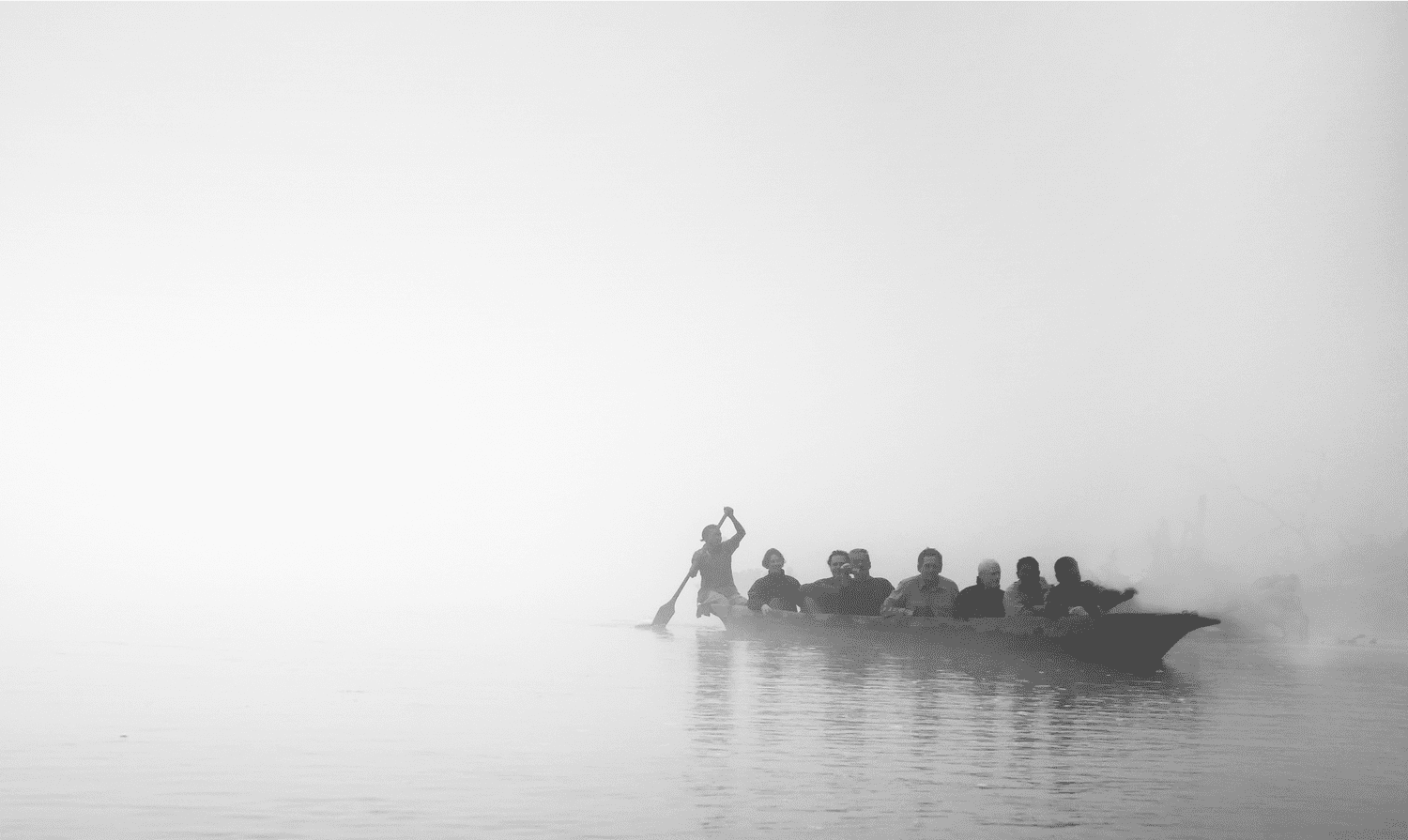
Table of Contents Show
Last month I wrote about why most photographers don't know when their photograph is finished — because they've never decided what they think of it, so they outsource their standards to Instagram and camera-club judges. This month I want to take that same discipline somewhere wider: to the thing most photographers hand over before they've even made the picture — their gear.
I meet this photographer almost every week.
Sometimes they're on a workshop, sometimes they book a one-to-one, sometimes they just corner me at a camera-club evening. The conversation always starts the same way. They wax lyrical about their kit — the lens they just bought, the body they're saving for, the tripod they've been researching for three months. They ask me what I'd buy next. What lens is sharpest in that focal range. Which filter kit I'd recommend.
Then they show me their photographs.
And I think — quietly, kindly, but honestly — none of what they just asked me about will help.
Not the lens. Not the body. Not the tripod. Not the filters. Because what's missing from their photographs isn't a piece of equipment. It's something no camera shop sells and no YouTube review can explain.
The honest version
Your photography gear isn't the problem — you are
I'm going to say this plainly because the piece won't work otherwise.
Your photography gear isn't the problem. The problem is you.
That's not an insult. It's a diagnosis — and it's the more hopeful of the two possibilities. If the problem were your gear, you'd have to spend money you probably don't have on kit that wouldn't fix it anyway. But the problem isn't your gear — which means the fix is in a direction you can actually walk.
What's missing isn't gear
The toolbox you've been ignoring
Here's what most photographers are missing when they ask me about their next lens:
- Their brain. The willingness to think about what they're photographing before they lift the camera.
- Their soul. The reason the picture matters to them in the first place.
- Their vision. What they actually see when they look at a scene — not what the scene "ought to" look like.
- Their ability to learn. The patience to go back out and work on the thing they didn't quite get right last time.
What is teachable — because I've spent fifteen years teaching it, and the Academy framework distils exactly how — are the four practical disciplines that turn those raw ingredients into actual photographs.
You already own the only tools that matter. You're just not using them, because you're too busy shopping for the ones that don't.
The four questions no shop sells
The four tools that aren't in the camera shop
These are the four quadrants of the Composition Framework I teach in the Academy. They're the four questions a good photographer asks themselves at a scene — in this order, every time.
1 · Intention
"What am I trying to communicate?" Before you touch a dial, know what you want the photograph to say. Not the subject — the meaning. The lens doesn't help you with this. Your brain does. If you can't answer this question, no composition rule, no lens, no exposure setting will rescue the picture you're about to take.
2 · Restraint
"What can I leave out?" Once you know what the picture is for, the second question is what doesn't serve it. Space, contrast, balance. Simplify. The hardest part of composition isn't adding things — it's resisting the urge to put everything in. No filter kit teaches this. Only your judgement does.
3 · Observation
"What is actually happening here?" Train your eye to see what's actually in front of you — the light, the shapes, the patterns, the relationships, the moments other people walk straight past. This is the one most photographers skip entirely, because it's slow and it looks like you're not doing anything. You are. You're doing the only thing that matters.
4 · Judgement
"Does the photograph do what I intended?" After you've made the picture, review it against the intent you set — not against what strangers on the internet will like. Learn to see your own work honestly, refine your style, and decide for yourself when something has worked. This closes the loop. Everything else collapses without it.
Intention, Restraint, Observation, Judgement. Four tools. All of them in you already. None of them for sale.
Practise it
What this looks like on a Tuesday
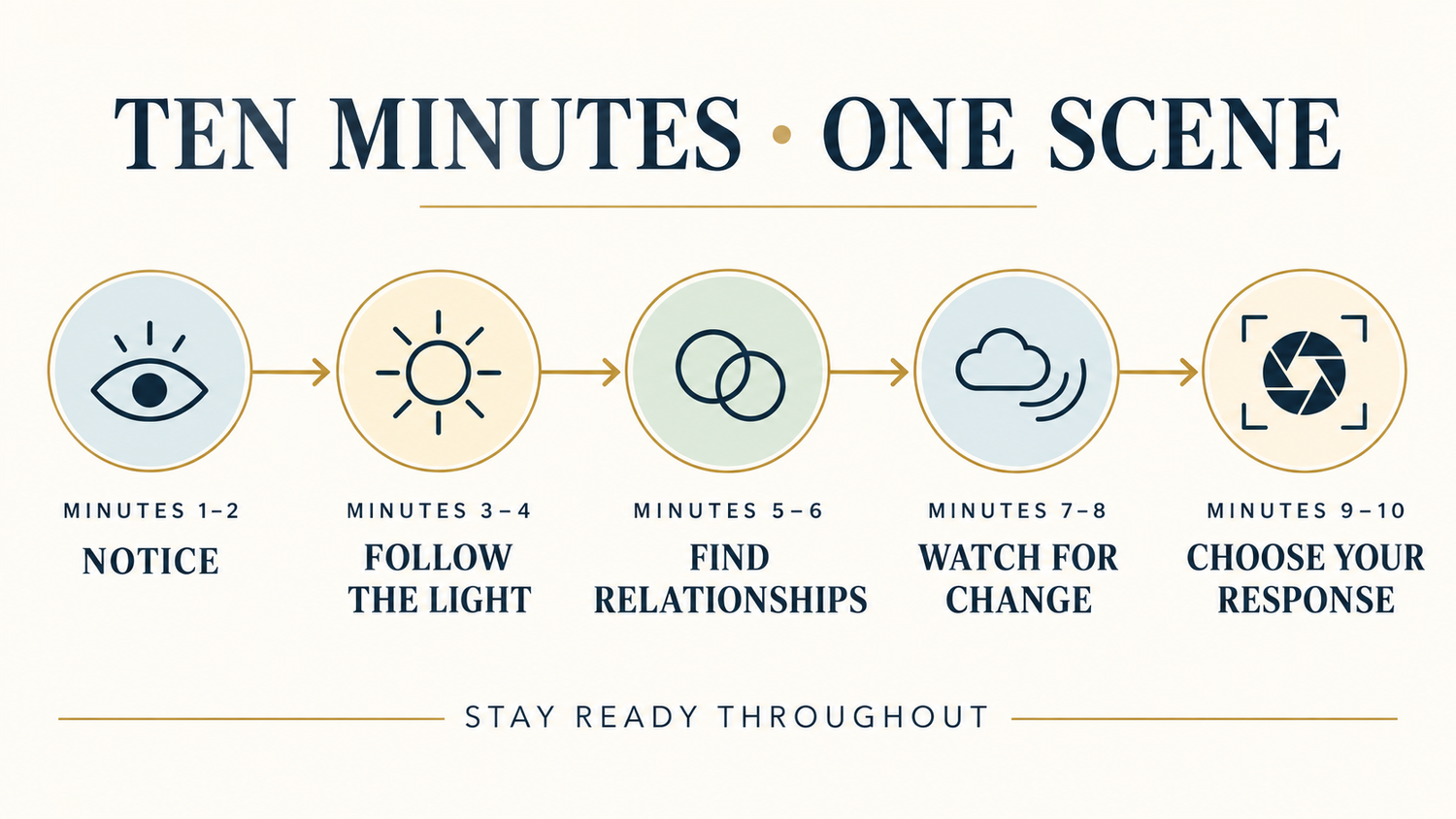
Next time you catch yourself researching a lens, or watching a gear-review video, or opening a camera shop's website for the fourth time this week — try this instead.
Open your own photo library. Pick the last twenty photographs you made. Not the ones you've already filed as favourites — all twenty, honestly.
For each one, ask the four questions in order:
- Intention — What was I trying to communicate here?
- Restraint — What should I have left out?
- Observation — What was actually happening in front of me that I missed?
- Judgement — Does this photograph do what I intended — honestly?
If, after twenty pictures, you can answer those four questions with confidence on most of them — then yes, maybe you've outgrown your current kit. Email me, we'll talk gear.
If you can't — and most honest photographers can't, including me on plenty of days — the next lens isn't going to help. The next week of practice with the four questions might.
Where this fits
A new sub-arc — the three things we hand over
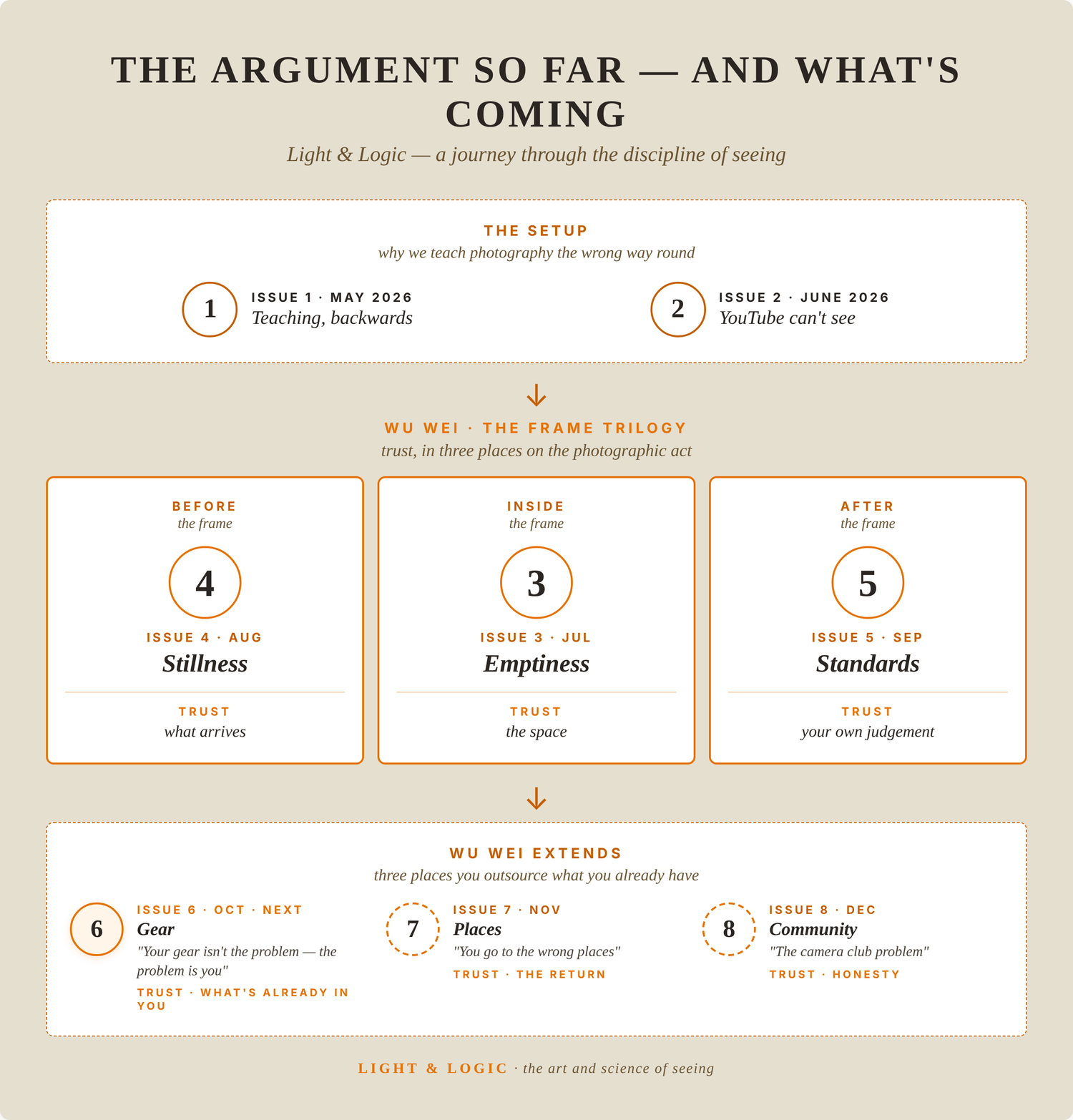
Last month I closed what I've been calling the frame trilogy — three editions on trusting what you already have in the three places of the photographic act itself (inside the frame, before it, after it).
Issue 6 opens a new sub-arc: three editions on the places photographers hand over something they could own.
- Issue 6 (this one): the gear you carry.
- Issue 7: the places you go to make photographs.
- Issue 8: the opinions you let shape your work.
Each one a place where photographers quietly hand over a decision they should own.
"The single most important component of a camera is the twelve inches behind it."
— Ansel Adams
Adams said that about his own 8×10 view camera in the 1940s. It's just as true of the mirrorless body you're carrying today. The gear changes. The twelve inches don't.
About the image
Out of the Mist, Nepal — 2006
Twenty years ago, in a monastery courtyard, in the kind of fog that erases buildings a few metres away. The gear in the bag that morning cost a fraction of what the average camera-club member now carries. None of that mattered — because the picture isn't about the gear.
It's about the decision that was already made before the camera came up: stay with this scene, watch the mist move, let the shape walk into the frame. That's not technique. It's the four questions, in sequence, long before the shutter.
I keep this picture close when photographers want to talk about the next lens. It's a quiet reminder: the frame was never going to be rescued by better equipment.