
The Art of Slow Photography — Watch Before You Shoot
Updated 14 Oct 2026
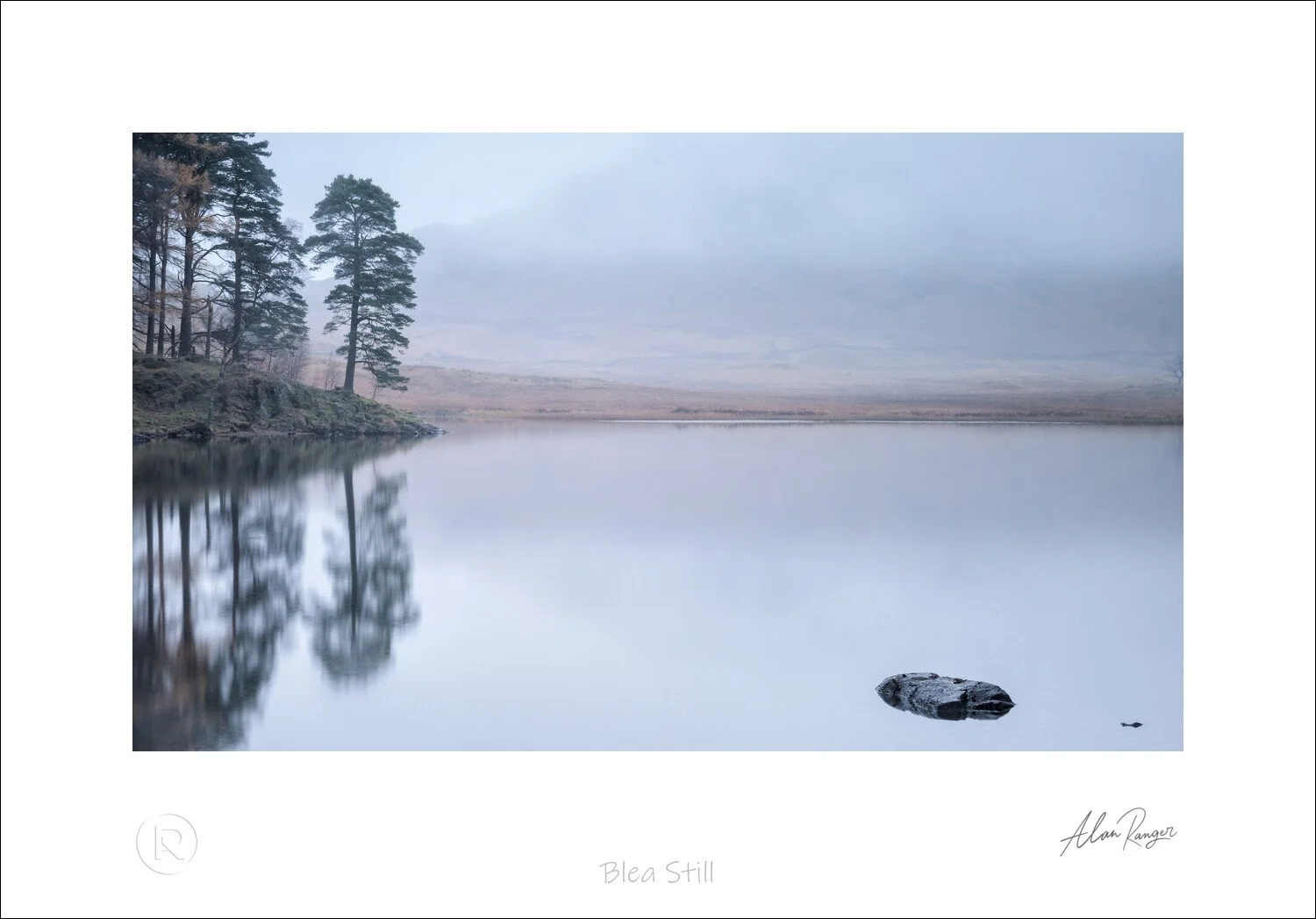
Table of Contents Show
Last month I wrote about emptiness inside the frame — the case for taking things out. This month I want to go one step earlier, to something that happens before the frame exists at all. Before you've raised the camera. Before there's a composition to empty.
Here is the uncomfortable version of it, and I'll spend the rest of this letter trying to earn it: most of your photographs are made too soon.
Not badly. Not carelessly. Too soon.
The claim
Slow photography: the rush we don't notice
Watch a photographer arrive at a location — watch yourself, if you're honest. The camera is up within a minute. We start working the scene immediately: hunting angles, testing compositions, chasing the shot before we've understood what's in front of us. It feels like diligence. It feels like not wasting the light.
But there's a story underneath it, and it's the same one I told last month. The Confucians in Solala Towler's parable painted their magnificent mural through sheer effort — every detail laboured over, the emperor astride his horse. The Taoists polished a wall and let the painting arrive.
"All we did was create the space for the painting to happen."
— The Taoists, in Solala Towler's parable
I wrote about that idea more fully on my blog — the way of Wu Wei — if you missed it. Raising the camera in the first minute is the Confucian move. It's doing where the moment called for not-doing yet.
The argument
The photograph arrives — you don't make it
This is the part I most want you to sit with, because it runs against everything the word "shoot" implies.
The photographs I return to — mine, and other people's — weren't hunted down. They were waited for. There is a difference between a scene you constructed and one that arrived, and you can feel it in the final image even when you can't name it. Construction has fingerprints all over it. Arrival doesn't.
When you wait — properly wait — the light shifts, the wind drops, a bird crosses, the tide turns a stone, and the picture that was always possible in that place finally becomes visible. You didn't invent it. You were present when it happened. That's not mysticism; it's the honest description of how the best frames actually come to be.
The photographer's real skill isn't making the picture appear. It's being still enough to notice when it does. Construction, more often than not, is what we reach for when we failed to wait.
The best photographs aren't the ones you made. They're the ones you were still there for.
In moving pictures
The four principles — and why "stop hunting, start seeing" is the one you need now
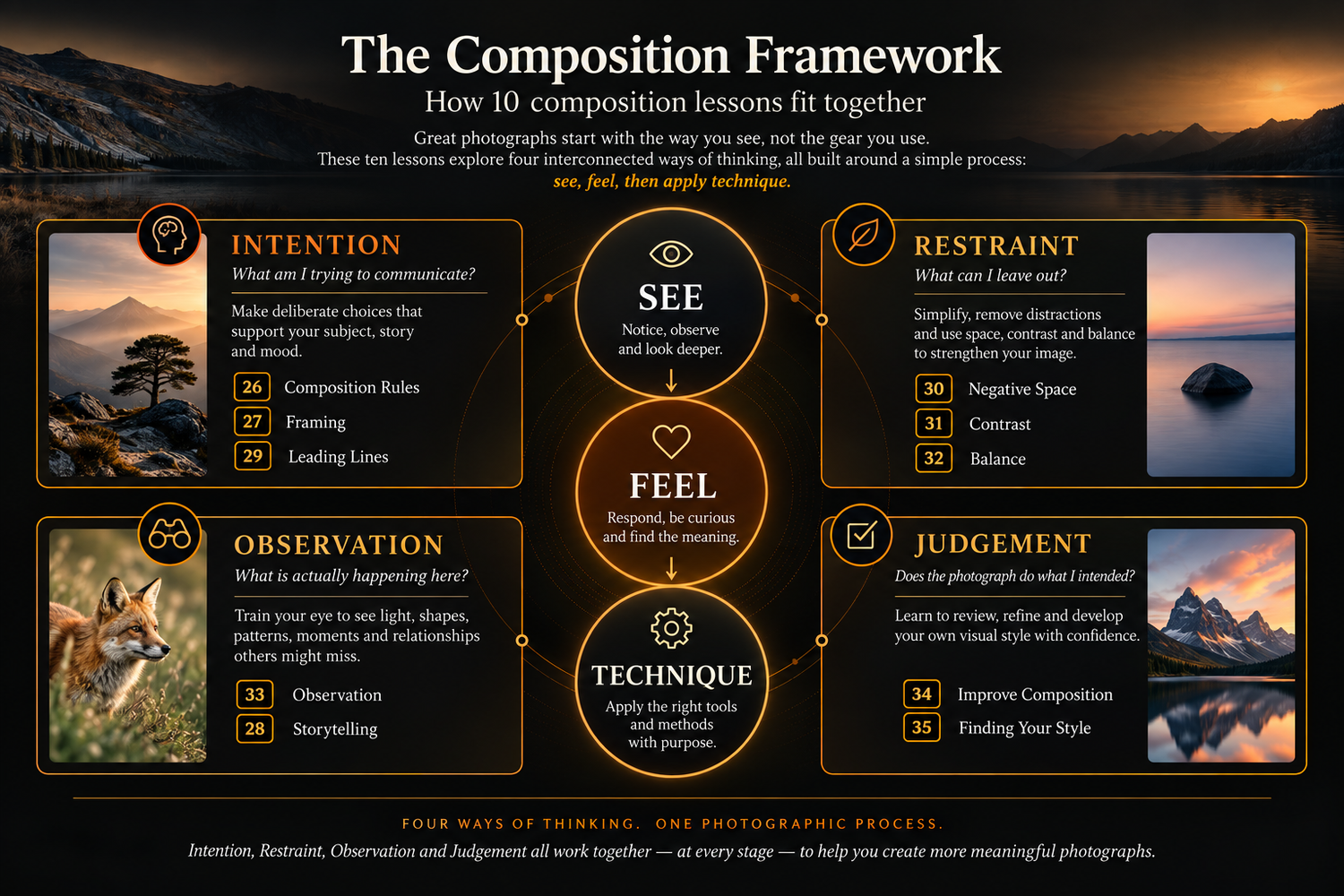 Watch · from 4:20
The nuance
But "waiting" isn't standing around
Here's the fair objection: so I just stand there doing nothing? No. And this is the piece most photographers miss.
When you watch a place properly, you're doing several things at once:
- You're reading the light in motion. Not where it is, but where it's going — what the scene will look like in twenty minutes, and whether that's the frame worth waiting for.
- You're letting the place set the terms. Where it wants to be photographed from, not where you assumed from the car park. The location has a logic; watching is how you find it.
- You're noticing what the rush would trample. The reflection that only holds when the water stills. The shape that only reads once the walker has left the frame. The small thing that becomes the whole picture.
A photographer with the camera down, watching, is working harder than the one firing off forty frames. The forty frames are what not watching looks like — the sound of someone hoping volume will do the job that attention should have done.
The reason we don't
Why we shoot too soon
Because stillness is frightening in exactly the way emptiness was frightening last month. Standing at a location without the camera up feels like doing nothing — and doing nothing feels like failing.
Every instinct says justify the trip, justify the early alarm, make something. The camera in your hands is reassurance. It says I am a photographer, I am working. Putting it down and simply watching feels like admitting you don't yet have the picture — which, of course, you don't. That's the honest state you're refusing to sit in.
So we shoot to soothe the discomfort. And the picture we take in the first five minutes is a picture of our anxiety, not of the place.
Forty frames is what not-watching looks like.
Practise it
What this looks like on a Tuesday
Next time you arrive somewhere to photograph, try this. Leave the camera in the bag. Not for the whole session — for the first ten minutes. Set a timer if you have to.
- Walk the place. Notice where your eye keeps returning, and notice where it slides off.
- Watch the light. Notice what it's doing, and guess what it will do next.
- Notice the picture you would have taken in the first minute — and then notice how it changes, or dissolves, or improves, once you've actually looked.
- Then, and only then, take the camera out.
You will feel the resistance immediately — the itch that you're wasting light, missing the shot, doing it wrong. Sit in it. That itch is the thing standing between you and every photograph you didn't wait for.
The Wu Wei arc continues
What's coming next
There's a stillness before the frame. There's also a discipline that comes after it — and it may be the hardest of the three.
Once the photograph has arrived, the temptation is to keep working it. To push the contrast, lift the shadows, add the grade, chase the version in your head instead of honouring the one that came. The restraint to stop — to know when a picture is finished and leave well alone — is its own kind of not-doing. That's the next issue.
The photograph was already there. You just had to be still enough to see it arrive.
For now: put the camera down for ten minutes. You may find the best photograph of your day is one you almost didn't wait for.
Where to go next
Keep practising slow photography
If this piece landed, here's where to take the idea next on the site.
- Photography is an art of observation — the longer essay on seeing before shooting, with a free one-page field checklist for noticing more.
- The free Academy foundation course — 60 modules on the craft of seeing, free to join.
- My landscape workshops — small groups, slow pace, watching before working. Autumn and winter dates live now.
- One-to-one tuition — if you'd rather work on your own frames, in your own locations.
- ← Previous issue: Simplifying your photography composition — the Wu Wei arc, Issue 3.
About the image
Blea Tarn, the Lake District
A morning the water went completely still. This is from my Serenity collection. Stillness in a photograph isn't the absence of movement — it's the presence of waiting. Its opposite is the instinct that hunts: restless, roving, firing, afraid of missing something. That instinct produces busy, anxious pictures. This one only exists because I stood at the tarn long enough for it to settle — and for me to settle with it. I didn't make this photograph. I waited, and it arrived.