
K&F Concept PL-60B Photography Light Review: 60W COB LED
Photography equipment · Hands-on review
Disclosure: K&F Concept supplied this photography light for me to use and review.
I used the K&F Concept PL-60B on a commercial product shoot in a warehouse, then took it around the factory for photographs of the work taking place. My main use was as a fill light: at 100% power, with the diffuser attached, I bounced it off a large reflector onto the products. It was easy to adjust and quick to move into position. Battery life at that output was the main limitation.
This is a light you can use for several different photography purposes: portraits, product photography, macro and close-ups, as well as video recording and live streaming. Whether it works best as your main light or as additional fill will depend on the subject, working distance and available light.
For a demonstration of the light and its controls, watch Joe Marano's full K&F Concept PL-60B video review.
K&F Concept sent me the PL-60B to use and review. For me, the important questions are how easily it fits into a real photography session, what sort of light it produces and whether its portability justifies the space in a camera bag.
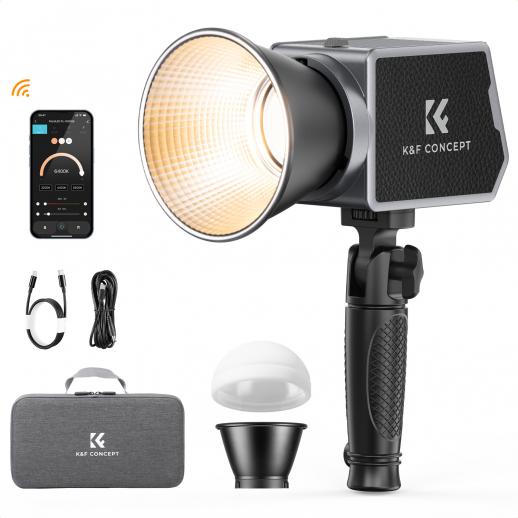
What is the K&F Concept PL-60B?
The PL-60B is a COB LED light. COB stands for chip on board, a design that groups LED chips into a concentrated light source. It provides continuous illumination, so you can see where the light and shadows fall as you position it.
That makes it useful for learning lighting as well as taking photographs. Move the light to the side and watch texture become more pronounced; bring it towards the camera and the shadows become less obvious. The same light can also illuminate video, where continuous output is essential.
It is a bi-colour light, with a stated range of 2700K to 6500K. That lets you move between warmer and cooler white light. It does not offer the full range of colours available from an RGB light.
Photography light features and specifications
The figures below are K&F Concept’s published specifications, rather than measurements from my own testing.
| Feature | Published specification | Practical consideration |
|---|---|---|
| Model | PL-60B; SKU KF34.045 | 60W COB continuous LED light |
| Colour temperature | 2700–6500K | Warm to cool white adjustment |
| Colour rendering | CRI 97+; TLCI 98+ | Manufacturer ratings; skin tones and product colours still need practical assessment |
| Bare-light illuminance | 2280 lux at 1m, 5600K | Quoted without reflector |
| Reflector illuminance | 15,900 lux at 1m, 5600K | Concentrated beam; not a measurement of evenly lit scene coverage |
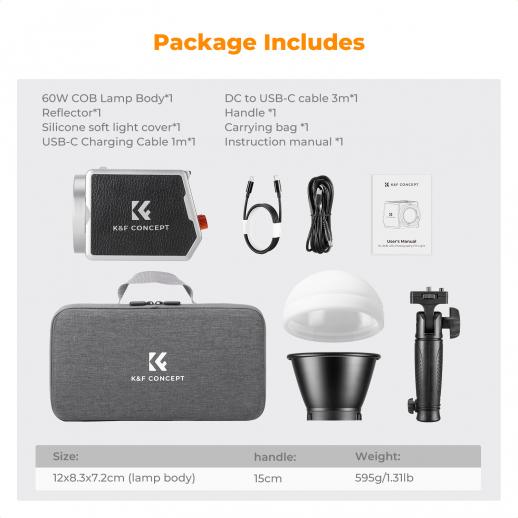
| Size and weight | 12 × 8.3 × 7.2cm; 595g | Lamp body figures, rather than the complete packed kit |
| Battery | Built-in 4500mAh | No separate battery plate required |
| Claimed runtime | At least 75 minutes in normal mode; 45 minutes in MAX mode | Manufacturer figures; my shoot gave about 30 minutes at 100% output (see below) |
| Power connections | USB-C PD 3.0 and DC input; use while charging supported | Listing specifies a power bank above 60W and a separately purchased charger; check supply compatibility |
| Controls | On-body controls; Linklite app over Bluetooth | Remote adjustment of brightness, temperature and effects |
| Cooling | Temperature-controlled fan; fan-off operation described below 20% brightness | Quiet operation involves an output trade-off; see note below |
| Effects | 12 lighting effects | Primarily useful for video and creative sequences |
| Accessories shown | Reflector, silicone diffuser, handle, carrying bag, USB-C cable, DC-to-USB-C cable and instructions | Stand and mains charger are not shown as included |
| Optional modifier | K&F lists a compatible 40cm Mini Bowens softbox separately | Check fit before buying other modifiers |
Normal, MAX and lighting effects modes
Normal mode provides adjustable continuous light. MAX mode increases output, with a shorter claimed battery runtime. The effects modes simulate changing light sources and events.
| Mode or effect | What it is for |
|---|---|
| Normal | Steady, adjustable white light for photographs and video |
| MAX | Extra output when needed, with reduced battery runtime |
| Pulse | Repeated changes in light output |
| Lightning | Simulated storm flashes |
| TV | Changing illumination suggesting a television screen |
| Faulty bulb | Irregular flickering-light effect |
| Paparazzi | Simulated bursts of camera flashes |
| SOS / emergency call | Emergency-style flashing effect |
| Fade in / gradual brightening | Light builds in intensity |
| Fade out / gradual dimming | Light reduces in intensity |
| Bonfire / campfire | Variable output suggesting firelight |
| Explosion | A sudden burst of light |
| Candlelight | Flickering illumination suggesting a candle |
| Breathing | A repeated rise and fall in brightness |
The names above follow the product listing, with alternative wording used in the video demonstration. Joe Marano demonstrates adjustable effect speed and brightness. For still photography, I would put more emphasis on steady output, control and the quality of the light than on the number of effects.
Where a portable photography light could be useful
Small products and close-up subjects
A continuous light lets you see reflections and shadow edges before releasing the shutter. That is useful when photographing objects on a table or bringing out texture in a close-up subject. Position and distance matter: a small adjustment can change the result considerably.
The reflector concentrates the beam. The included silicone diffuser changes how the light is spread, but it remains a relatively small source. For softer shadows on a portrait or larger object, a larger compatible modifier is worth considering.
Portraits and indoor video
In Joe Marano’s PL-60B review and controls demonstration, he describes closing the blinds and using the light for his indoor recording setup. This addresses a familiar problem: daylight changing as clouds pass the window.
That is a useful application to explore. A consistent light position and output can make a recording session more predictable. App control also gives a solo photographer or presenter a way to make adjustments without repeatedly walking over to the light.

What needs checking in everyday use?
Battery freedom is useful, but session length matters. On my shoot I got about 30 minutes of use at 100% output before needing to recharge. It took about an hour of charging before I could use the light again. These are approximate observations from that session, rather than a controlled runtime or full-charge test. I did not record whether the separate MAX mode was engaged, so this is not a direct comparison with K&F’s normal-mode or MAX-mode claims.
For longer jobs I would plan for charging breaks or check a compatible external power supply. The convenience of a built-in battery needs weighing against the time available at the output you actually need.
Fan noise deserves similar attention if you record speech. The listing describes fan-off operation below 20% brightness, while Joe’s demonstration describes the light dropping to 15% when the fan is switched off. I would check the behaviour of my own unit before relying on silent operation at a particular brightness.
Budget for support and modifiers too. The illustrated kit includes a handle, but a stand is a separate consideration. K&F also lists a compatible Mini Bowens softbox; check the mount rather than assuming an existing full-size Bowens modifier will attach directly.
My experience using the PL-60B
I used the PL-60B during a commercial product shoot in a warehouse on Friday 27 November 2026. With the diffuser attached and the light set to 100%, I bounced it off a large reflector onto the products to provide fill. It was part of a wider lighting setup, rather than the sole source illuminating the products.
The controls were easy to adjust. On a working shoot, being able to change a setting and get back to photographing matters more to me than a long list of effects.
I also used it while taking photographs around the factory. It was easy to transport on a light stand and quick to position where I needed some extra light. That portability was its strongest practical benefit for me.
The battery lasted about 30 minutes at 100% output, followed by about an hour of charging before I could use it again. That makes it useful for shorter periods of fill, but I would not plan a long session at full output without allowing for power and charging.
The photographs below show the warehouse setup, finished product photographs and a detail from the factory work. The finished product images have been edited for presentation; they are examples from the assignment, not a controlled light-off/light-on comparison or a demonstration of the PL-60B used on its own.
Is this photography light worth considering?
Yes — I would use the PL-60B again when I need portable fill light. It earned its place on this assignment through easy controls and the ability to move quickly between products and working areas.
I would recommend considering it for photographers who need a compact supplementary light for product work or short location setups. The main qualification is battery life: my approximately 30 minutes at 100% output means I would plan charging or suitable external power for longer sessions. My recommendation is based on using it for fill; I have not tested every advertised feature or measured its colour accuracy.
Check the current price and kit contents, and allow for a stand, compatible power supply and any additional modifiers when comparing the overall cost.
View the K&F Concept PL-60B photography light and current price.
Photographs from the warehouse and factory shoot
Two views of the lighting setup, followed by finished sink photographs and a factory detail. Photographs by Alan Ranger.
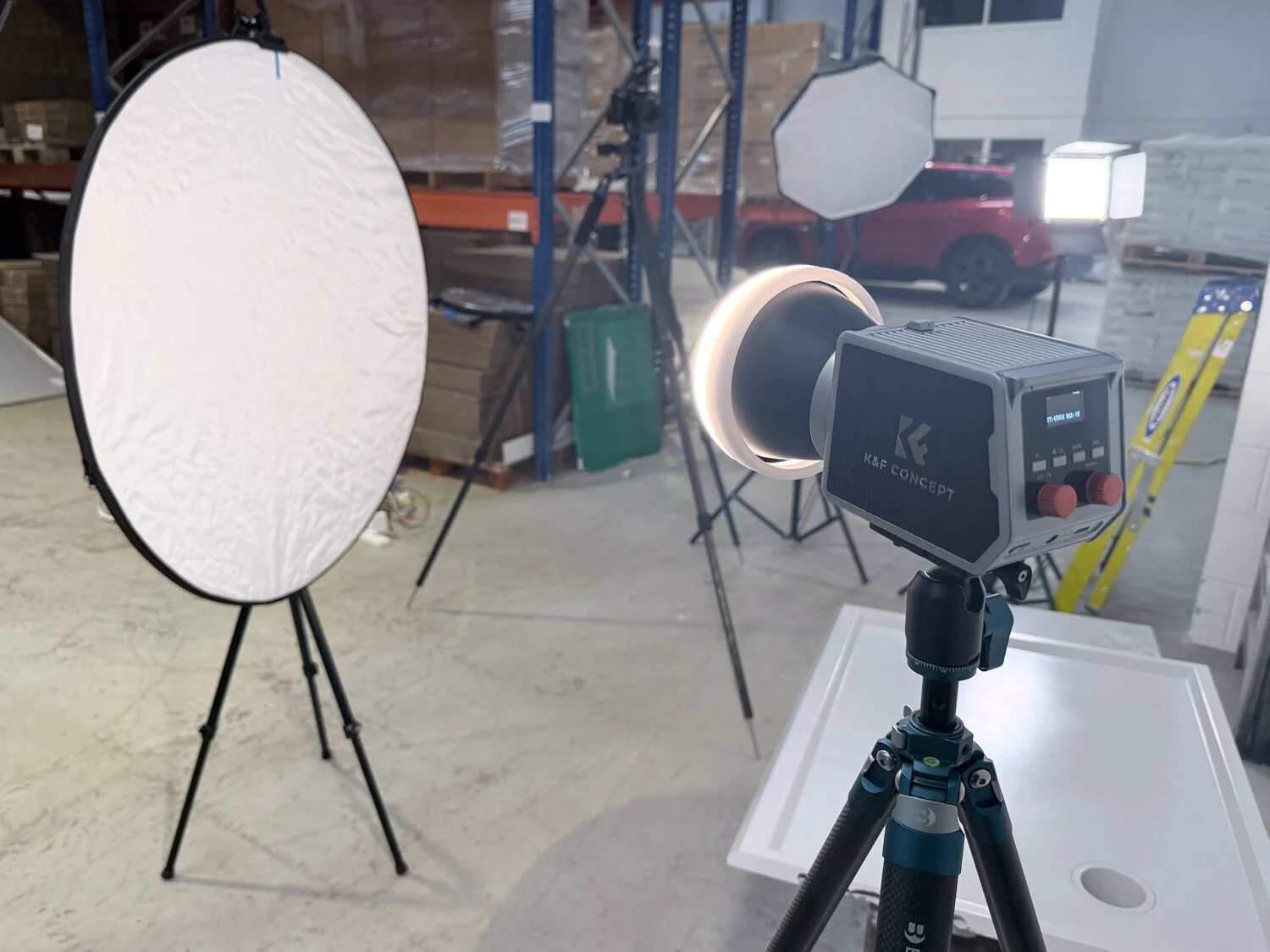
Warehouse product shoot: the PL-60B provided fill, bounced off a large reflector, alongside the other lights in the setup.
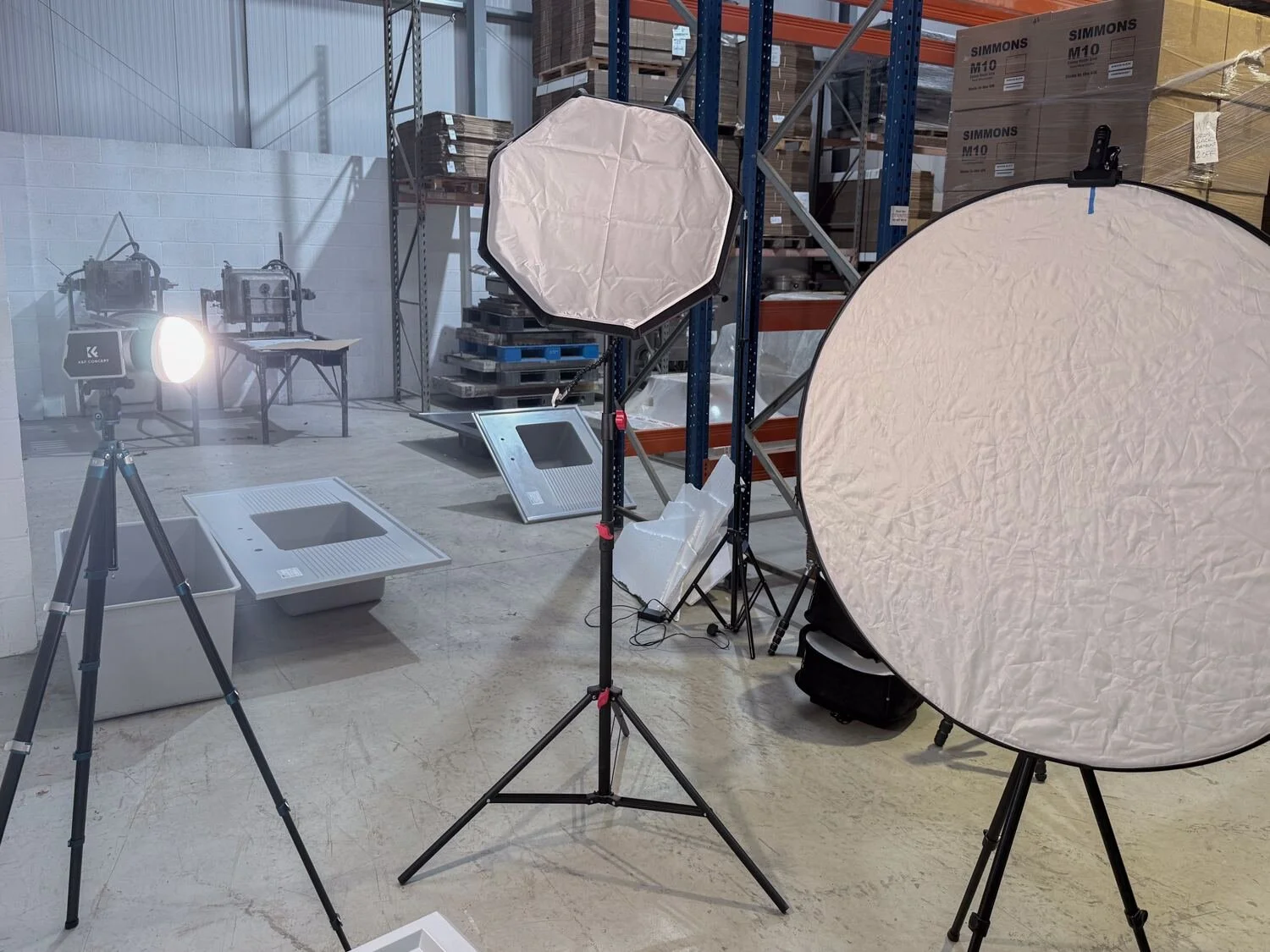
Another view of the warehouse lighting setup, with the PL-60B, diffuser and large reflector.
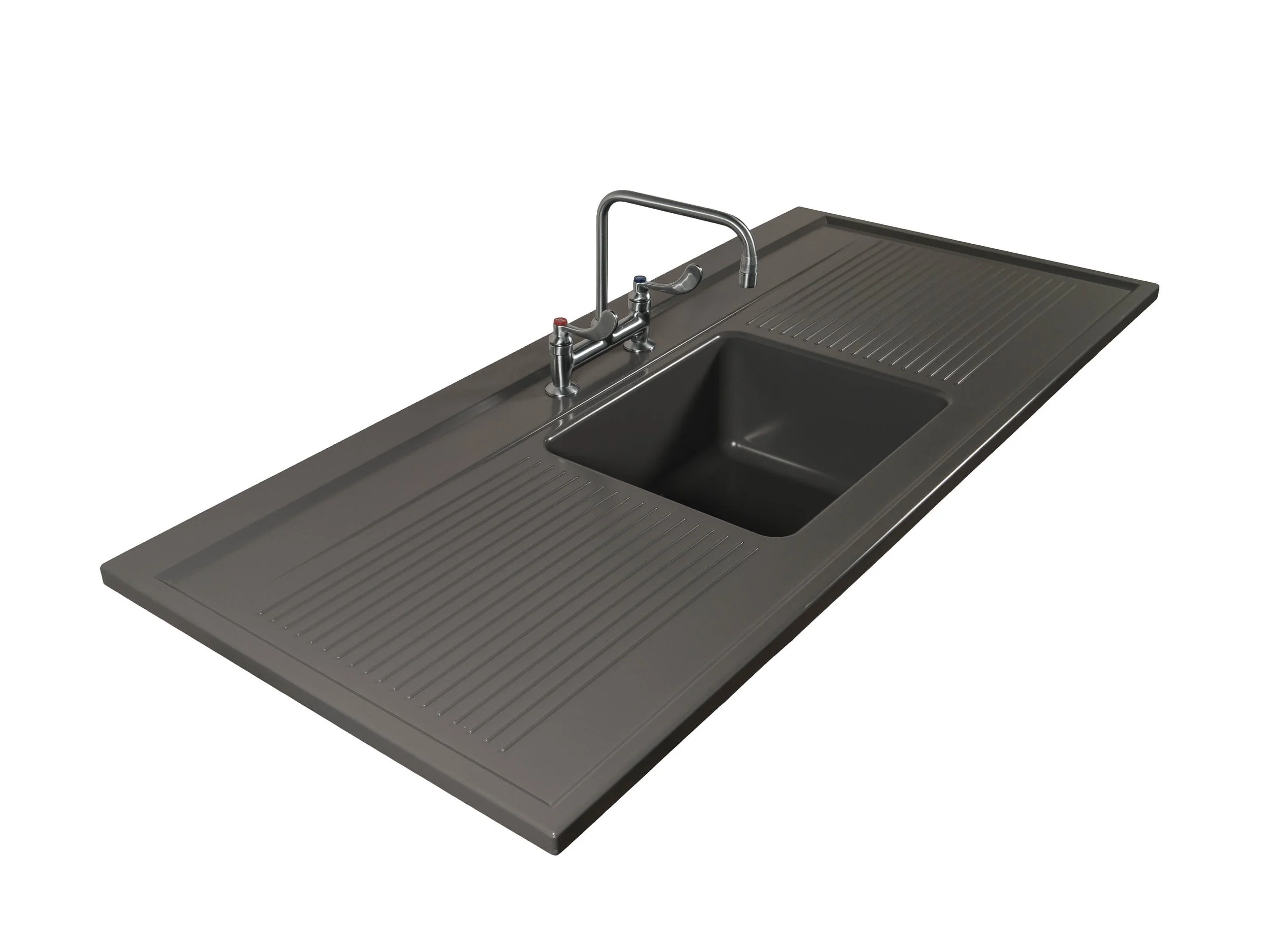
Finished sink product photograph from the assignment, edited for presentation. The PL-60B was used as supplementary fill during the product shoot.
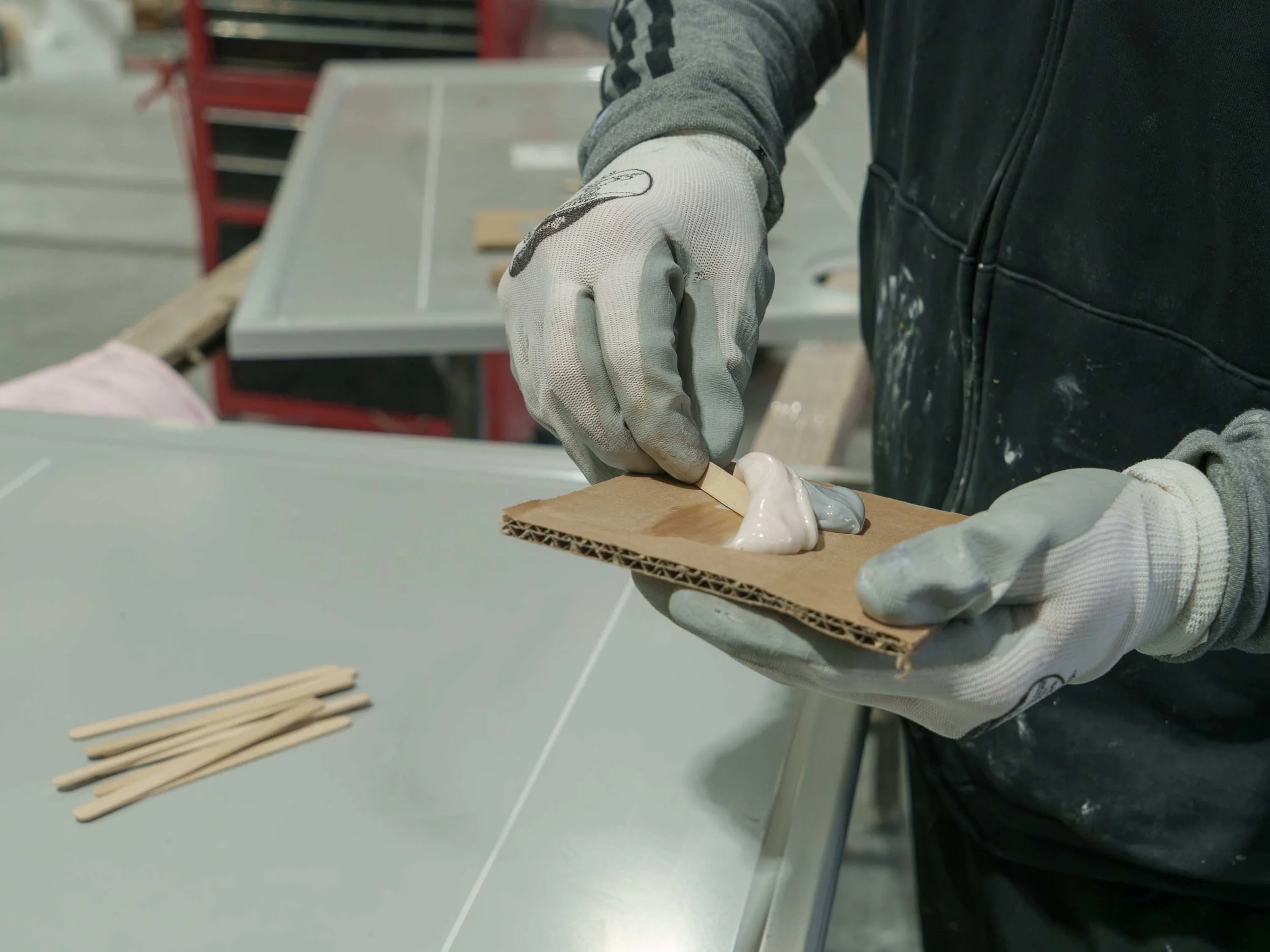
A factory detail from the same assignment. The compact light was easy to move on a stand and position where fill was needed.
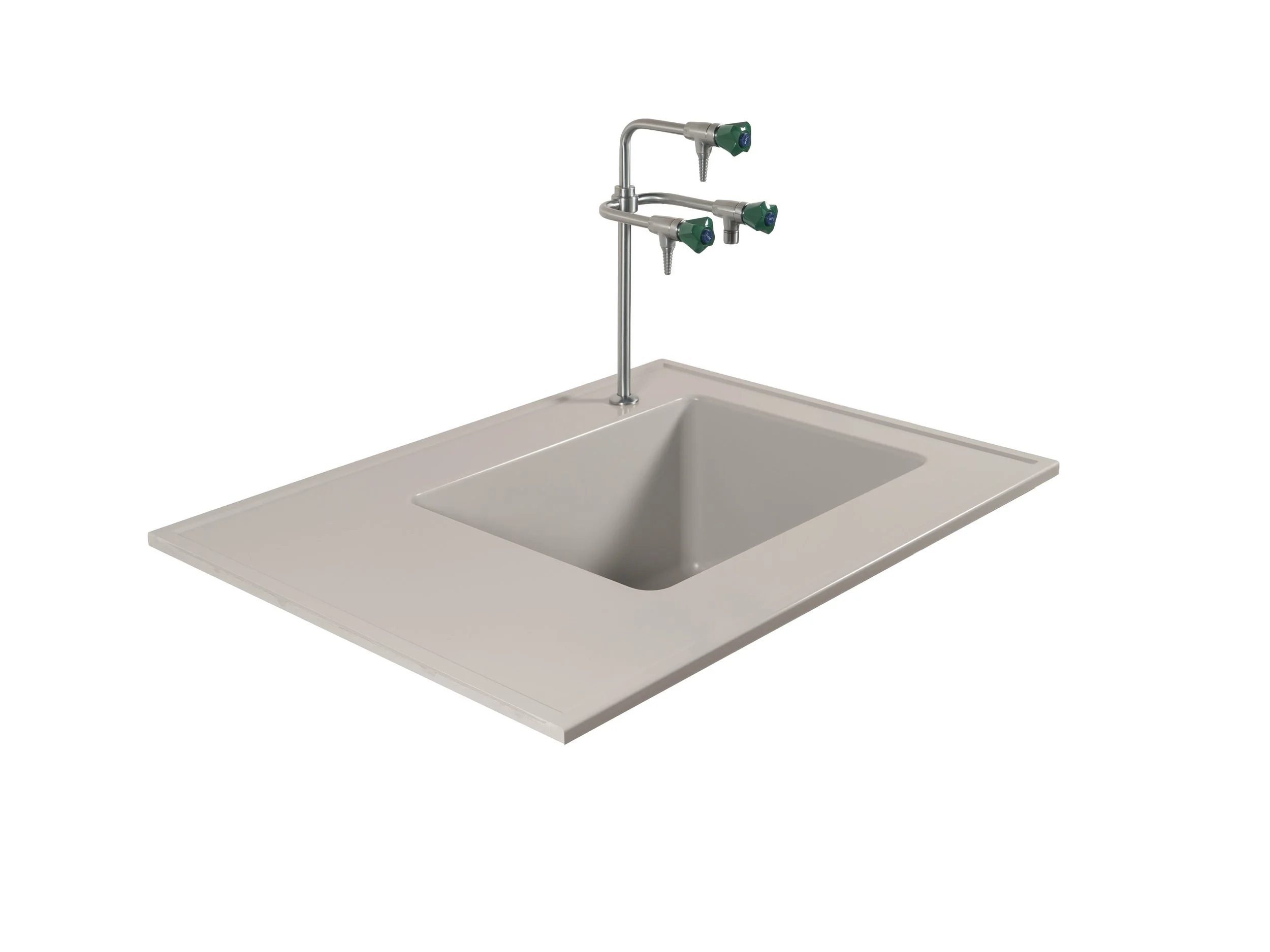
Finished basin and tap photograph from the product shoot, edited for presentation; this is not a light-off/light-on comparison.