
Your best photography locations are the ones you return to
Updated 15 Nov 2026
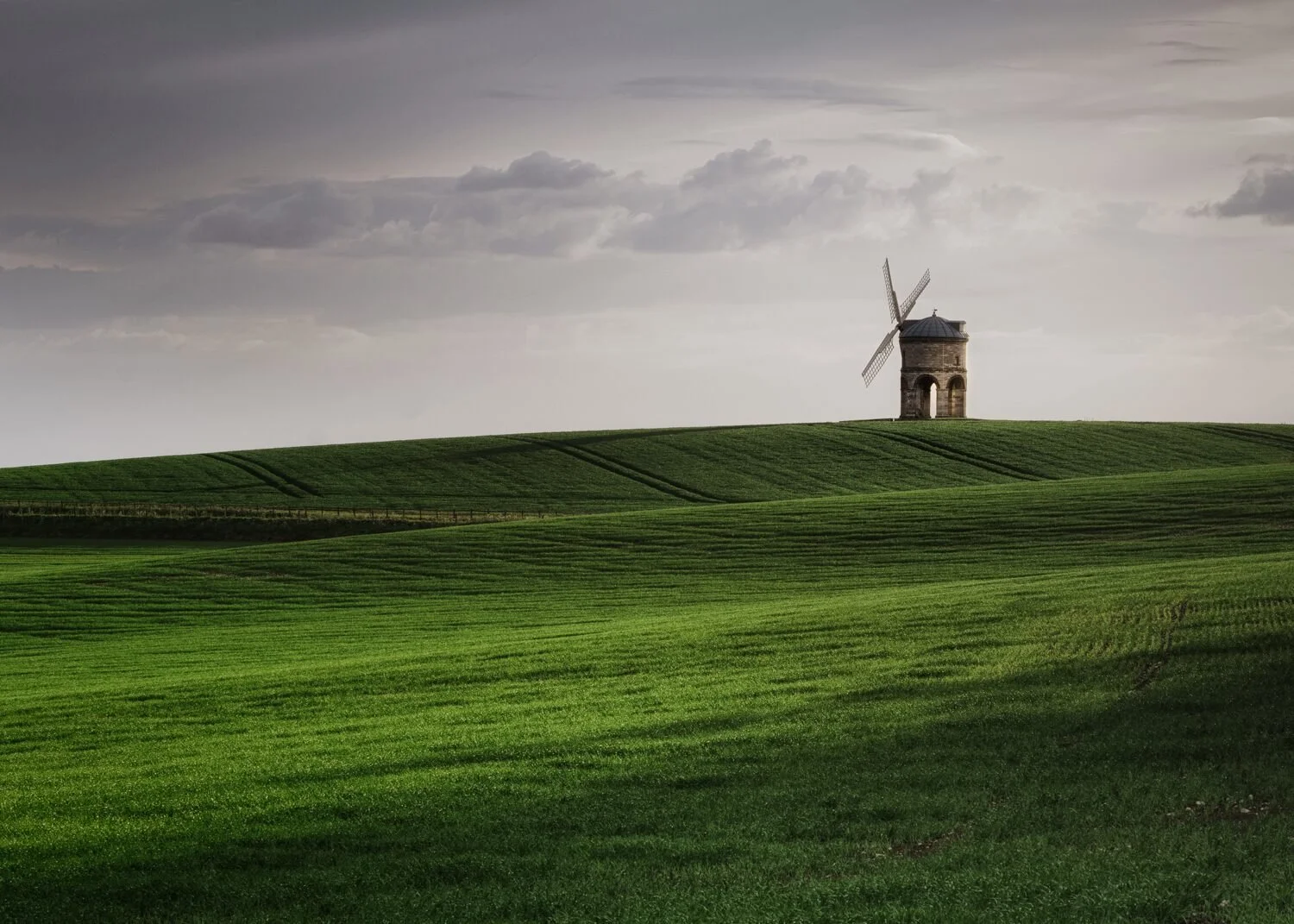
Table of Contents Show
Last month I wrote about why your photography gear isn't the problem — how most photographers hand over something they already have, to equipment that was never going to fix it. This month I want to stay in the same pocket, because we do the same thing with places. We decide the fix is a different coastline, a better mountain, a further destination — that our next good photograph is at one of the photography locations we haven't been to yet.
Most photographers think the answer is somewhere else.
Different mountains. A different coastline. The lavender fields in Provence, the fjords at the right hour, Iceland in winter, Tuscany in June. If only the light were better, the scene less overshot, the car park a bit further from the tripod.
So they go. They drive, they book, they queue. They come back with something that looks a lot like what everyone else came back with — because everyone else was standing next to them with the same lens on the same tripod in the same five-minute window.
And then they do it again. Different place, same photograph.
The problem was never the place.
If you missed the companion Short that went out this weekend, it says the same thing in 40 seconds: Grasmere, in weather.
The place I keep going back to
Why photography locations don't run out
There is a windmill about forty-five minutes from my house.
Chesterton Windmill. 17th century. A stone tower on four open arches, standing on a low Warwickshire ridge. You can see it from the A423 if you know where to look. Most people photograph it once, from the car park entrance, at the single angle most Instagram posts use. Then they move on.
I have photographed it, by my rough count, for over twenty years. That's roughly one hundred and fifty visits to the same stretch of ridge, with cameras of every generation and lenses of every length I've ever owned.
Not every day. Not even every month. But enough that I now know what it looks like when the January snow drifts have carved themselves into the field below it, when the May rapeseed turns the lower half of every frame yellow, when the August stubble runs out from the base like a path leading nowhere, when the December dawn backlights it into a silhouette and the frost picks out the stones. I know where the shadow falls from the sails at seven in the morning and where it falls at seven at night. I know which side of the mound is grazed and which is left to seed. I know which weeks the tracks are mud, which weeks they're cracked clay, which weeks they're under water.
None of that was available on the first visit. Or the tenth.
It only showed up because I kept coming back.
That's the quiet truth about good photography locations. They don't run out — they deepen. The place doesn't give you more; you develop the eye to see more of what was always there.
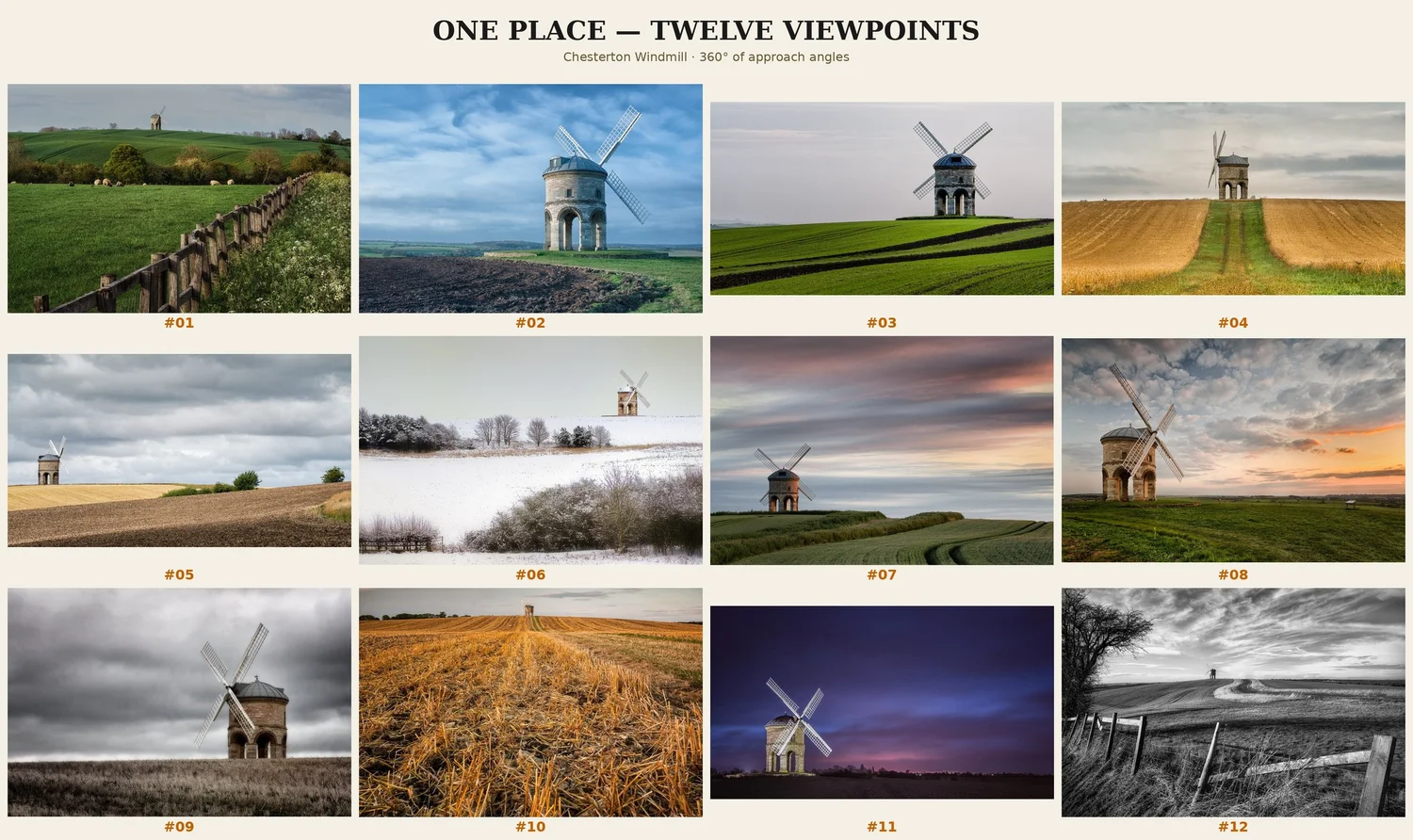
Twelve viewpoints. The same windmill from twelve different approach angles. Most visitors photograph it from one spot. Walk ten minutes in any direction and it becomes a different building — framed by trees, dwarfed by a hill, reflected in a pool, isolated against a stripe of cloud, hidden behind a stubble field so only the sails show. Space changes everything too.
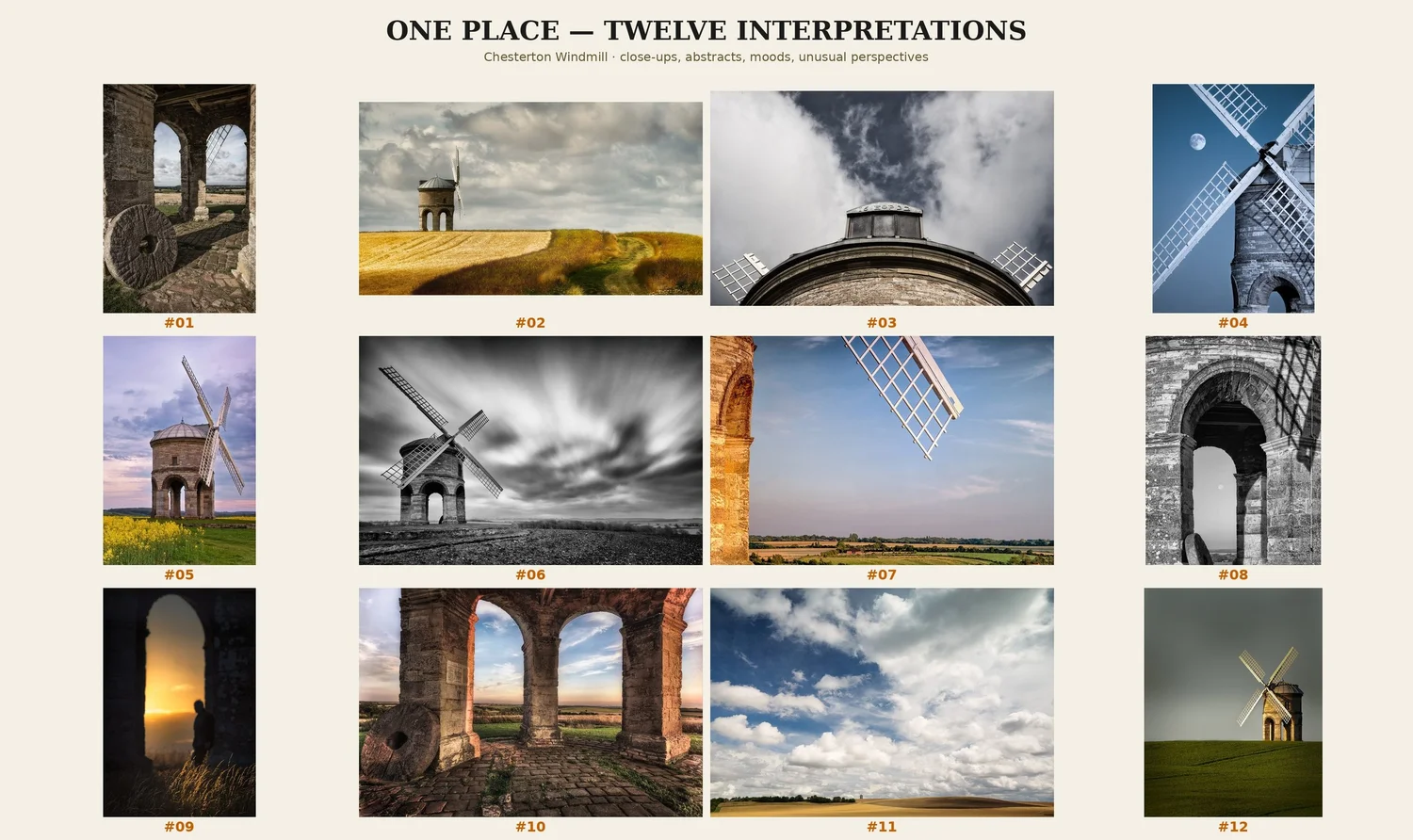
Twelve interpretations. The same windmill, twelve ways of seeing. A close-up through the arches with a millstone in the foreground. An upward view of the dome against dramatic cloud. A silhouette with a figure inside the arch at sunset. A black-and-white long exposure that blurs the clouds into motion. A sky-dominant abstract where the windmill is almost incidental. Each one is a decision about what the photograph is actually about.
Thirty-six images. One windmill. Forty-five minutes from my house.
I could not have made any of them on a first visit. I could not have made most of them on a tenth. Some of them I made because a previous photograph had failed and I came back to try something different. Some of them I made because I was driving past, saw the light change, and knew — because I'd been there a hundred times — exactly where to stand and what lens to put on.
What the return reveals
One place, three dimensions
The three sets of images below are the same windmill, photographed three ways. Time, space, and vision — all applied to one of the photography locations I've returned to the most.
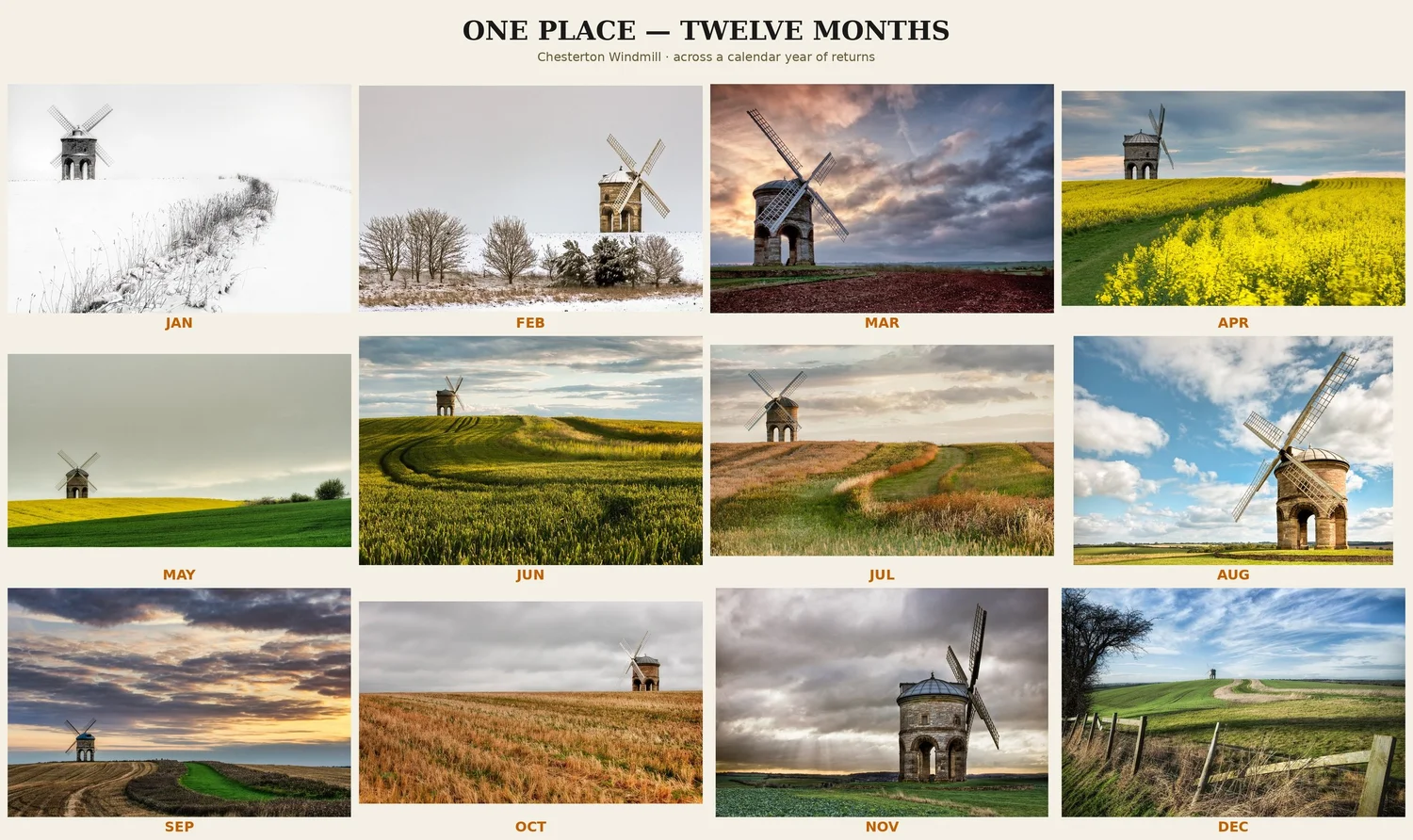
Twelve months. The same windmill across the calendar year. Twelve returns, one per month, assembled over years of showing up. Nothing changes except time — and time changes everything. The crop, the crop colour, the sky, the moisture in the air, the angle of the light. The windmill is a constant. The photograph is not.
Why most of us don't do this
Returning feels like cheating. It isn't.
We've been sold a story that serious photography requires travel, requires novelty, requires a bigger budget and a further destination. "Scouting new photography locations" sounds like craft. "Going back to the windmill again" sounds like laziness.
It is the opposite.
Going somewhere new, once, gives you the thing everyone else already got. Going back to the same place thirty times gives you the thing nobody else has — because nobody else was patient enough to stay.
The returning is the work. The place is incidental. And most of the best photography locations in your own life are closer than you think — within an hour of where you live, almost certainly, if you'll let the discipline of the return do its job.
What this looks like on a Tuesday
Commit to twelve returns
Pick one place within an hour of where you live. Anywhere — a stretch of coast, a reservoir, a wood, a hill, a bend in a river, a single tree in a field. It doesn't matter if it's famous or anonymous. Famous actually works against you, because you'll chase the shot other people have already made.
- Commit to twelve returns. One a month for a year. Weather, mood and light don't choose — you just go on the date you set.
- Keep the photographs together. Don't grade them against other people's. Grade them against each other.
- Watch what happens to the place in your hands over twelve visits. And watch what happens to you over twelve visits.
By visit six, you'll start seeing things you didn't see on visits one through five. That's the return doing its work. Nothing else needed to change.
"Be still with yourself until the object of your attention affirms your presence."
— Minor White
Where this fits
Three editions on what we outsource
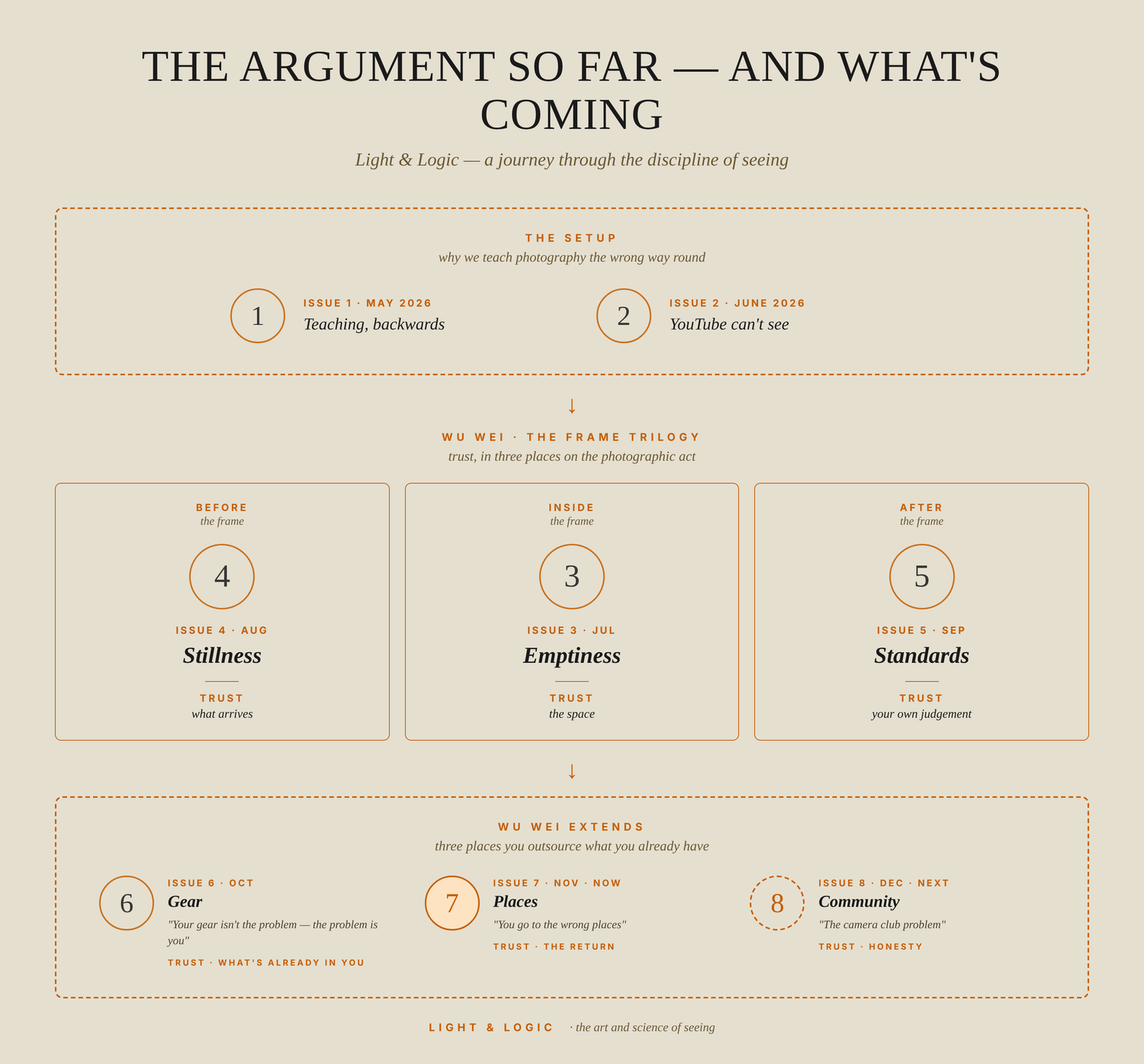
This is Issue 7 of Light & Logic, and the second in a three-part arc about things photographers hand over — the things we outsource when we could, instead, own them.
Issue 6 · Gear — trusting what's already in you.
Issue 7 · Places — trusting what's already around you. The photography locations you already know will outperform the ones you don't, if you'll go back to them.
Issue 8 · Community — trusting the people whose feedback is worth having. The camera-club problem, the review loop, honest critique. Out in December.
All three carry the same argument in different clothes. You don't need to acquire. You need to notice. You already have enough.
If you want to actually do this · new for 2027
A Year at Chesterton — one place, twelve months
I'm running the return itself as a programme. Twelve monthly sessions at Chesterton Windmill across 2027 (and into mid-2028), six annual places, £480 upfront for the year — or £50 for a single session if you'd rather dip in. Provisional dates published; weather and group agreement allowed to move a date within its month.
The point isn't the twelve pictures you'll come away with on the day. It's what a year of returning to one of your photography locations does to how you see a place.
See the full programme, dates and FAQs →
About the images
Chesterton Windmill · Warwickshire
Chesterton Windmill sits on a low ridge between Leamington Spa and Harbury, about forty-five minutes from my home in Coventry. Built in 1632, it's one of only a handful of English tower mills on an open stone arcade — the sails rest on a drum that sits on four arches, with the mill floor above. It has no sails for most of the year (they're removed for conservation) and no public interior access, but the mound is a public right of way and the light rewards anyone patient enough to visit at dawn or dusk, in any season.
I return to it partly because it's close enough to be possible, and partly because — two decades and a few hundred visits later — it still shows me something I haven't photographed before. That's the test of a good place: it doesn't run out.
More of my work from this and other photography locations like it on my site.