
How to Photograph a Solar Eclipse (UK): Camera & Phone
How to Photograph a Solar Eclipse — Safely, With Any Camera or Phone
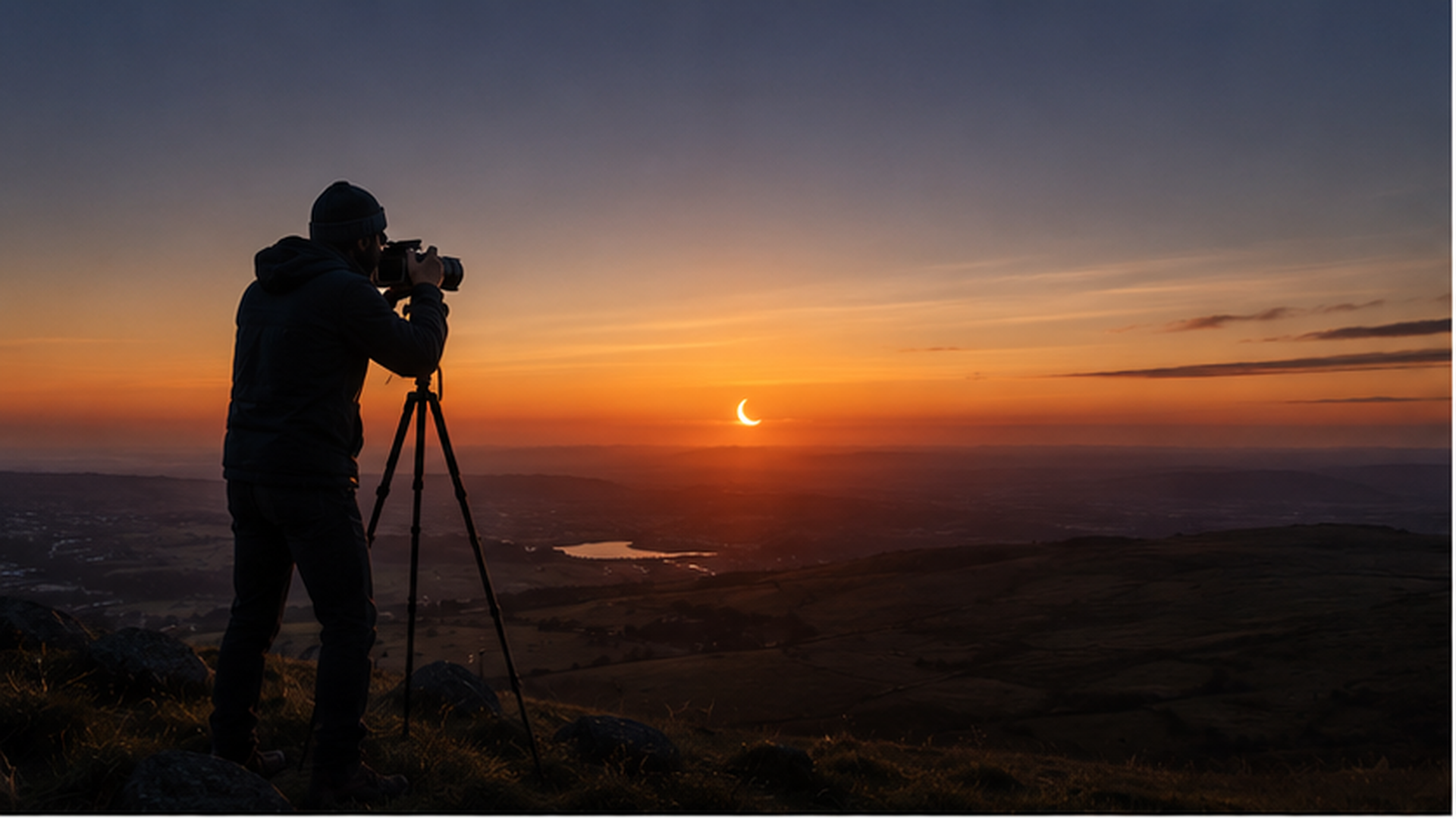
A solar eclipse is one of the few times a landscape photographer gets to treat the Sun itself as the subject. This guide covers how to photograph one safely and well — from the UK, with either a proper camera or just your phone. It applies to any UK eclipse, not one single date, so it is worth bookmarking: the future-dates table near the end lists every solar eclipse visible from Britain for decades to come.
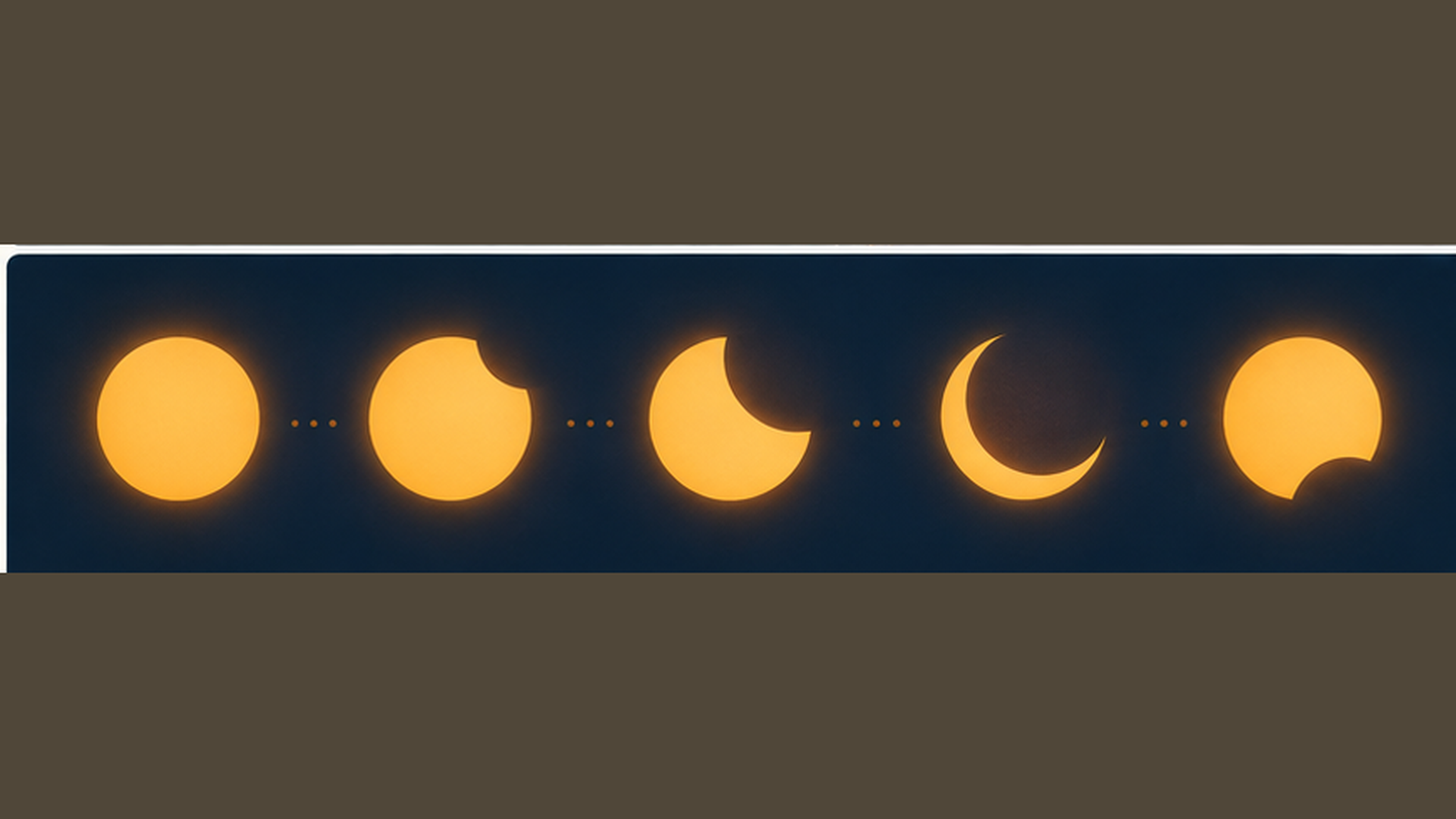
One thing to be clear about from the start: from the UK you are almost always photographing a partial eclipse, low in the western sky, as the Sun is setting. That changes how you shoot it — think of it as a sunset photograph with an extraordinary Sun, not a shot straight up into a black midday sky.
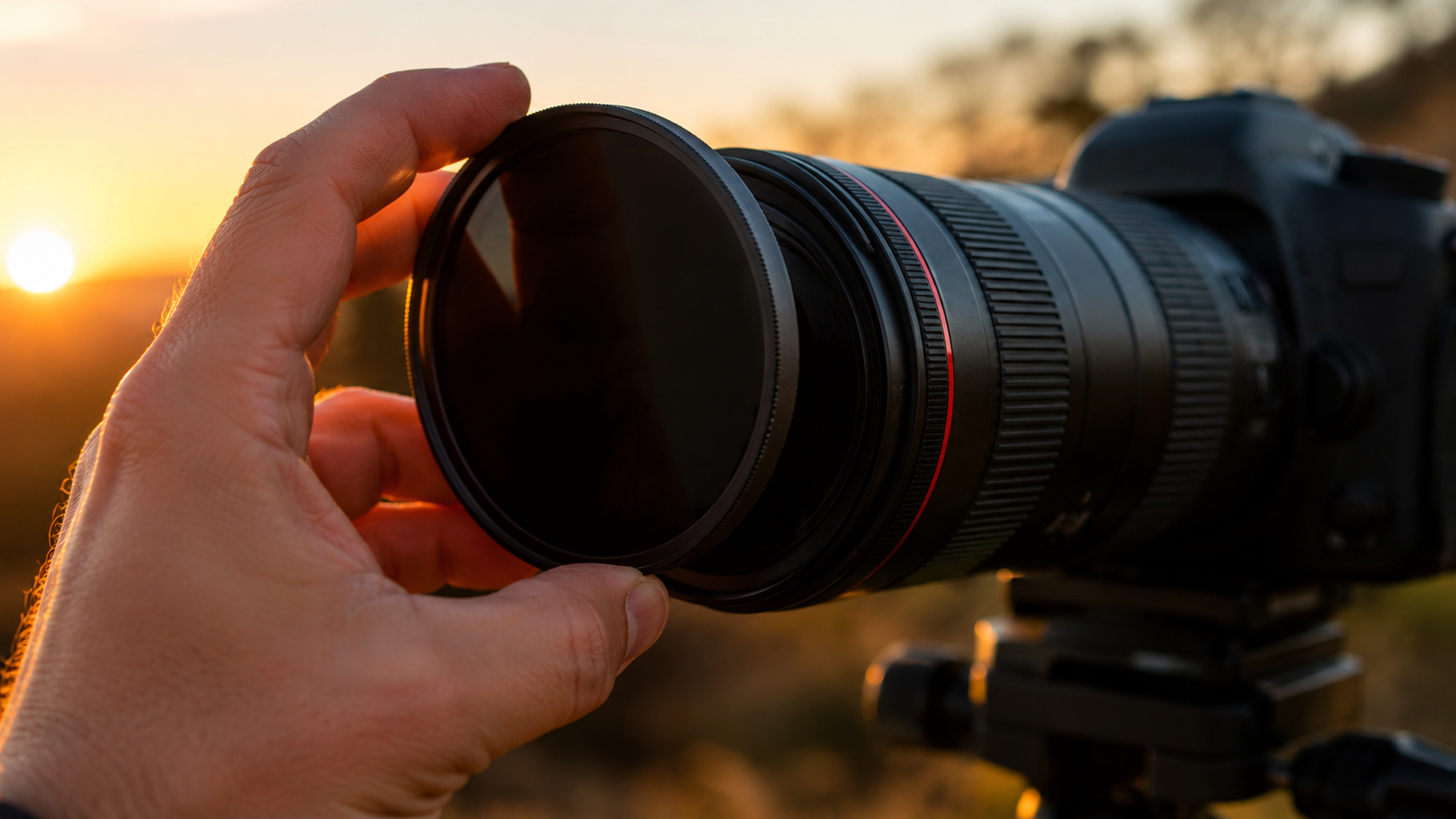
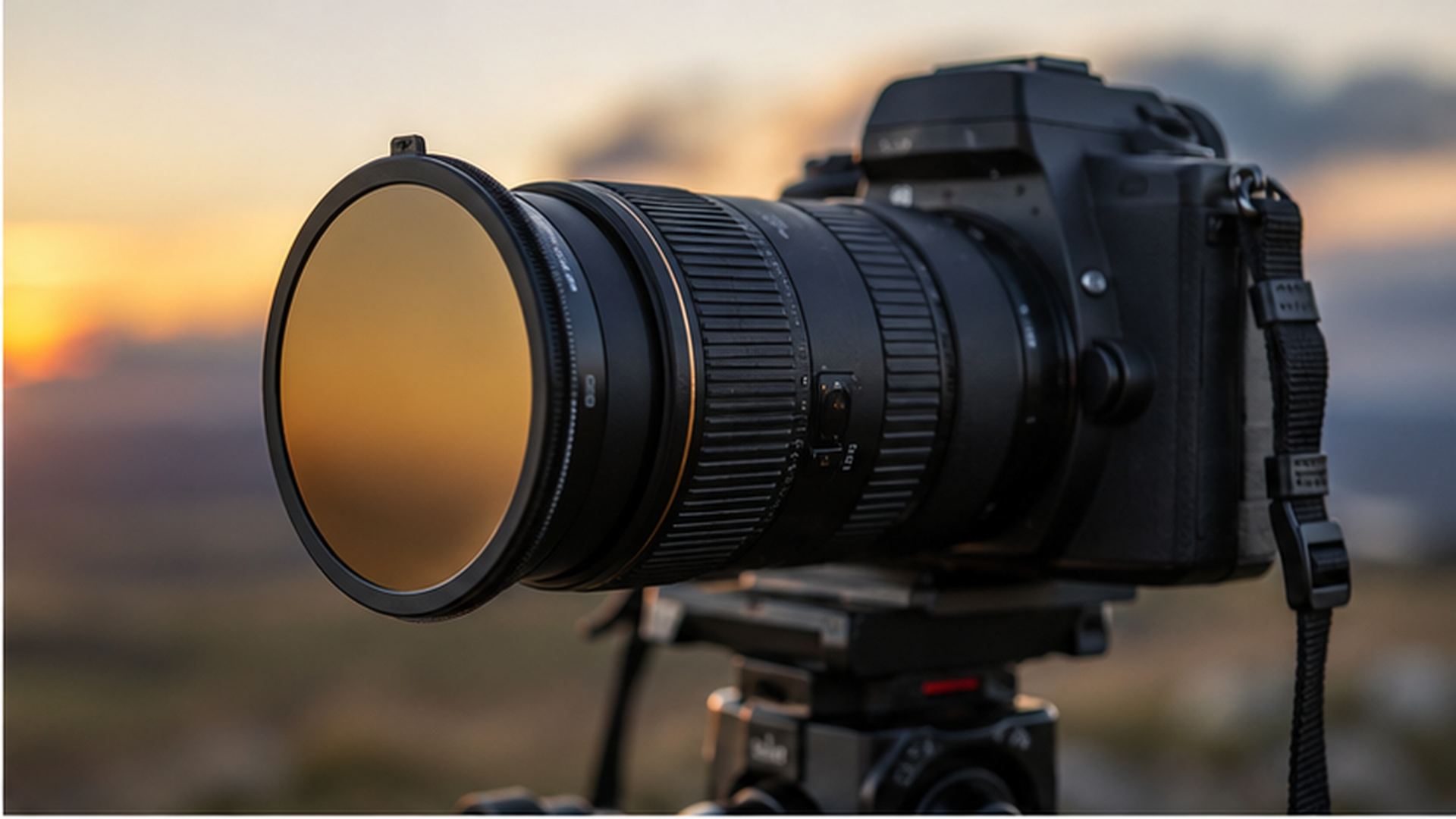
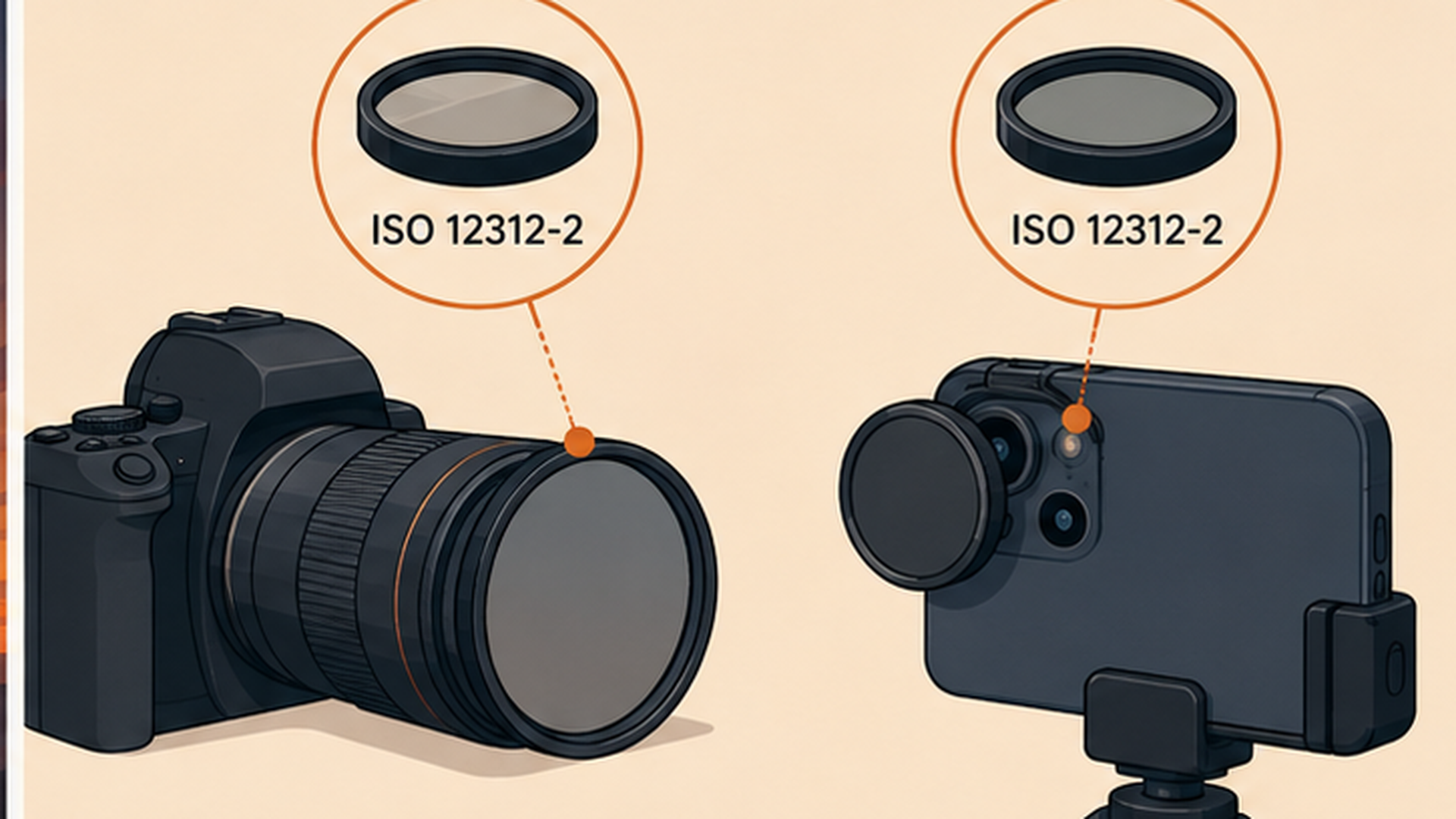
Read this before anything else — eye and gear safety. Never look at, or point an unfiltered camera or phone at, a partially eclipsed Sun. During every partial phase the Sun is still overwhelmingly bright and will damage your eyes and your camera sensor instantly. You must use a dedicated solar filter certified to ISO 12312-2 over the front of the lens (or over the phone's rear lens) for the entire partial phase. Ordinary sunglasses, ND filters, polarisers and exposed film are not safe substitutes.
What you need
You do not need a telescope or exotic kit to come away with a strong eclipse frame. The essentials:
- A certified solar filter (ISO 12312-2) sized to fit over the front of your lens, or a solar filter sheet you can cut and mount over a phone lens. This is the one non-negotiable item.
- A tripod. You are shooting a small, low Sun near dusk; a stable base is what separates a sharp frame from a soft one.
- A telephoto lens if you want the Sun large in frame — roughly 300mm or longer on full-frame. A wide lens is perfectly good for a landscape-with-eclipse composition.
- A remote release or the 2-second timer to avoid shake when you press the shutter.
With the filter sorted and the tripod up, the settings are where most people overthink it. Here is the honest version.
How to photograph the eclipse with a camera (DSLR or mirrorless)
Work in Manual mode and shoot RAW — you will want the latitude afterwards. There is no single correct exposure, because every solar filter transmits a different amount of light. Treat these as a starting point and adjust by eye:
- ISO 100 to keep the file clean.
- Aperture around f/8 — the sharpest part of most lenses, and enough depth for a distant Sun.
- Shutter speed: test a range. With a solar filter fitted, start somewhere in the fast band and bracket several frames. Check the back of the camera and the histogram after each: you want a crisp solar disc with the crescent clearly defined and the highlights not blown out.
- Focus manually on the Sun's edge and lock it — autofocus struggles on a filtered disc.
The single most useful habit is to review as you go. Light levels shift quickly as the Sun sinks and the eclipse deepens, so an exposure that worked ten minutes ago will need nudging.
No camera to hand? A modern phone is genuinely capable here — with two caveats.
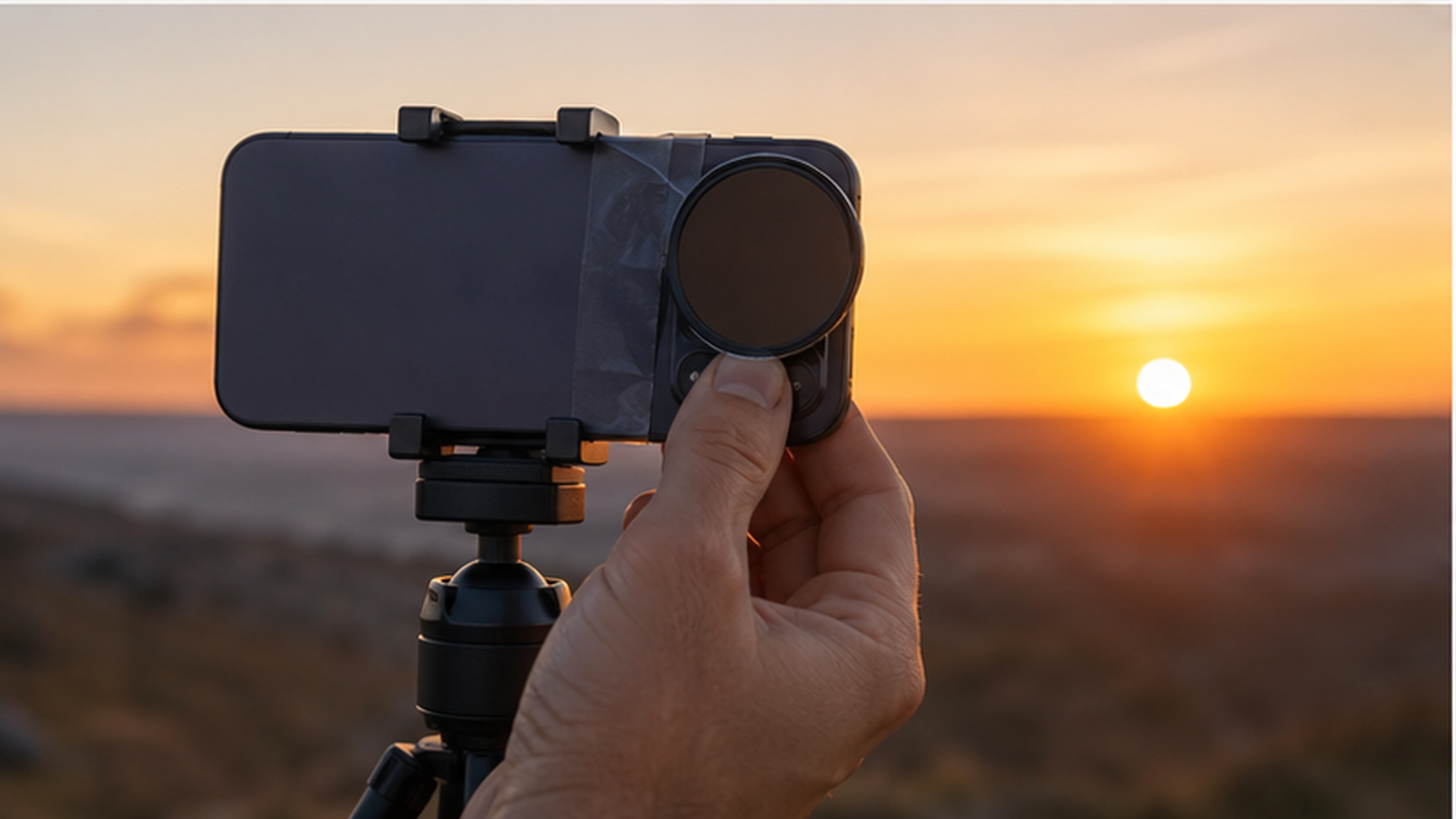
How to photograph the eclipse with a phone
A phone is best for the wide, atmospheric shot: the eclipsed Sun small in a real landscape, the changing light, the people watching. For a close-up of the disc itself a phone will struggle, but you can still do well:
- Filter first, always. Cover the rear lens you are using with a certified solar filter for every partial phase. This protects the lens and stops the frame blowing out.
- Lock focus and exposure. Tap and hold on the Sun to lock; on iPhone drag the sun icon down to pull the exposure back, on Android long-press then adjust.
- Use optical zoom, not digital. Digital zoom just enlarges and softens; use your phone's telephoto lens if it has one.
- Shoot RAW if you can — some phones offer it natively, otherwise a manual camera app unlocks it.
- Steady it on a small tripod or clamp, and use a timer or voice shutter to avoid shake.
Whichever you are using, the picture that actually stands out is usually not the one that fills the frame with the Sun — it is the one that shows where you were.
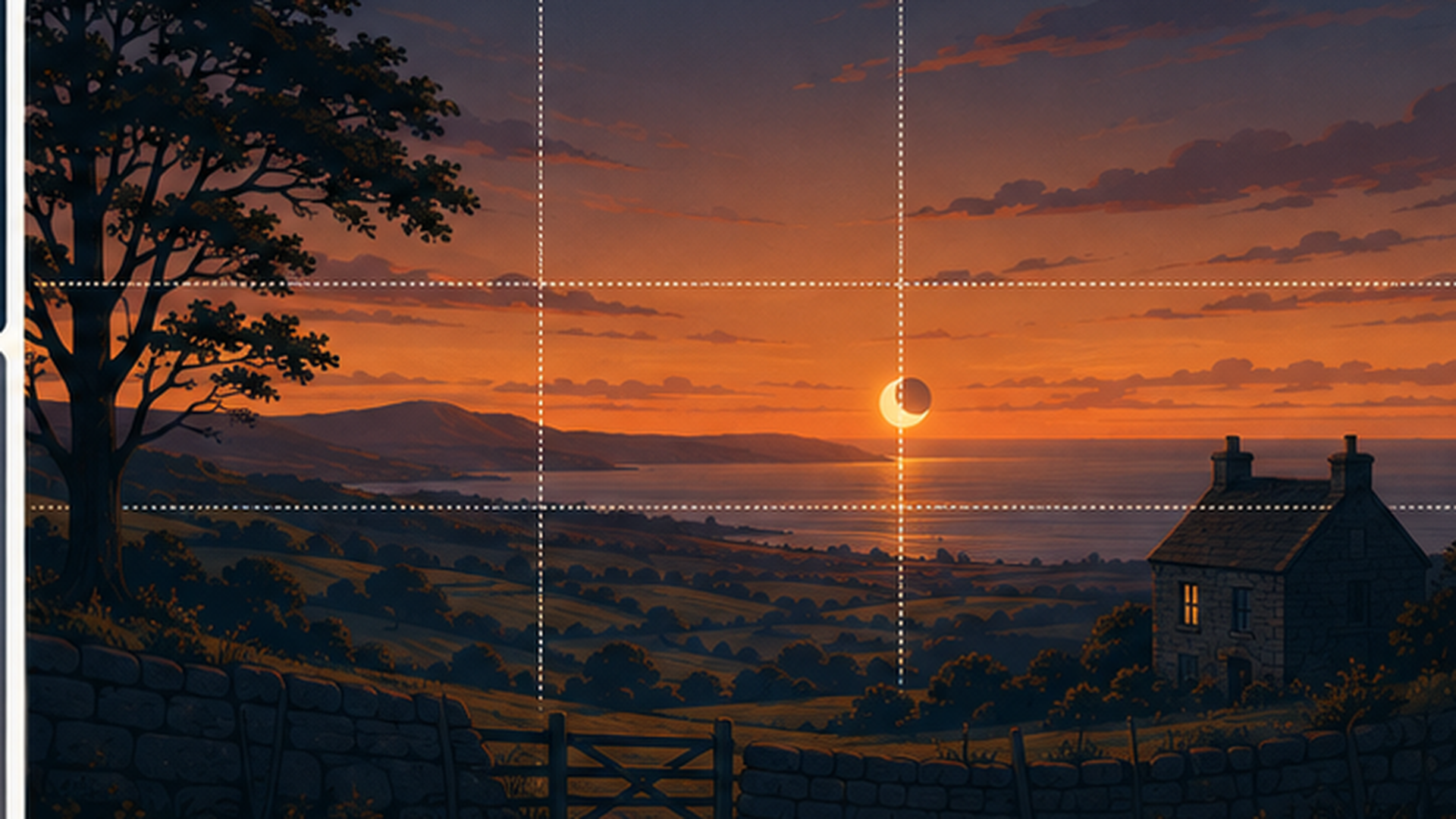
Composition: shoot it like a UK sunset
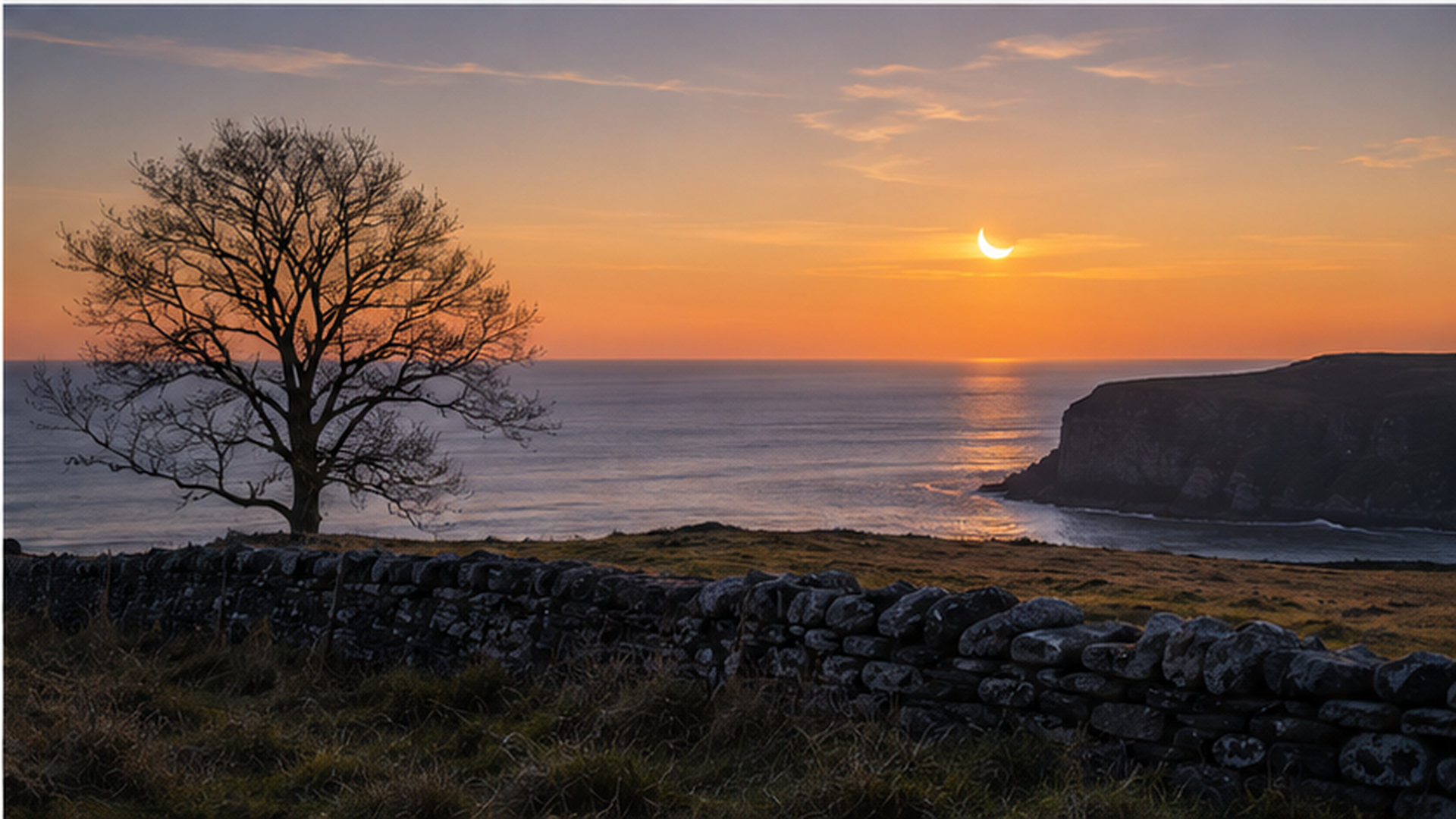
Because a UK eclipse happens with the Sun low in the west, you are effectively making a sunset photograph. Lean into that:
- Find an unobstructed western horizon. An elevated, coastal or open spot beats a garden hemmed in by trees and rooftops. Scout it the evening before at the same time.
- Give the Sun a foreground. A tree, a ridgeline, a headland or a lone building gives scale and turns a record shot into a photograph.
- Let it be small. A tiny eclipsed Sun in a big, characterful landscape is often more compelling than a frame-filling disc floating in black.
- Watch the light on the land. As coverage deepens the whole scene dims toward an eerie dusk — that ambient change is part of the story.
Future solar eclipses visible from the UK
This is the part worth saving. The next total solar eclipse visible from the UK is a long way off — 2090 — but there is a run of partial eclipses before then, plus one near-total event. Dates and coverage below are from the Royal Observatory Greenwich.
| Date | Type (from UK) | Approx. max coverage |
|---|---|---|
| 12 August 2026 | Deep partial | 90–96% |
| 2030 | Partial | ~50% |
| 2053 | Partial | ~40% |
| 2066 | Partial | ~60% |
| 2075 | Partial | ~70% |
| 3 September 2081 | Near-total partial | up to 99% |
| 2082 | Partial | ~70% |
| 2088 | Partial | ~40% |
| 2090 | Total | 100% (next UK total) |
Worth noting for the diary: a 90% partial lunar eclipse is visible from the UK on 28 August 2026, about two weeks after the August solar eclipse — a much easier target that rewards the same low-western-horizon planning.
Frequently asked questions
Can I use sunglasses or an ND filter to photograph the eclipse?
No. Sunglasses, neutral-density filters, polarisers, smoked glass and exposed film are not safe for looking at or photographing a partially eclipsed Sun. Only a solar filter certified to ISO 12312-2, mounted over the front of the lens, is safe for the partial phases.
What camera settings should I start with for a partial solar eclipse?
With a solar filter fitted, a sensible starting point is Manual mode, ISO 100, aperture around f/8, RAW format, and manual focus locked on the Sun's edge. There is no universal shutter speed — bracket several frames across a fast range and check the histogram for a crisp disc without blown highlights.
Can I photograph a solar eclipse with just my phone?
Yes, especially for wide, atmospheric shots of the eclipse in the landscape. You still need a certified solar filter over the phone's rear lens for every partial phase. Lock focus and exposure by tapping and holding the Sun, use optical rather than digital zoom, and steady the phone on a small tripod.
When is the next solar eclipse visible from the UK?
After the deep partial on 12 August 2026, the next partial eclipses visible from the UK fall in 2030 (~50%), 2053, 2066, 2075, 2082 and 2088. A near-total partial (up to 99%) occurs on 3 September 2081, and the next full total solar eclipse visible from the UK is in 2090.
Want to go further than eclipses?
Learn photography properly — exposure, composition and the seeing that turns snaps into photographs — with 60 modules across 5 levels in my online Academy. Start with a free 14-day trial, no card required.
Start the free online photography course 14 days free · £79/yr only if you continue · no auto-billing