
Best Tripod for Headshots: Top Picks & Reviews 2026
Table of Contents Show
Best Tripod for Headshots: Top Picks & Reviews 2026
Headshot photographers face a unique challenge that landscape or wildlife shooters rarely encounter: they need to maintain unwavering consistency while fully engaging with living, breathing subjects. When you're directing expressions and building rapport, the last thing you want is to hold a camera for hours while worrying about composition drift. A purpose-built tripod transforms this dynamic by anchoring your framing decisions, freeing you to focus entirely on capturing authentic personality rather than technical operation.
The difference between a standard tripod and one optimised for headshots comes down to precise requirements that professional portrait work demands. Camera stability at low shutter speeds becomes critical when using continuous lighting, which forces slower exposures that magnify even minor shake. Equally important is consistent frame composition across sessions. A tripod locks in camera height and angle, enabling uniform framing throughout a shoot and across multiple sessions, essential for producing cohesive professional portfolios.
Eye-level positioning precision stands as perhaps the most fundamental requirement. Professional practice requires positioning the camera at the subject's eye level, typically ranging from 60 inches (152 cm) for seated portraits to 65-70 inches (165-178 cm) for standing adults. This ergonomic approach not only creates more flattering images but prevents physical strain, allowing photographers to shoot comfortably for extended durations.
Our Methodology: The recommendations in this guide draw from Alan Ranger Photography's professional headshot practice, testing tripods across studio sessions and corporate location shoots. We evaluated each model based on stability with professional portrait lenses (70-200mm), height adjustability for varied subject statures, setup speed during high-volume sessions, and real-world performance in both controlled studio environments and challenging on-location conditions. Where noted, some recommendations incorporate specifications and third-party professional reviews to supplement our hands-on experience.
Why Headshot Photography Requires Specific Tripod Features
Headshot work imposes distinct technical demands that general-purpose tripods often struggle to meet. The ability to dial in framing precisely, then step away to concentrate on your subject and their expressions, represents a workflow shift that transforms results. This approach maintains consistency across different shoots while preventing the physical exhaustion experienced after marathon portrait sessions.
However, location headshot photographers face practical challenges that theory overlooks. Moving even 30 cm on uneven surfaces (sloped office floors or outdoor areas during corporate events) requires full leg leveling and readjustments, significantly slowing workflow during dynamic shoots. The solution lies in quality carbon fibre tripods with quick-release legs and fluid ball heads paired with leveling bases, enabling faster repositioning without full disassembly.
Portable yet stable construction creates a delicate balance. Headshot tripods must travel easily for location work while delivering studio-grade stability. Carbon fibre models weighing around 2.5 pounds maintain robust leg spreads and base reinforcement for vibration-resistant performance. Yet transport remains challenging. Lightweight tripods prove difficult to attach to backpacks for city walks or exceed plane limits, exacerbating fatigue during back-to-back corporate shoots. Professionals recommend storing in main luggage with dedicated backpack straps, reserving full setups for static studio work while using lighter alternatives for mobile assignments.
Height becomes equally critical. When fully extended without using the centre column, your tripod should reach chin level to avoid stooping during extended sessions. This ergonomic consideration directly affects your ability to maintain energy and focus throughout high-volume portrait days, allowing you to engage subjects conversationally while shooting via tether-release or wireless trigger rather than hunching over the camera.
Best Tripod for Headshots: Detailed Reviews
Best Overall Tripod for Headshots
The Gitzo Mountaineer GT2532 Series 2 stands as the top all-around professional tripod, praised for exceptional build quality, stability, and versatility suitable for studio portrait work. Reaching 170 cm (67 inches) at maximum height while weighing just 1.5 kg (3.3 pounds), it delivers the rare combination of reach and portability that location headshot photographers require.
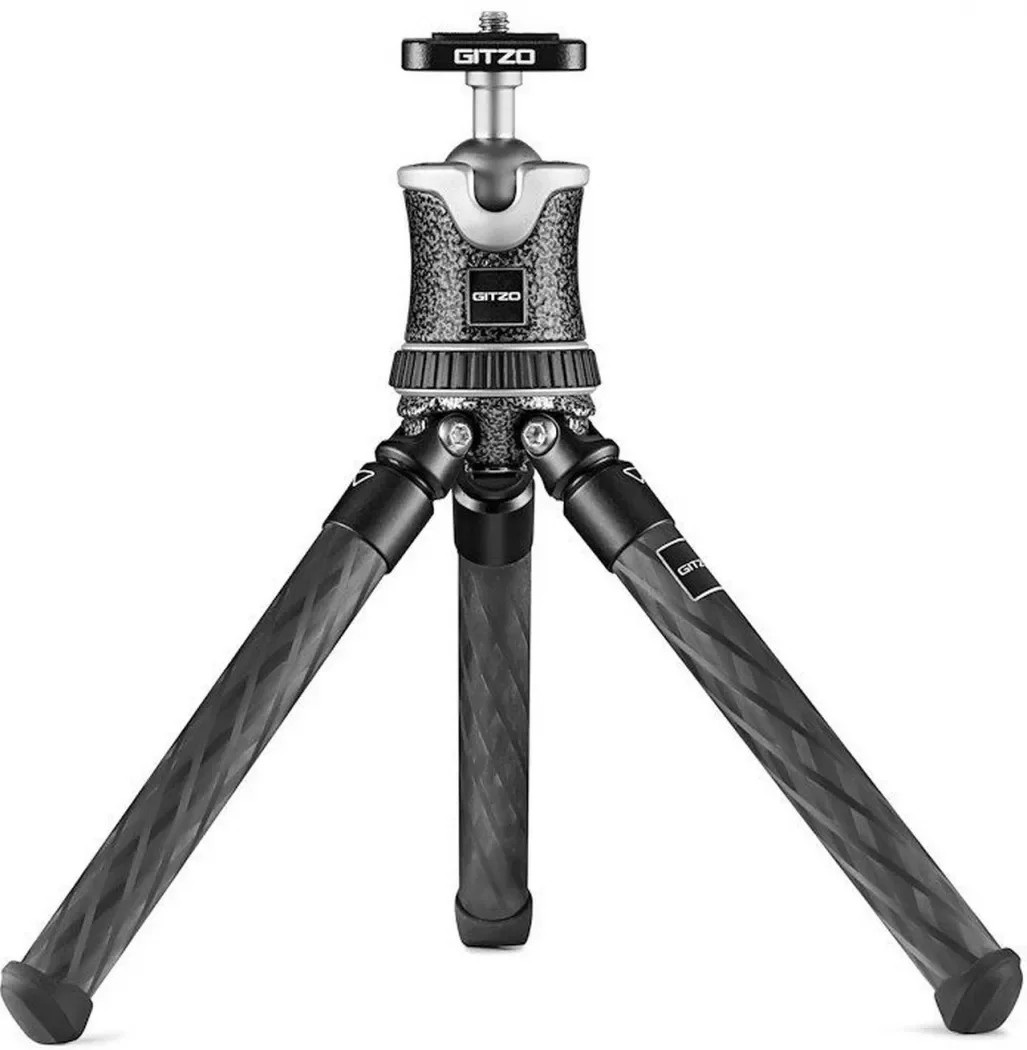
Its carbon fibre rigidity excels in precise adjustments essential for controlled studio setups. The 10 kg (22 lb) load capacity comfortably supports full-frame DSLRs paired with professional portrait lenses like 70-200mm f/2.8 optics, the focal length range preferred for flattering facial compression. Advanced twist locks enable independent or simultaneous leg section locking without endless spinning, ideal for quick setups where precise height changes are frequent.
What distinguishes this model in headshot applications is its ability to maintain rock-solid stability even when extended to full height, critical when working with the longer lenses that portrait work demands. The carbon fibre construction offers better vibration dampening than aluminium, with quicker settling after movement and maintained rigidity even at maximum extension.
Best Budget Tripod for Headshot Photography
The Geekoto CT25Pro Craftsman delivers exceptional value at approximately £150, proving that budget constraints needn't compromise headshot quality. Its carbon fibre legs provide lightweight durability at just 2.36 pounds, while the reversible centre column enables low-angle headshots when creative perspectives demand unconventional positioning.
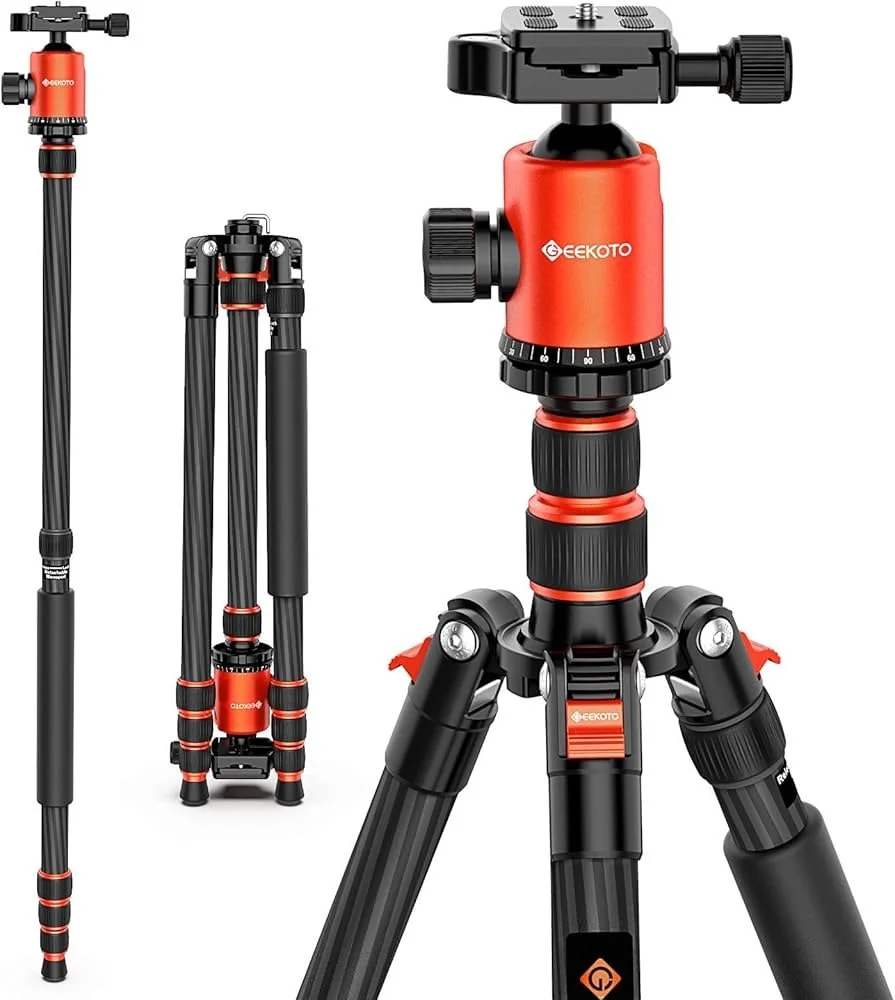
Reaching 79 inches fully extended, it accommodates even the tallest subjects with room to spare. The included Arca-type ball head facilitates the quick, intuitive adjustments that headshot work demands (far more practical than pan-tilt alternatives when subjects shift position during posing). With 27 lb capacity, it handles professional camera bodies and heavier portrait lenses without concern.
Five-star reviews consistently praise its stability in the budget category, with photographers noting performance well beyond its price point. The flip locks enable rapid deployment, valuable during fast-paced headshot sessions where multiple subjects require efficient transitions.
Best Premium Tripod for Professional Headshots
When professional reputation depends on consistent results, the Really Right Stuff TFC-24L Series 2 justifies its premium positioning through uncompromising performance. Described as the true all-rounder of professional tripod systems, it offers an 85 lb load capacity suitable for any professional lens setup, including the heaviest telephoto configurations some photographers use for compressed headshot aesthetics.
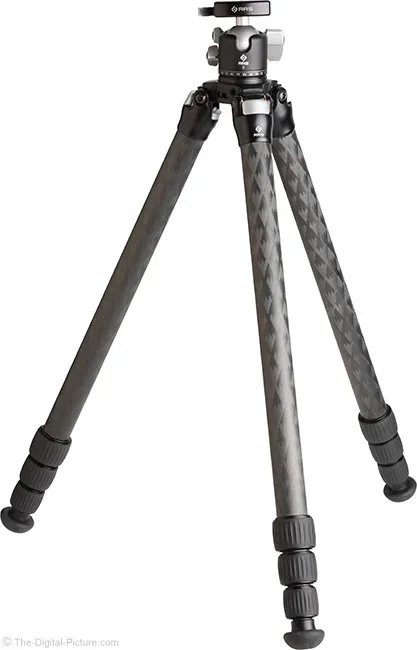
This capacity proves particularly valuable when tethering to laptops for live review during sessions. It's a technique for teaching subjects poses and adjustments that builds better connection and enables immediate feedback. The added weight of cables and laptop tethers becomes negligible with such substantial support capacity.
The carbon fibre construction prioritises vibration dampening over mere weight reduction. Professional photographers favour this superior dampening characteristic for its ability to settle quickly after adjustments, eliminating the settling time that aluminium requires. In high-volume studio work where efficiency determines profitability, these seconds accumulate meaningfully across dozens of subjects.
Best Lightweight Travel Tripod for Headshots
Location headshot photographers require support that travels without burden. The Sirui Traveler 5CX achieves this at just over 1.5 pounds (0.72 kg), positioning itself among the lightest options available while supporting 13 lb (6 kg) camera setups. That's adequate for full-frame DSLRs with portrait lenses.
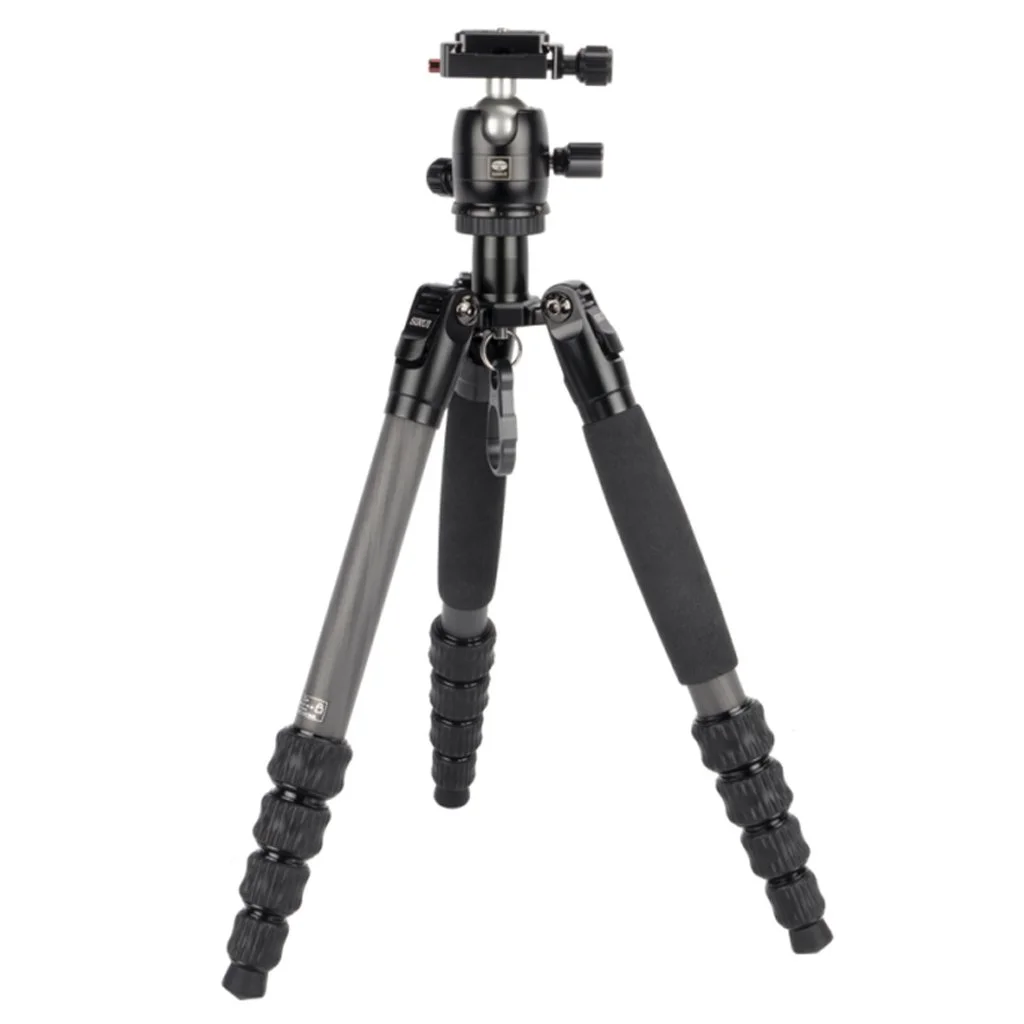
This weight consideration extends beyond mere convenience. When shooting environmental headshots across multiple locations during a single day, every ounce compounds into fatigue that affects your creative engagement with subjects. Maintaining energy for genuine interaction matters more than minor gains in absolute stability for most location scenarios.
The ball head enables precise angle adjustments and smooth panning necessary for portrait photography, while the compact design doesn't sacrifice the height needed for proper eye-level positioning. Folding to carry-on compatible dimensions, it eliminates the complications of checked luggage while maintaining professional capability.
Best Studio Tripod for High-Volume Headshot Sessions
High-volume headshot work demands equipment that withstands repetitive use without performance degradation. The FEISOL CT-3442 Tournament Class, recommended by headshot photographer Peter Hurley and the Headshot Crew, offers 2.5 lb carbon fibre build with exceptional durability and stability despite its light weight.
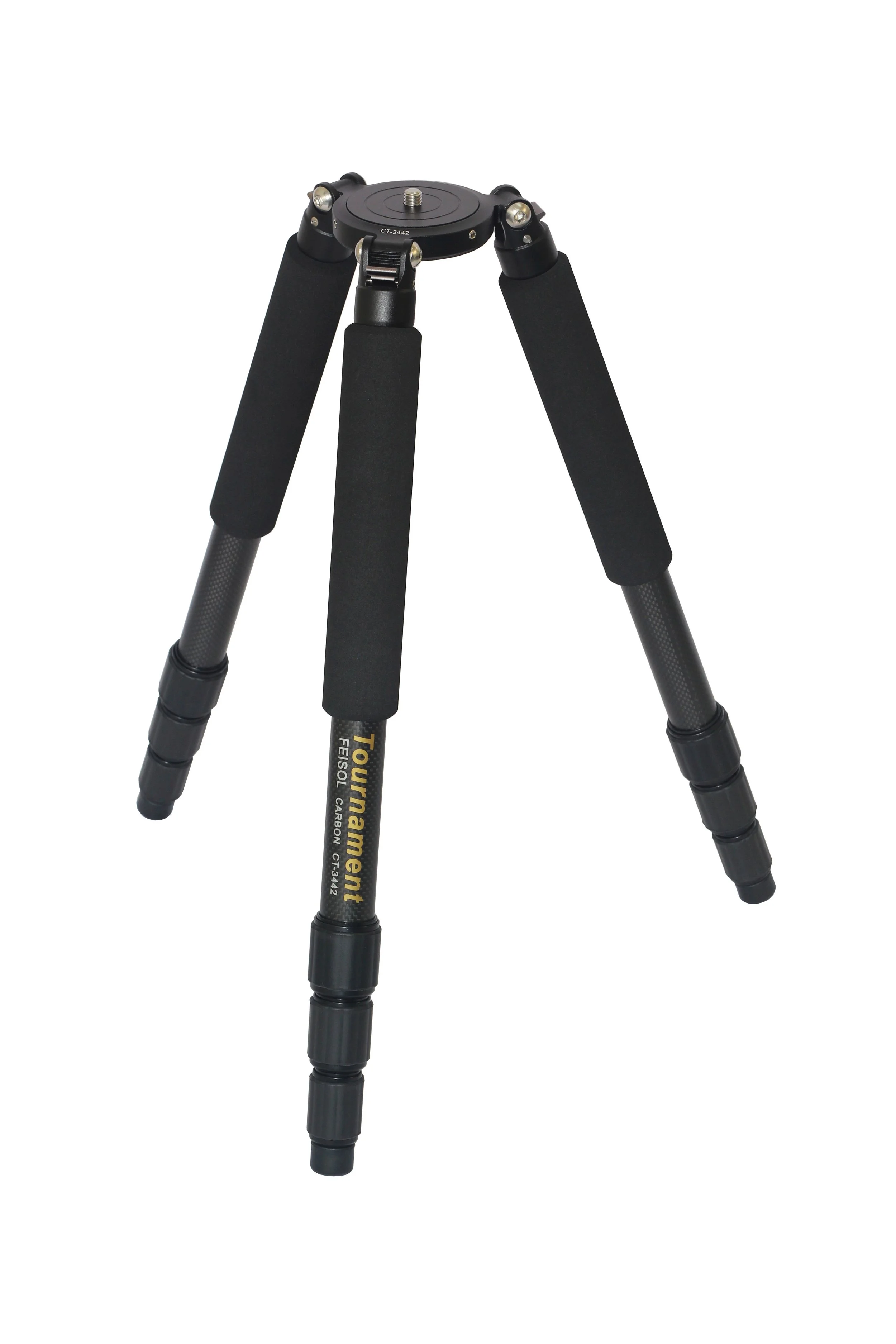
Quick-release leg locks enable fast setup and adjustments essential for efficient workflow during sessions where dozens of subjects require individual attention. This efficiency directly impacts your ability to maintain consistent quality while meeting tight scheduling demands that corporate headshot days often impose.
For photographers requiring additional height or broader stability, the FEISOL CT-3472LV M2 Rapid serves as the upgraded studio favourite. Its taller stature and stronger, wider base enhance stability under heavy use, with carbon fibre construction ensuring durability across repeated sessions.
Best Tripod with Centre Column for Eye-Level Headshots
Centre columns provide crucial versatility when photographing subjects of varying heights without constant leg adjustments. The Manfrotto MT055CXPro4 with Q90 Center Column stands out through its 90-degree rotating capability, enabling eye-level positioning for headshots while maintaining stability.
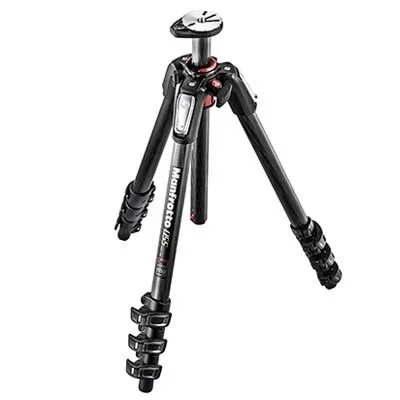
This rotation feature proves particularly valuable when switching between standard portraits and unconventional angles without repositioning the entire tripod. The low minimum height of 3.5 inches provides flexibility for varied shooting approaches, while the 360-degree rotating bubble level helps ensure proper orientation from any position.
The Vanguard VEO 3+ 303CBS advances this concept through complete 180-degree centre column pivoting, superior to typical 90-degree designs. This range offers maximum versatility for precise eye-level framing, while the included dual-axis ball head provides level panning capability even when tripod legs aren't perfectly levelled. That's particularly useful for maintaining consistent headshot composition across varied studio or location environments.
Essential Features to Consider When Choosing a Headshot Tripod
Maximum Height and Working Position
Selecting appropriate height determines whether you'll work comfortably or develop chronic back strain. Your tripod should reach chin, nose, or eye level when fully extended without using the centre column. This ensures comfortable composition at subject eye level for standing headshots while maintaining stability. For a six-foot photographer, this typically means 60-70 inches maximum height (152-178 cm).
The working height differs from maximum extension due to your camera and head adding 8-10 inches to the system. Account for this by targeting tripods rated slightly higher than your apparent needs. Versatile range from approximately 20 inches low to above eye level accommodates seated subjects or varied heights, essential when photographing diverse client bases.
Consider that extending the centre column reduces stability, a critical factor when using the longer focal lengths that headshot work favours. Professional photographers prioritise tripods that achieve necessary height through leg extension alone, reserving centre column use for final micro-adjustments rather than primary height achievement.
Stability and Load Capacity for Portrait Lenses
Load capacity requires a safety margin beyond your equipment's combined weight. Professional sources recommend at least 4.5-15 lbs (2-7 kg) capacity, exceeding the weight of camera plus 70-200mm lens, which typically totals 3-5 pounds. This margin accounts for stability during long exposures or wind conditions.
Portrait lenses in the preferred 85-200mm range create leverage that standard weight calculations don't fully capture. The extended lens barrel acts as a moment arm, multiplying effective stress on the tripod head. Models supporting up to 15 lbs provide vibration-resistant performance at maximum height, where leverage effects intensify.
Carbon fibre's superior vibration dampening becomes particularly relevant here. While carbon's stiffness-to-weight ratio is theoretically 5x aluminum's, real-world performance depends heavily on resin quality and construction. Peak Design's carbon fiber tripod demonstrates ~20% more stiffness than its aluminum equivalent under certain conditions, contributing to consistently sharp images that aluminium alternatives struggle to match.
Head Type: Ball Head vs Pan-Tilt for Headshots
Professional portrait photographers favour ball heads over pan-tilt heads primarily for their quick, intuitive adjustments that facilitate rapid posing changes and subject interaction. Ball heads enable fast, single-knob repositioning in any direction, ideal for portrait work involving movement like subject shifts or quick reframing.
This speed advantage proves critical when capturing fleeting expressions. When tripod-mounted, photographers can step aside to interact naturally while shooting, maintaining eye contact and rapport rather than hunching over the camera. This approach prevents both physical strain and accidental equipment movement during extended sessions.
Pan-tilt heads offer independent control of pan, tilt, and vertical axes via separate knobs, excelling in studio headshots needing exact levelling or alignment without disturbing other planes. However, they're slower and bulkier. Those are attributes that create friction in dynamic portrait workflows.
Leg Lock Mechanisms and Setup Speed
Leg lock mechanisms directly impact how quickly you can deploy and adjust your tripod between subjects. Advanced twist locks like Gitzo's G-lock outperform standard flip locks for rapid adjustments in studio workflows by enabling independent or simultaneous leg section locking without endless spinning. They're praised as the best system tested for scenarios where precise height changes occur frequently.
Single-lever flip lock systems revolutionise deployment speed over multi-section alternatives. The Sachtler flowtech approach features legs that auto-extend smoothly with minimal manipulation, described as revolutionary for controlled environments like studios. This design reduces repetitive unlock-extend-lock cycles across three legs, saving valuable seconds during high-volume headshot days.
Twist locks generally edge flip locks in studio reliability through better dirt and sand resistance plus glove-friendly operation, though quality varies significantly between manufacturers. For headshot-specific work conducted primarily indoors, this durability advantage matters less than pure adjustment speed.
Material Choice: Carbon Fibre vs Aluminium
Carbon fibre absorbs vibrations better than aluminium, beneficial for sharp headshots particularly when using longer focal lengths or in windy conditions. This dampening characteristic proves critical during location shoots where environmental factors introduce unwanted movement. Carbon fibre legs flex less under load, contributing to sharper images.
Aluminium tripods provide greater stability for stationary studio setups through their heavier mass, which resists fine vibrations through sheer inertia. This weight becomes disadvantageous for location work but proves valuable when your tripod remains fixed throughout a session.
Environmental durability favours carbon fibre through superior corrosion resistance, making it more suitable for studios in humid environments or near coastal areas where salt air accelerates aluminium degradation. For photographers working across varied conditions, this longevity justifies carbon fibre's premium pricing through extended service life.
Centre Column Options and Flexibility
Centre columns add versatility through quick height adjustments without leg repositioning, valuable when accommodating subjects of varying stature during sequential portrait sessions. A long centre column with wide adjustment range enables positioning cameras for subjects ranging from five feet to 6.5 feet tall without leg changes, streamlining workflow during sessions with diverse client heights.
Extended centre columns reduce stability, a critical consideration since they elevate the camera's centre of gravity beyond the tripod's leg support triangle. Professional photographers prioritise models achieving necessary height through leg extension alone, using centre columns only for final micro-adjustments.
Some tripods feature reversible or pivoting centre columns particularly useful for overhead shots or unconventional angles, though these capabilities matter less for standard headshot work than for macro or creative portrait applications.
How to Use Your Tripod for Better Headshots
Optimal Tripod Height and Camera Positioning
Position your camera at subject eye level for headshots and bust-up portraits. This creates direct, connective perspective mimicking human interaction while avoiding unflattering distortions from low angles that enlarge chins or high angles that shrink faces. Ideal height ranges from 60-70 inches for standing adults, though individual variation demands flexibility.
Elevate slightly above eye level for plus-size subjects or close bust shots. This positioning reduces perceived body size by foreshortening the frame and emphasising the face, making subjects appear slimmer and more balanced.
Experiment within 50-85mm focal lengths at eye height to prevent facial distortion from wide angles while maintaining subject isolation. Tripod adjustability to proper eye level ensures consistency across sessions, enabling you to establish framing then focus entirely on expression and direction.
Achieving Consistent Framing Across Multiple Subjects
Pre-establish framing and step aside before subjects arrive. Dial in exact framing, composition, and camera height on the tripod during setup, then position yourself to the camera's side to interact naturally without accidentally moving the equipment during sessions. This approach maintains uniform lighting, background positioning, and composition standards across all subjects.
Utilise a long centre column with wide adjustment range to accommodate subjects from approximately five feet to 6.5 feet tall without requiring leg adjustments. This capability streamlines high-volume corporate headshot days where efficiency determines profitability.
Mount a ball head for fluid micro-adjustments as subjects naturally shift during posing. This enables quick, smooth pivoting that compensates for slight position changes without disrupting your established composition. Maintain ergonomic posture beside the camera rather than hunching over it. This prevents physical strain while keeping you free to engage meaningfully with subjects.
Using a Tripod for Self-Portraits and Remote Headshots
Mount your camera at eye level on a sturdy tripod with remote trigger or intervalometer to avoid shake while allowing natural posing. Position your DSLR or mirrorless camera at subject eye height or slightly above for flattering angles, capturing 100-300 frames for selection variety.
Apply single-light softbox or umbrella with reflector in clamshell or loop setup. Place your key light three feet away (matching the modifier width) above and ahead for butterfly or loop lighting patterns, adding a reflector below for catchlights that bring life to eyes.
Set f/4-f/8 aperture, 1/125s or faster shutter speed, and low ISO between 100-400 for sharp facial depth without blur or noise. Enable burst mode via intervalometer for expression variety including relaxed smiles and neutral professional looks. Angle shoulders slightly, lean forward, and experiment with face sides and expressions while directing yourself toward authentic personal branding.
Tripod Accessories That Enhance Headshot Photography
Quick release plates streamline camera attachment and detachment, accelerating workflow transitions between shots and setups during portrait sessions. Arca-Swiss compatible systems enable rapid camera swaps between tripods and handheld shooting, supporting the fluid transitions that contemporary headshot work often demands.
Tripod hooks allow hanging weights like camera bags from the centre column, enhancing stability against wind or vibrations. This simple addition ensures sharper headshots in outdoor or challenging studio environments where environmental factors threaten image quality, particularly noticeable when working with longer portrait lenses.
L-brackets with Arca-Swiss clamps facilitate instant switching between landscape and portrait orientation without removing the camera. This proves ideal for headshot versatility and cable clearance during tethered shoots where laptop connections constrain camera positioning.
Ball heads offering precise 360-degree panning and friction control enable smooth headshot framing and subject tracking, outperforming basic heads in professional portrait stability. Models like the ProMediaGear BH1 provide the fine control necessary for exacting composition while maintaining quick adjustment capability.
Frequently Asked Questions
What height tripod do I need for headshot photography?
Professional sources recommend tripods reaching 60-70 inches maximum height for standing adult portraits, ensuring comfortable composition at subject eye level while maintaining stability. This range accommodates most scenarios without requiring full centre column extension, which compromises stability. For seated portraits, 60 inches (152 cm) typically suffices, though versatile range from 20 inches to above eye level provides flexibility for varied subject heights.
Do professional headshot photographers use tripods?
Professional headshot photographers routinely employ tripods to ensure stability and consistency across their work, particularly when photographing multiple subjects or in controlled studio environments. Tripods lock in camera height and angle, enabling uniform framing throughout sessions. That's critical for producing cohesive professional portfolios. The equipment frees photographers to concentrate on subject direction and expression capture rather than camera stability.
Can I use a regular photography tripod for headshots?
Regular photography tripods can function for headshots, though models with features tailored for portrait photography deliver superior results. Headshot-optimised tripods prioritise ball heads for quick adjustments, extended centre columns for height versatility, and lightweight yet rigid construction balancing portability with stability.
What's better for headshots: ball head or pan-tilt head?
Ball heads prove generally preferred for headshot work due to their quick adjustments enabling rapid response to posing changes and expression capture. Their single-knob operation facilitates intuitive repositioning while subjects move slightly or shift position. Pan-tilt heads offer more precise axis-independent control valuable for exact studio levelling, though their slower operation creates friction in dynamic portrait environments.
How much should I spend on a tripod for headshots?
Budget tripods starting around £150 provide adequate stability and functionality for photographers establishing portrait practices, with models like the Geekoto CT25Pro Craftsman delivering exceptional value through carbon fibre construction and professional features. Mid-range options between £300-£500 offer enhanced build quality and refined adjustment mechanisms, while premium models exceeding £500 justify investment through superior materials and performance characteristics that professional workflows demand.
Final Verdict: Choosing Your Headshot Tripod
Selecting appropriate tripod support for headshot photography requires balancing multiple considerations that directly impact your creative workflow and technical results. Prioritise stability sufficient for your camera and lens combination, height enabling comfortable eye-level positioning without centre column dependency, and material choice reflecting your portability requirements against stability needs.
Investment level should reflect professional demands and usage intensity. Photographers conducting occasional headshot sessions find excellent value in budget offerings around £150 that deliver fundamental capabilities. Those running dedicated portrait businesses benefit from mid-range to premium options whose refined performance and extended durability justify higher initial expenditure through years of reliable service and workflow efficiency gains.
The tripod that serves you best ultimately depends on your specific working style and client mix. Location photographers shooting corporate headshots across varied environments prioritise lightweight carbon fibre models with quick deployment mechanisms, while studio specialists may prefer heavier, supremely stable systems optimised for repetitive positioning during high-volume days.
At Alan Ranger Photography, we've found through years of professional practice that the right tripod transforms headshot work from technically demanding to creatively liberating. When equipment handles stability and consistency reliably, you're free to focus entirely on what truly matters: connecting with subjects and capturing authentic expressions that represent their personality effectively.