
How Photography and Data Analysis Work Together in Our Age
Guest Post.
Guest post disclaimer
This content has been provided as a paid guest post. It is published for general interest only. The views expressed, and any mentions or links to external companies (including assignment-writing or “pay someone to do your assignment” services), are entirely those of the guest author. I do not endorse or recommend these services and they should not be taken as advice from me or my business.
Nowadays, photography is more than just capturing lovely moments. It has grown significantly in the digital era. Every picture we take has the potential to be a source of knowledge. However, data analysis is no longer restricted to scientific studies or business charts. In the realm of images, it now plays a significant role. Together, photography and data analysis produce powerful tools for social media, science, marketing, creativity, and security.
How, then, do these two disciplines actually collaborate? They might initially appear to be completely different worlds. One sounds logical and technical, while the other is artistic and sentimental. They are, nevertheless, closer than ever. Data analysis is like the brain, and photography is like the eye in many respects. One depicts the world, while the other aids in our comprehension.
The Digital Nature of Modern Photography
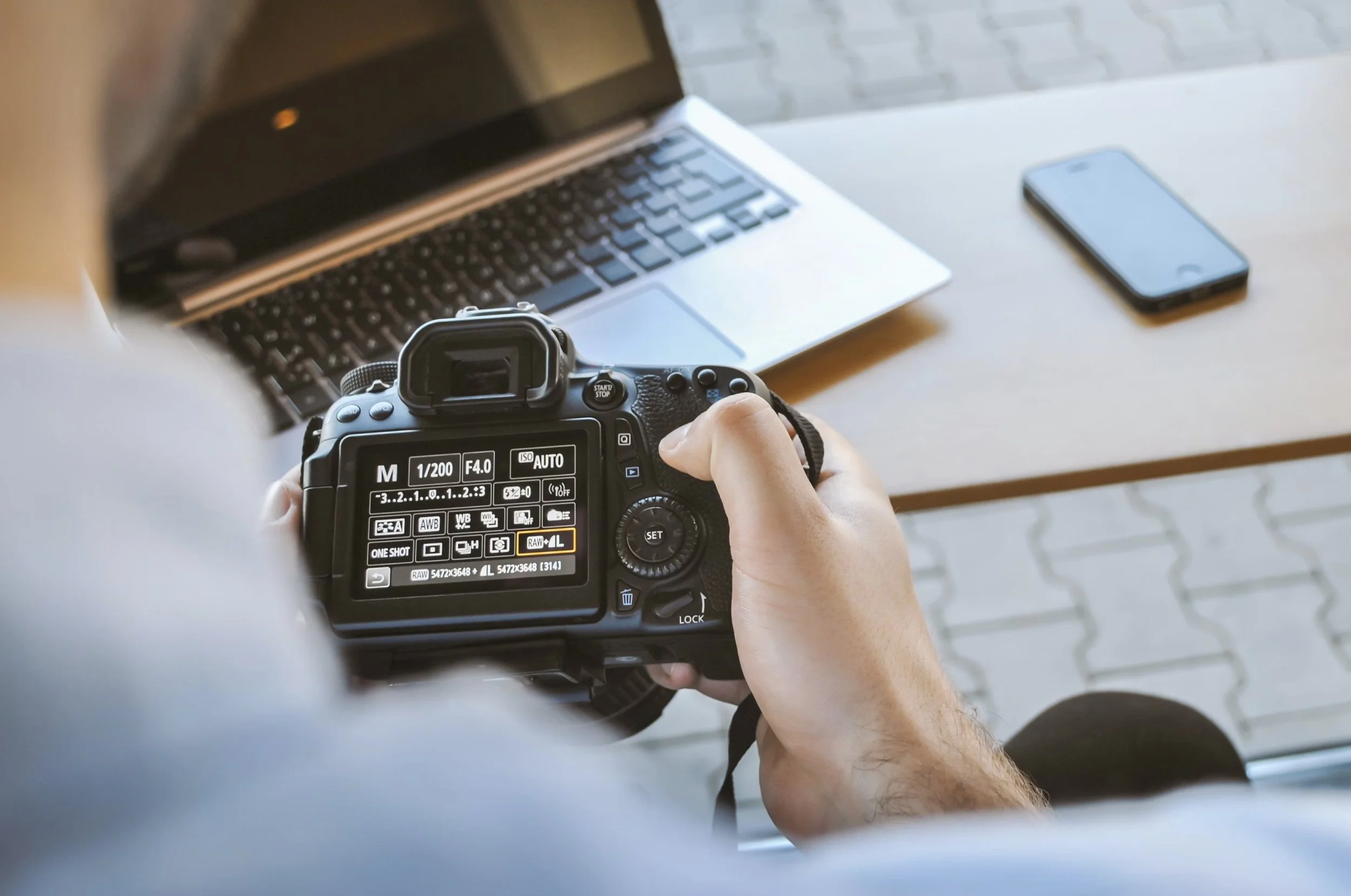
Everything changed with the advent of digital photography. Photographers used to work with film, darkrooms, and printed images. These days, smartphones, digital cameras, drones, and even satellites are used to take the majority of photos. Photography has consequently become quicker, simpler, and more widely available.
The crucial point is that digital photos are more than just pictures. They have data as well. Time, date, location, camera settings, and device type can all be stored in each picture. Metadata is a common term for this secret information. Despite its diminutive size, it has the potential to tell a fascinating tale.
A travel blogger, for instance, can use photo metadata to determine the location and time of their best photos. A business can find out which visual style receives the most attention by analyzing image performance on social media. To put it another way, every picture has the potential to be both a creative product and a piece of data.
Why Data Analysis Matters in Photography
Businesses and photographers can go beyond speculation with the aid of data analysis. "What patterns do the numbers show?" is a better question to ask than "Which photos do people like?" That is a significant distinction.
Data analysis helps photographers and creators move beyond guesswork and intuition. Instead of wondering “which photos perform better,” you can actually see what the numbers show — which images get more engagement, which lighting works best at golden hour, or which composition holds attention longer.
For wildlife and nature photographers especially, this combination is becoming incredibly powerful. Whether you’re analyzing which animal shots get the most saves on Instagram, tracking how different compositions perform, or even reviewing metadata from hundreds of field shots, data turns your photography from pure art into informed creative decisions.
When working with large sets of images — for example, comparing hundreds of shots from a safari or a landscape expedition — an AI statistics solver online can quickly help you interpret patterns in engagement, timing, or even technical data (such as shutter speed success rates or focal length performance). It supports the analytical side without pulling you away from the creative and visual heart of photography.
Understanding Audience Behavior
Consider a fashion brand that shares images of its products on Instagram. While some photos are largely ignored, others receive thousands of likes. Analyzing data can show why. Perhaps images that are brighter work better. Perhaps images of people receive more interaction than images of products alone. Perhaps posts published in the morning perform better than those published in the evening.
People are better able to make decisions when they have this kind of insight. It boosts outcomes, enhances content, and saves time. Creators can work with purpose and direction rather than in the dark.
Improving Creative Decisions
Some fear that the artistic aspect of photography is eliminated by data. However, that isn't always the case. In actuality, data can foster creativity. It can display audience preferences, trends, and technical prowess. A photographer can still use insights to enhance their work while adhering to their vision.
Consider it similar to using a map while driving. Although it doesn't pick the destination, the map makes it easier for you to get there.
Real-World Uses of Photography and Data Analysis
Numerous industries exhibit the collaboration between data analysis and photography. Influencers and photographers are not the only ones. Journalism, science, healthcare, retail, and security are all impacted.
Businesses in e-commerce examine product photos to determine which ones generate higher sales. They might experiment with model poses, lighting, angles, and background colors. They are able to better understand consumer behavior and increase conversion rates thanks to this process.
One of the most obvious examples in healthcare is medical imaging. In a broad sense, X-rays, MRIs, and CT scans are examples of photography. To identify illnesses, monitor changes, and assist physicians in making decisions, these images are analyzed using data-driven tools.
Drones are used in agriculture to take aerial photos of fields. Data analysis then examines these photos to identify dry spots, unhealthy crops, or disease indicators. Farmers are able to cut waste and react fast.
This combination is also used by journalists. Location, timing, and authenticity can be examined in images taken during protests, natural disasters, or conflict areas. This aids in the verification of facts in a world where false information and images proliferate rapidly.
Artificial Intelligence Is Changing the Game
This connection has been strengthened by artificial intelligence. These days, machines are capable of quickly analyzing thousands or even millions of images. For humans alone, that would be nearly impossible.
AI systems are able to read emotions, identify faces, identify objects, and even categorize images according to their content. Every day, photo apps make use of this. Image analysis is demonstrated when your phone groups photos of sunsets, beaches, or pets.
Large businesses and organizations can particularly benefit from this. A retail company can use customer photos to learn how customers actually use its products. Photos from traffic cameras can be used by a city to research road safety. Images captured by camera traps in the forest can be used by a wildlife team to identify animal species.
But this also begs the question. How much information about images should be gathered? Who is the owner? What is the proper way to use it? These are significant problems. Ethics must advance along with technology.
Challenges and the Future of This Partnership
While there are many advantages to the relationship between photography and data analysis, there are drawbacks as well. One of the main concerns is privacy. Particularly when faces, locations, or private areas are included, photos frequently contain personal information. People may feel watched rather than assisted if businesses gather and examine excessive amounts of visual data.
Bias is another problem. Data systems pick up knowledge from already-existing data. The outcomes may be unfair if the information is incomplete or unjust. Facial recognition systems, for instance, have occasionally outperformed other groups. This demonstrates the need for meticulous design and testing.
Nevertheless, the future appears promising. Data tools are getting more precise, and cameras are getting smarter. We are heading toward a future in which pictures do more than merely depict events. They also aid in elucidating the reasons behind it, its significance, and potential outcomes.
Data analysis and photography are no longer distinct disciplines located on different sides of the room. In the digital age, they move in unison as dance partners. Reality is captured by one, and insight is translated by the other.
In conclusion, the way we create, communicate, and comprehend the world is being shaped by the connection between photography and data analysis. This combination helps people make better decisions and find deeper meaning in visual content, from social media and business to science and medicine. This collaboration will only get stronger as technology advances. This implies that improving vision is not the only aspect of photography's future. It also involves more in-depth thought.